

Understanding Camera Belts and Harnesses: A Technical Deep Dive
The Engineering of Weight Distribution and Accessibility
Camera belts and harnesses represent a critical evolution in photographic equipment support, moving beyond the simple neck strap to sophisticated systems that redefine gear accessibility and user comfort. At their core, these solutions are engineered to meticulously distribute the substantial and often asymmetrical weight of professional camera bodies and telephoto lenses across larger, more resilient areas of the photographer's anatomy. This strategic load management minimizes localized pressure points, particularly on the neck and shoulders, thereby mitigating fatigue over prolonged periods. Advanced designs often incorporate contoured padding, breathable mesh fabrics, and adjustable strap systems to conform to individual body types, ensuring consistent comfort and stability. The objective is not merely to carry gear, but to make it feel lighter and more integrated with the photographer's movement, freeing hands and improving overall agility in dynamic shooting environments.
Typologies and Their Functional Advantages
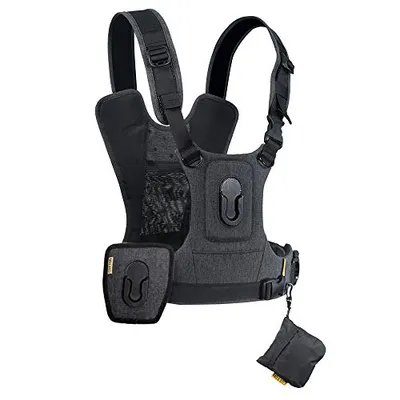
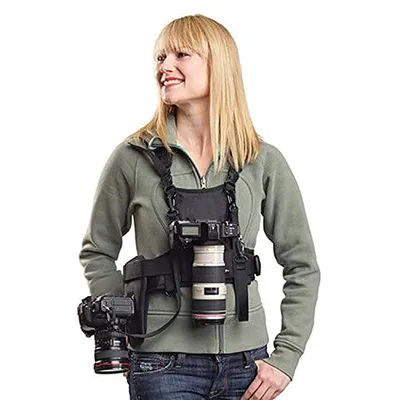
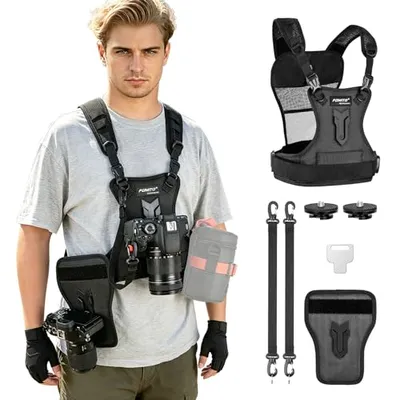
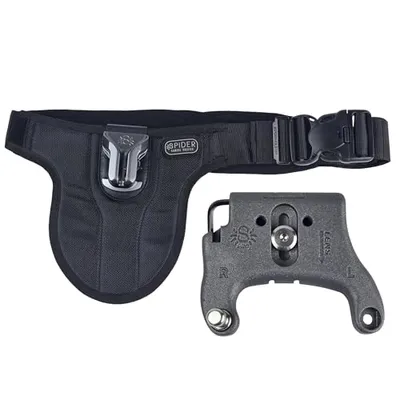
The market offers distinct typologies, each optimized for specific use cases. Camera Belts, such as those employing a 'holster' mechanism, secure a single or dual camera setup at the waist or hip. These are favored for their low profile, rapid draw capabilities, and suitability for lighter setups or as a secondary system for accessories. Key features often include quick-release plates that integrate with tripod mounts, and robust pins that engage with the belt. Camera Harnesses, conversely, distribute weight over both shoulders and across the back, often via an 'X' or 'H' strap configuration. This design excels with heavier camera bodies and multiple lens setups, as it leverages the body's strongest support structures. They provide superior stability, preventing cameras from swinging, and are ideal for event, wedding, or wildlife photographers requiring constant readiness. Vest Systems represent a hybrid, often integrating elements of both belts and harnesses, providing even greater load-bearing capacity and numerous attachment points for lenses, flashes, and other peripherals, transforming the photographer into a mobile command center.
Material Science and Construction Integrity
The durability and reliability of camera belts and harnesses are directly attributable to the selection of advanced materials and meticulous construction techniques. High-denier ballistic nylon or reinforced polyester webbing forms the backbone of most systems, chosen for its exceptional tensile strength, abrasion resistance, and relatively low weight. Padding often utilizes high-density EVA foam or specialized closed-cell foams, frequently encased in breathable air mesh to wick away moisture and enhance comfort. Hardware components are paramount; buckles, D-rings, quick-release plates, and carabiners are typically crafted from aircraft-grade aluminum, stainless steel, or high-impact composite plastics, all rigorously tested for their load-bearing capacity and resistance to corrosion. Stitching is a critical indicator of quality, with reinforced bar-tacking at stress points and heavy-duty industrial threads preventing unraveling under strain. Furthermore, many high-end systems incorporate weather-resistant coatings, such as Durable Water Repellent (DWR) treatments, to protect gear in inclement conditions, ensuring operational integrity regardless of the environment.
Advanced Security and Rapid Deployment Mechanisms
A crucial technical aspect lies in the balance between absolute gear security and instantaneous access. Modern systems employ sophisticated locking mechanisms to prevent accidental camera detachment. This can range from spring-loaded, self-locking carabiners on harness systems to proprietary quick-release plates that firmly lock into a belt-mounted receiver with an audible click and often require a two-step disengagement process to prevent unintentional release. Anti-swing straps and stabilizing tethers are also common, preventing cameras from bouncing or swaying excessively during movement, which not only protects the gear but also minimizes distraction for the photographer. The design of these mechanisms prioritizes fluid, one-handed operation, allowing photographers to draw their camera to shooting position within a fraction of a second, crucial for capturing fleeting moments. The integration of Arca-Swiss compatible plates for direct tripod mounting further streamlines workflows, eliminating the need to repeatedly attach and detach different plates.