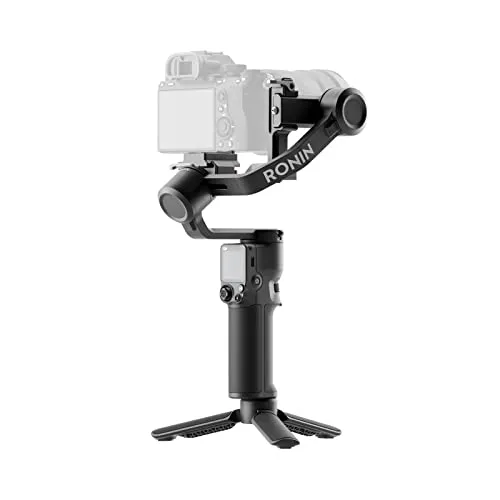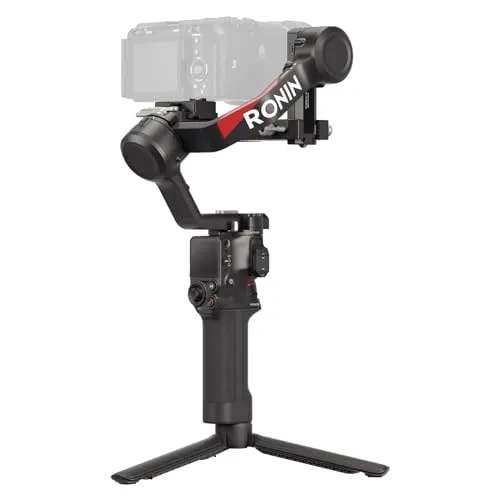


DJI RS 4 3-Axis Gimbal DSLR Mirrorless
Specifications
Core Functionality
Core Functionality
| Axis Stabilization |
3-Axis
|
|---|---|
| Native Vertical Shooting |
Yes (2nd-Gen)
|
| Payload Capacity |
3 kg (6.6 lbs)
|
| Maximum Payload Weight |
3
kg
95% better than others
|
Power and Battery
Power and Battery
| Max Operating Time |
12 hours (Up to 29.5 hours with optional BG70 grip)
|
|---|---|
| Phone Charging |
Via optional BG70 grip (18W USB-C)
|
| Charging Port |
USB-C
|
Portability and Handling
Portability and Handling
| Built-in Tripod |
Yes (Extended Grip/Tripod included)
|
|---|
Connectivity and Software
Connectivity and Software
| App Integration |
Yes (DJI Ronin app)
|
|---|---|
| App Download Source |
DJI Official Website
|
Brand and Compatibility
Brand and Compatibility
| Brand |
DJI
|
|---|---|
| Camera Compatibility |
DSLR and Mirrorless Cameras (Canon/Sony/Panasonic/Nikon/Fujifilm)
|
Disclaimer: Information on this page may need review. If you notice any discrepancies, please report them

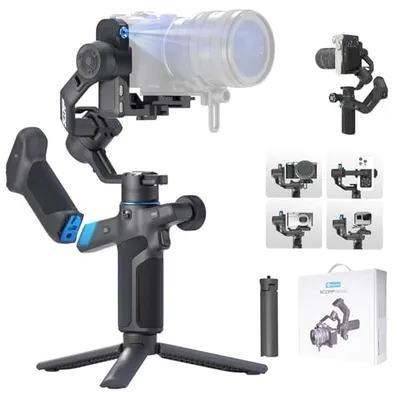
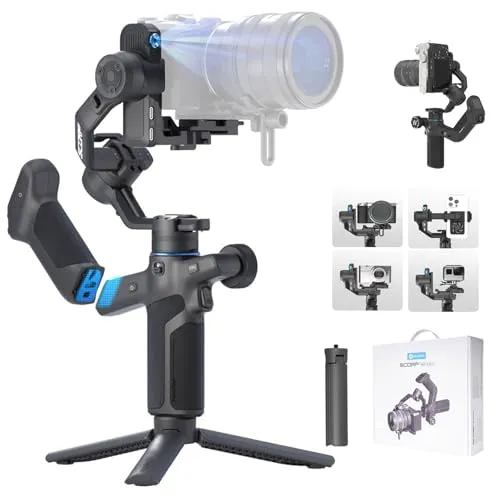
DJI RS 4 incorporates Teflon-coated axis arms across all three axes, significantly reducing friction during balancing operations and ensuring ultra-precise camera movements. The design includes a new horizontal plate for enhanced 2nd-generation native vertical shooting capability, allowing for a tool-less, rapid transition to portrait orientation. Furthermore, the tilt axis has been extended by 8.5 mm compared to its predecessor, providing expanded balancing space for various camera and lens combinations, reinforcing its robust structural engineering.
The RS 4 supports a maximum payload capacity of 3 kg (6.6 lbs), accommodating mainstream mirrorless and DSLR setups efficiently. Its operational framework allows for quick mode switching between PF, PTF, and FPV via a dedicated joystick, with FPV customizable to 3D Roll 360 mode, ensuring precision control. The included BG21 Battery Grip provides up to 12 hours of operation, extendable to 29.5 hours with the optional BG70 High-Capacity Battery Grip, which also offers 18W USB-C power delivery to cameras or accessories.
Positioned as an incremental upgrade over its predecessors, the DJI RS 4 excels with its refined vertical shooting mechanism and enhanced balancing space, making it a robust choice for professional videographers and content creators requiring quick transitions and compatibility with heavier camera systems. The RSA communication port expands its ecosystem for extensive control and third-party accessory integration, outperforming gimbals lacking such modularity. Users seeking a highly adaptable and efficient stabilizer for hybrid shooting scenarios, especially those utilizing larger mirrorless cameras, should consider the RS 4, while casual users or those with smaller setups might find more cost-effective alternatives sufficient.
Pros & Cons
Pros
What we love about this product
- 2nd-Gen native vertical shooting with quick-release horizontal plate.
- Teflon-coated axis arms ensure smoother, precise balancing.
- 3kg payload capacity with extended tilt axis for larger camera setups.
- RSA communication port for extensive accessory ecosystem.
Cons
Points to consider before buying
- High-capacity battery grip (BG70) sold separately.
- DJI Ronin app not available on Google Play, requiring manual download.
- No integrated lighting or advanced audio reception capabilities.