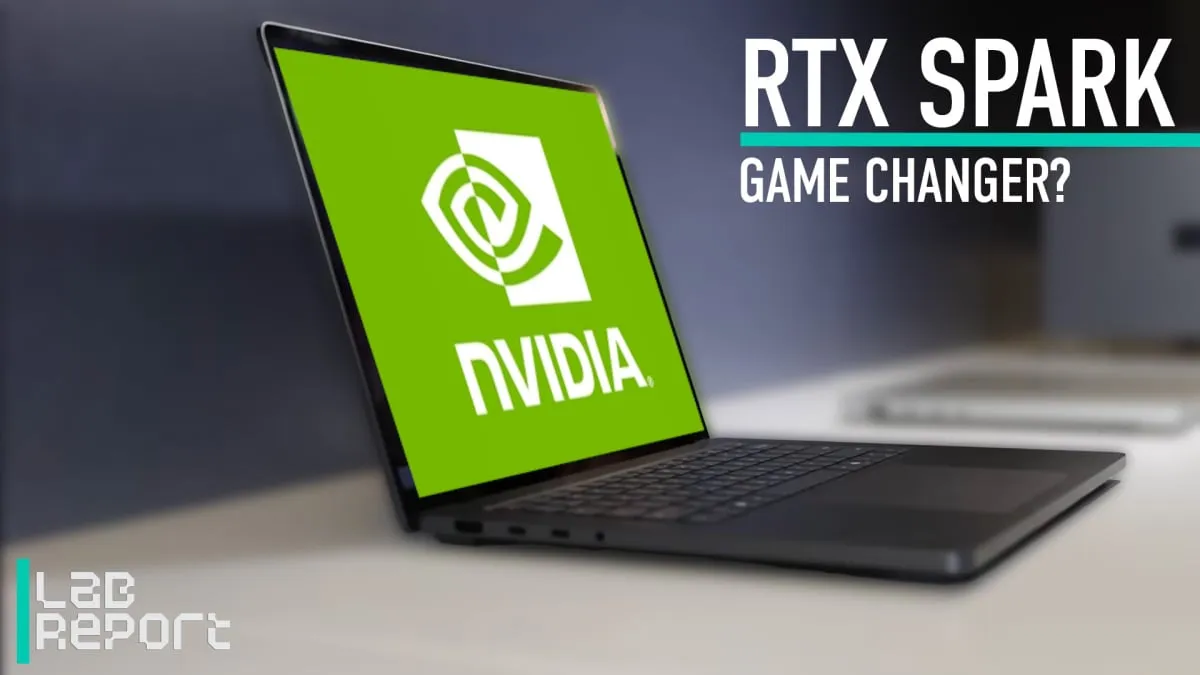
Nvidia has officially announced the RTX Spark, a significant new entrant into the processor market. This ARM-based Windows chip is engineered to deliver high performance, positioning itself as a potential "Apple Silicon moment" for the PC ecosystem. The introduction of RTX Spark signifies Nvidia's strategic expansion beyond its traditional GPU dominance, aiming to capture a larger share of the computing hardware landscape. This move directly challenges established players in the x86 architecture space, promising enhanced efficiency and power for a new generation of devices.
The potential implications of the RTX Spark are far-reaching, particularly for users demanding robust performance for demanding tasks. Nvidia is touting its capabilities for AI workloads, professional content creation, and high-fidelity gaming. This suggests a chip designed not just for general productivity, but for power users who push the boundaries of their hardware. The integration of AI acceleration directly into the silicon could usher in a new era of on-device intelligent processing, reducing reliance on cloud-based solutions and improving responsiveness.
RTX Spark: Architecture and Performance Potential
Core Architecture and Efficiency
At its heart, the RTX Spark is an ARM-based processor, a significant departure from the prevalent x86 architecture that has long dominated the Windows PC market. This architectural choice allows for greater power efficiency, a critical factor for both mobile computing and sustained high-performance tasks. Nvidia leverages its deep expertise in parallel processing and AI acceleration, integrating components designed to handle complex computations with remarkable speed. The chip's design aims to strike a balance between raw computational power and energy consumption, making it suitable for a range of devices from ultra-portable laptops to more powerful workstations.
The efficiency gains inherent in ARM architecture, when coupled with Nvidia's specialized cores, could translate into longer battery life for laptops and lower thermal output. This is particularly important for thin-and-light devices where cooling is often a limiting factor. Furthermore, Nvidia's focus on integrating AI capabilities at the silicon level means that tasks such as machine learning inference, natural language processing, and image recognition can be performed much faster and more efficiently directly on the device, rather than requiring offload to a separate AI accelerator or the cloud.
AI Acceleration and Compute Capabilities
A key differentiator for the RTX Spark is its integrated AI acceleration. Nvidia has equipped the chip with dedicated hardware designed to dramatically speed up artificial intelligence and machine learning tasks. This includes support for various AI frameworks and models, making it an attractive option for developers and professionals working with AI-driven applications. The enhanced AI performance can benefit a wide array of use cases, from sophisticated data analysis and predictive modeling to real-time content generation and advanced computational photography.
For AI power users, this means the ability to run more complex models locally, reducing latency and enhancing privacy. Creators can leverage these AI capabilities for tasks like intelligent video editing, noise reduction, and generative art. Gamers might also see benefits through AI-powered features such as upscaling (like Nvidia's DLSS), intelligent NPC behavior, and enhanced graphical rendering techniques that rely on machine learning for optimization.
Target Markets and Use Cases
Content Creators and Professionals
Nvidia has explicitly targeted content creators and professionals with the RTX Spark. The combination of powerful CPU cores, integrated AI, and potential access to Nvidia's graphics technologies positions this chip to excel in demanding creative workflows. Applications for video editing, 3D rendering, graphic design, and CAD software can potentially see substantial performance improvements. The efficiency of the ARM architecture also means that high-performance workstations could become more portable and quieter.
The ability to perform complex rendering and AI-driven post-processing tasks on-device can significantly shorten project turnaround times. For professionals working with large datasets or complex simulations, the RTX Spark offers a compelling proposition for enhanced productivity. Access to Nvidia's ecosystem of software optimizations and developer tools further solidifies its appeal within the professional creative community.
Gamers and Enthusiasts
The gaming market is another significant focus for the RTX Spark. While traditionally Nvidia's strength lies in discrete GPUs, an integrated ARM-based solution for Windows PCs opens up new possibilities. The chip is expected to offer robust graphical performance suitable for modern games, potentially enhanced by Nvidia's AI technologies like DLSS. This could enable higher frame rates, better visual fidelity, and improved performance on portable gaming devices or laptops.
Beyond raw performance, the integrated AI capabilities could power next-generation gaming features. This includes more intelligent game environments, realistic character behaviors driven by AI, and potentially dynamic difficulty adjustments. The efficiency of the ARM architecture is also beneficial for gaming laptops, allowing for more immersive gaming sessions without constant tethering to a power outlet.
AI Power Users and Developers
For individuals and developers focused heavily on artificial intelligence, the RTX Spark represents a powerful new platform. Its dedicated AI hardware accelerates training and inference for machine learning models, making it ideal for research, development, and deployment of AI applications. Developers can build and test AI applications directly on their Windows machines with greater speed and efficiency.
The potential for running advanced AI models locally, without needing high-end server infrastructure, democratizes access to powerful AI tools. This is particularly relevant for edge computing applications where processing needs to occur close to the data source. Nvidia's commitment to supporting AI frameworks ensures that developers have the tools and libraries they need to leverage the full potential of the RTX Spark's AI capabilities.
Impact Analysis
Shifting PC Architecture Landscape
The introduction of Nvidia's RTX Spark could mark a significant inflection point in the PC processor market. For years, the dominance of Intel and AMD's x86 architecture has been largely unchallenged in the Windows ecosystem. However, the success of Apple's M-series chips on ARM has demonstrated the viability and performance potential of this alternative architecture. Nvidia's entry, leveraging its extensive experience in AI and graphics, could catalyze a broader shift towards ARM-based Windows devices, potentially leading to more diverse hardware options, improved power efficiency, and innovative form factors.
This competition is likely to spur innovation across the entire industry. Other chip manufacturers may accelerate their own ARM-based Windows initiatives, and existing players might be pressured to enhance the efficiency and AI capabilities of their x86 offerings. Consumers could benefit from a wider range of devices offering superior performance-per-watt, longer battery life, and enhanced AI features, ultimately driving the evolution of personal computing hardware.