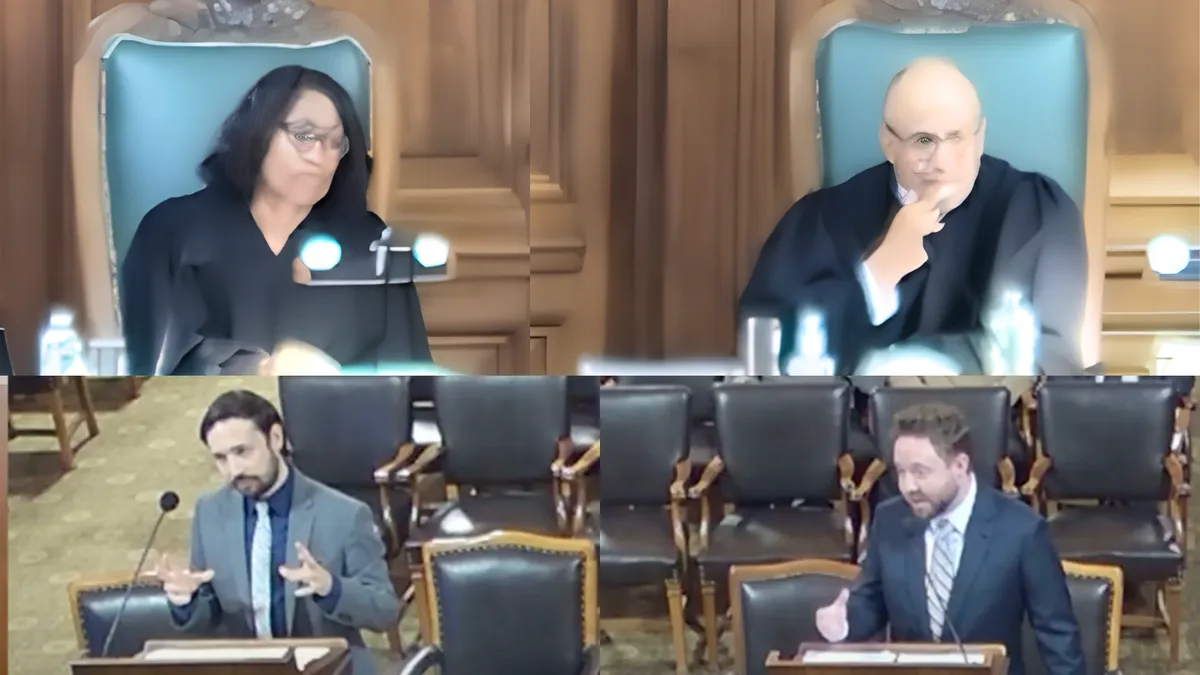
The legal profession is grappling with the increasing prevalence of generative artificial intelligence (AI), and a recent hearing before the Supreme Court of the State of New York Appellate Division has brought this issue into sharp focus. In a dramatic turn of events, an attorney was publicly reprimanded for allegedly using fabricated citations and misrepresenting legal precedents in a client's filing. The incident, captured on a live stream, has reignited concerns about the ethical implications and potential pitfalls of relying on AI tools in legal practice.
The case involved Judith Landberg, who is suing the City of New York after sustaining injuries from tripping on a sidewalk uplifted by tree roots. During the oral argument on May 20th, plaintiff's counsel, Michael Sanders, was attempting to define the term 'sidewalk.' However, the court's attention was immediately drawn to serious discrepancies within the submitted brief, prompting a lengthy discussion with the involved legal teams.
AI-Generated Citations Raise Judicial Alarm
Justices Valerie Brathwaite Nelson and Hector LaSalle expressed profound disappointment and concern over the brief's contents. Justice Nelson pointed out that the brief cited at least three cases that appeared to be fictitious, with no record of their existence or the quoted language attributed to them. Furthermore, she noted that ten other cited cases seemed to misrepresent established legal principles.
When questioned by the court, Sanders initially struggled to provide a coherent explanation, stating he was not prepared to discuss the specific citations. This response prompted further inquiry from Justice LaSalle, who pressed Sanders on the source of these citations. Sanders admitted he was unsure of their specific origins, deepening the court's apprehension.
Ethical Obligations and Judicial Expectations
Justice Nelson sternly reminded Sanders of Rule 3.3 A of the rules of professional conduct, which prohibits lawyers from knowingly making false statements of fact or law to a tribunal or failing to correct such statements. Sanders offered his apologies for any incorrect citations, but the judges pressed further, questioning the source of the information. Justice LaSalle noted that this was not an isolated incident, indicating a pattern of similar issues arising in other cases, and suggested that the attorney's preparation for the hearing should have included addressing these errors.
The judges highlighted the critical role of trust in the legal profession, emphasizing that the court relies heavily on the accuracy and integrity of submissions from legal counsel. The citation of non-existent cases and misrepresentation of legal holdings were deemed to be significantly below the expected standards for appellate practice. This situation underscored the broader concern within the judiciary regarding the increasing use of AI tools, which can inadvertently or intentionally lead to the generation of inaccurate or fabricated information.
Accountability and Consequences
Ross Friscia, representing the property owner, and Elizabeth Freedman, counsel for the City of New York, also faced pointed questions from the bench. They were asked to explain their failure to identify and report the inaccuracies in the opposing counsel's brief. While Friscia apologized and pledged to conduct more thorough due diligence in the future, Freedman stated she had not focused on the specific citations as they were not central to her defense strategy. Both attorneys were urged to uphold their responsibilities as officers of the court.
The Appellate Division ordered Michael Sanders and his law firm to show cause why they should not be sanctioned for their conduct. Ultimately, on Wednesday, the underlying case brought by Judith Landberg was dismissed. This outcome, coupled with the judicial reprimand and potential sanctions, serves as a stark warning to legal professionals about the necessity of rigorous verification and ethical considerations when utilizing AI in legal work.
Impact Analysis
This incident highlights a critical juncture in the integration of AI into the legal field. The judiciary's direct confrontation with alleged AI-generated inaccuracies in court filings underscores the urgent need for clear guidelines and robust verification processes. The potential for AI to produce plausible-sounding but factually incorrect information poses a significant risk to the administration of justice, potentially leading to wasted judicial resources, erroneous judgments, and erosion of public trust. As AI tools become more sophisticated, courts and legal professionals must collaborate to establish protocols that ensure the integrity of legal arguments and filings, safeguarding the foundational principles of accuracy and truth within the justice system.