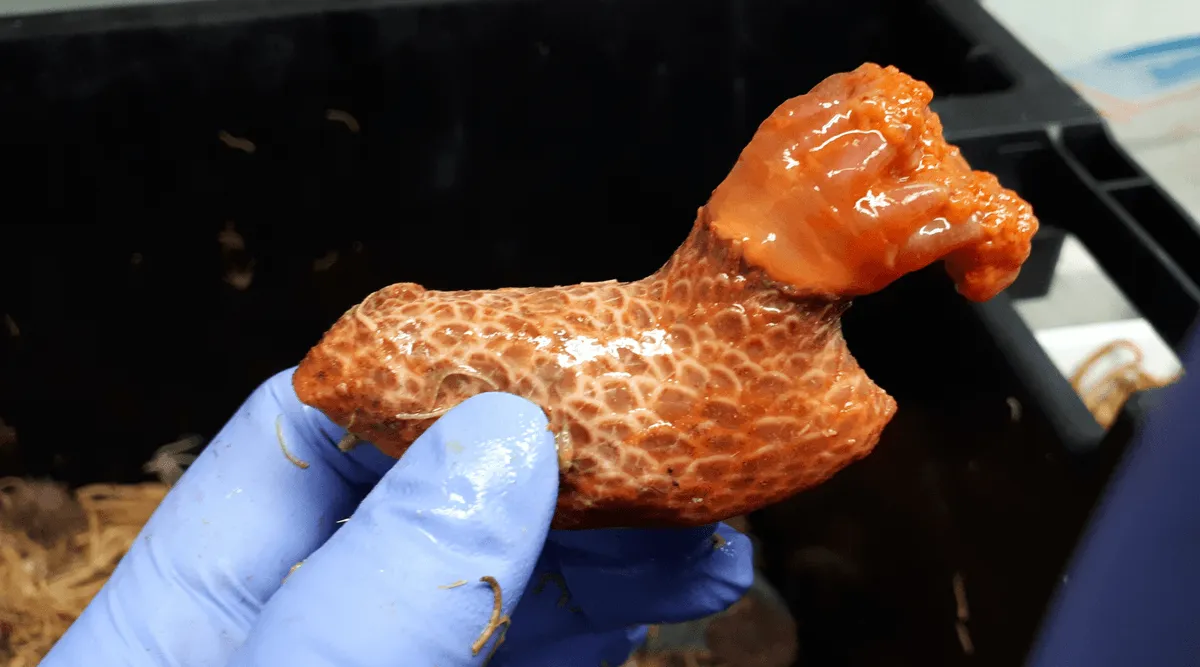
Imagine a biological scenario where a severed limb detaches from its host, only to continue living independently, scavenging for nutrients and maintaining cellular activity. While this might sound like the premise of a science fiction horror film, it is a remarkable reality observed in certain species of sea cucumber. The Atlantic and Arctic oceans are home to *Psolus fabricii*, a soft-bodied marine invertebrate that possesses an extraordinary regenerative capability, allowing detached portions of its body to survive for extended periods as self-sufficient entities.
Unlike many animals that can regenerate lost body parts, such as a salamander regrowing a limb or a starfish an arm, the detached component typically perishes. However, *Psolus fabricii* presents a stark contrast. Scientific observations have documented severed legs and feeding tentacles remaining viable for over three years post-detachment. These fragments actively absorb amino acids and nutrients from the surrounding seawater, sustaining tissue integrity and promoting cell division, effectively existing in a state of independent, albeit rudimentary, life.
Unprecedented Survival and Regeneration in Sea Cucumbers
Autonomous Survival of Detached Appendages
The process of wound healing and subsequent independent survival in these detached sea cucumber parts is surprisingly rapid. Within six days of being severed, the ragged edges of the detached appendage begin to heal, curling inward to seal the wound. Simultaneously, a similar healing process commences at the site of the original injury on the parent sea cucumber, preparing it for regeneration of the missing part. This dual-action healing mechanism is crucial for the survival of both the fragment and the original organism.
[IMAGE_X]
The capacity of these detached sections to manage their own cellular integrity and prevent infection is a key area of interest for researchers. The observed phenomenon includes a process akin to apoptosis, or programmed cell death, in damaged cells. This systematic elimination of compromised cells is vital for maintaining the viability of the remaining healthy tissue, preventing the spread of decay or infection to the rest of the fragment.
Cellular Processes and Neural Preservation
Further investigations revealed fascinating details about the physiological state of these detached parts. While the tube feet, responsible for locomotion and anchoring, remained largely immobile, the excised tentacles demonstrated a capacity for movement. When stimulated, these tentacle fragments exhibited responses, indicating that not only had body tissues regenerated, but neural networks essential for movement had also been preserved or re-established within the detached section.
[IMAGE_X]
This preservation of neural function in detached tissues challenges conventional understanding of biological survival. It suggests a remarkable resilience and a sophisticated biological mechanism that allows for the maintenance of essential cellular and neural functions even after complete separation from the main organism.
Implications for Biomedical Research
The unique regenerative capabilities of *Psolus fabricii* hold significant promise for advancements in biomedical research and tissue engineering. Understanding the mechanisms behind the survival and regeneration of these detached sea cucumber parts could provide invaluable insights into developing novel strategies for repairing and replacing damaged or diseased human tissues.
[IMAGE_X]
The ultimate goal in applying this knowledge to human health would be to harness these regenerative processes to enhance the body's natural healing capabilities, facilitating the repair of tissues within the context of the original organism, rather than promoting independent survival of severed parts. This research could pave the way for more effective treatments for injuries, degenerative diseases, and tissue loss.