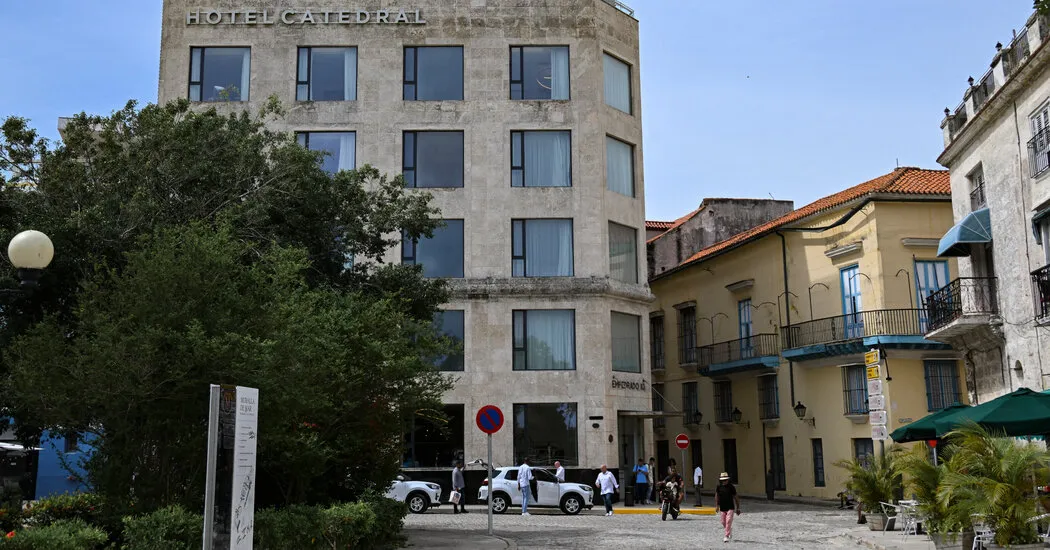
The Trump administration's intensified efforts to economically isolate Cuba have yielded significant results this week, as three prominent international hotel chains and a major bank facilitating Visa and Mastercard transactions have ceased operations in the communist nation. This withdrawal is a direct response to new U.S. regulations aimed at penalizing foreign businesses engaging with Cuban entities controlled by the military.
These evolving U.S. policies mandate that foreign businesses involved in ventures with Cuba's military conglomerate—an entity that commands approximately half of the country's economy—must divest by Friday. Further compounding these measures, the U.S. government announced on Thursday the imposition of sanctions targeting an expanded list of Cuban officials and state entities, including the nation's armed forces. This move underscores a broader strategy to exert economic pressure on the Cuban government.
U.S. Regulatory Escalation and Business Impact
The recent U.S. regulations represent a substantial escalation of long-standing prohibitions against American companies trading with Cuba. These new measures, often referred to as "secondary sanctions," are particularly impactful as they extend their reach to foreign companies and financial institutions, regardless of their direct ties to the United States. The threat of losing U.S. visa privileges and asset freezes looms large for business leaders whose companies remain operational in Cuba. Furthermore, the companies themselves face severe repercussions, including potential sanctions that could cut off access to American banking systems.
The implications of this business exodus are profound for Cuba's economy. As international businesses withdraw, the nation faces rising unemployment and diminished financial resources. This exacerbates an already critical economic crisis, potentially destabilizing the government's capacity to manage its affairs and provide for its citizens. The strategic targeting of the military conglomerate is designed to directly impact the regime's financial power base.
Impact on Financial Services and Tourism
Cuba's Central Bank confirmed on Wednesday that a bank responsible for processing Visa and Mastercard transactions has withdrawn its services. This action follows a recent executive order from the White House that explicitly threatened sanctions against foreign companies engaged in business activities within Cuba. The withdrawal of such critical financial services significantly impedes the ability of both Cuban businesses and individuals to conduct international transactions, further isolating the nation economically.
The departure of major international hotel chains from the Cuban market deals a severe blow to the nation's vital tourism sector. Tourism has been a crucial source of foreign currency for Cuba, and the withdrawal of these hospitality giants will inevitably lead to a decline in visitor numbers and a reduction in revenue. This not only impacts the government's finances but also affects employment within the hospitality industry and related sectors, potentially leading to widespread economic hardship.
Broader Geopolitical Implications
The effectiveness of these secondary sanctions remains a subject of ongoing debate. While they aim to exert significant pressure, they also risk alienating international partners and may provoke retaliatory measures. The United States' strategy appears focused on maximizing economic pain to compel political change, but the long-term consequences for regional stability and international relations are complex and far-reaching.
Cuba has historically relied on its relationships with international partners to mitigate the effects of U.S. sanctions. However, the extraterritorial nature of these new regulations forces foreign entities to choose between their Cuban operations and their access to the lucrative U.S. market. This diplomatic and economic tightrope walk underscores the challenging geopolitical landscape in which Cuba must navigate its economic future under increased U.S. pressure.
Impact Analysis
The recent U.S. sanctions targeting Cuba represent a significant shift in economic policy, moving beyond direct sanctions on U.S. entities to penalize international businesses. This strategy aims to isolate Cuba's military-controlled economy more effectively, potentially leading to increased hardship for the Cuban population and greater internal pressure for economic and political reform. The withdrawal of major hotel chains and financial institutions signals a growing risk for foreign investment in Cuba, thereby deepening the nation's economic crisis. This could have ripple effects on regional trade and diplomatic relations, forcing other nations to carefully consider their economic engagement with Cuba amidst U.S. regulatory pressure.