Recent revelations indicate significant challenges within the international collaboration for the Lunar Gateway, a planned orbital outpost serving as a staging point for lunar and deep space missions. Investigations have uncovered corrosion issues affecting critical modules, raising concerns about the program's timeline and the long-term integrity of spacecraft designed for the harsh environment of space. The discoveries, brought to light through inquiries to participating space agencies and contractors, suggest a complex interplay of material science, manufacturing processes, and environmental factors contributing to the degradation.
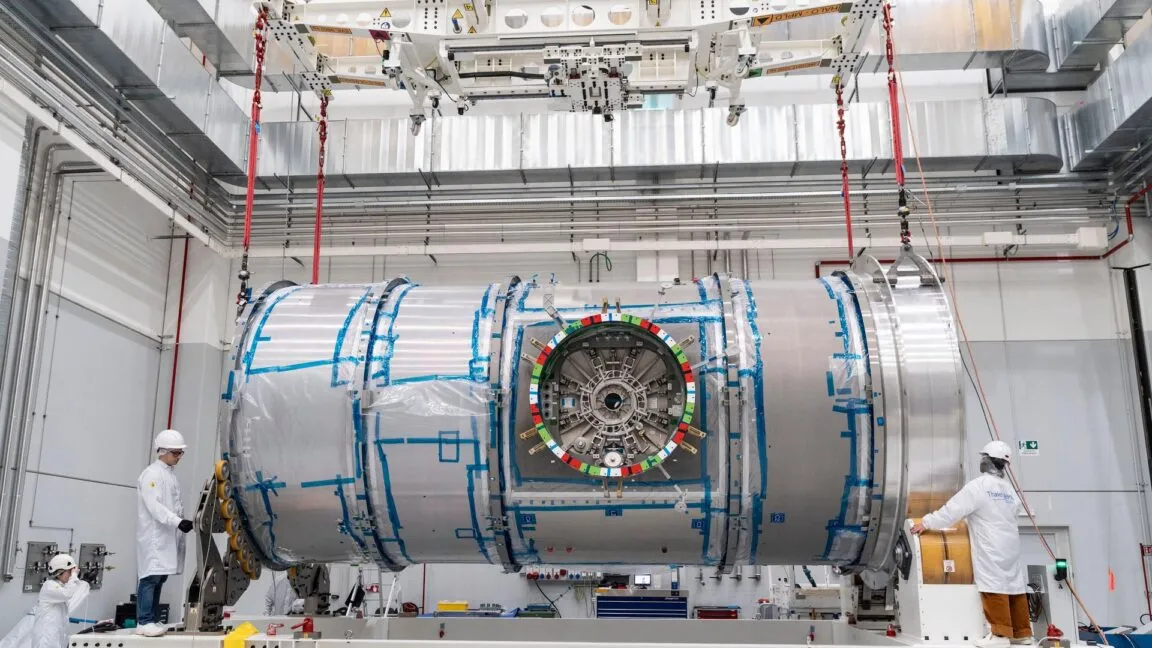
While specific details remain under official review, preliminary findings point to a combination of material properties, forging processes, and surface treatments as likely culprits. The European Space Agency (ESA), a key partner in the Gateway, has been actively investigating these issues, particularly concerning its contribution, the International Habitation Module (I-HAB). An ESA spokesperson confirmed that a 'tiger team' was established to probe the corrosion on the HALO (Habitation and Logistics Outpost) module, noting that while the issue was deemed technically manageable and not a showstopper for I-HAB itself, it highlighted underlying concerns. The I-HAB module, currently under construction and not yet delivered to NASA, faces an uncertain future as European officials reassess their participation.
Lunar Gateway Module Corrosion Under Scrutiny
The discovery of corrosion on spacecraft components is a serious matter that can compromise structural integrity and mission success. For modules destined for the Moon and beyond, where maintenance is extremely difficult or impossible, the materials and manufacturing must be exceptionally robust. The issues identified on the HALO module, and subsequently acknowledged by other contractors, suggest that existing protocols or material selections may not fully account for the long-term effects of exposure to space conditions, even within orbital environments. The preliminary findings from the ESA indicate a multifaceted origin for the corrosion, moving beyond a single point of failure to a systemic issue involving multiple stages of module development.
The initial announcement regarding the significance of these contracts, made in 2020, emphasized Thales Alenia Space's commitment to advancing cislunar exploration through their expertise. However, the subsequent emergence of corrosion problems casts a shadow over these ambitions. Industry response has varied, with some contractors providing swift comments while others, like Thales Alenia Space, have indicated they are preparing statements, suggesting the complexities of addressing and communicating such technical challenges publicly.
Contractor and Agency Responses to Corrosion Issues
The public acknowledgment of these technical hurdles has been a gradual process, initiated by investigative journalism prompting official comments. Northrop Grumman, a major player in the space sector, provided a timely response when queried about the issues. More significantly, Axiom Space, responsible for the first commercial module intended for the Gateway, confirmed that it too has encountered similar corrosion phenomena. This parallel discovery suggests that the problem may be more widespread than initially understood, affecting different contractors and potentially different types of modules within the Gateway architecture. Axiom Space indicated it is collaborating with NASA and Thales Alenia Space to resolve the issue, maintaining an optimistic launch schedule for its module in 2028.
The European Space Agency's detailed statement shed light on their investigative approach, attributing the problem to a 'combination of factors.' This suggests a thorough, multi-disciplinary analysis was conducted. The identification of the problem as 'technically manageable' offers a degree of reassurance, but the underlying uncertainty regarding European participation in the Moon base initiative underscores the delicate nature of international space projects. Such collaborations rely on shared confidence in technical execution and program stability.
Impact on Lunar Gateway Program and Future Missions
The ramifications of these corrosion issues extend beyond the immediate repair and investigation phases. The potential for delays in module delivery and integration could impact the overall construction schedule of the Lunar Gateway. This, in turn, could affect NASA's broader Artemis program, which relies on the Gateway as a crucial waypoint for lunar surface missions and eventual voyages to Mars. The need to re-evaluate materials, manufacturing processes, or even design specifications for future modules could lead to significant cost overruns and extended development timelines.
Furthermore, the incident serves as a critical case study for future deep space exploration endeavors. As humanity aims for longer-duration missions and more ambitious destinations, the reliability and durability of spacecraft systems become paramount. Understanding and mitigating issues like material degradation will be essential for ensuring astronaut safety and mission success. The collaborative nature of projects like the Gateway means that challenges encountered by one partner can have ripple effects throughout the entire program, emphasizing the need for transparent communication and robust quality control across all contributing entities.