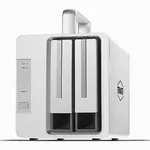
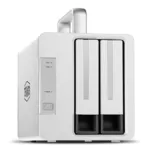
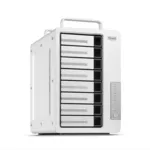
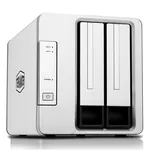
Disk Arrays

Technical specifications, key pros & cons, and real-time price comparison of 10 Disk Arrays models.
Filters
Brand
Price Range
Up to
User Rating
Sort by:
0.0
(1)
  • Weight
    -
  • Screws included
    -
  • Compliance certificates
    -
  • Storage drive capacity
    300 GB
  • DisplayPorts quantity
    -
  • Product colour
    Black
0.0
(1)
0.0
(1)
  • Weight
    1.4 kg
  • Screws included
    Yes
  • Compliance certificates
    CCC, CE, Federal Communications Commission (FCC), KC, RoHS
  • Storage drive capacity
    -
  • DisplayPorts quantity
    1
  • Product colour
    Grey
0.0
(1)
0.0
(1)
  • Weight
    1.4 kg
  • Screws included
    Yes
  • Compliance certificates
    RoHS
  • Storage drive capacity
    -
  • DisplayPorts quantity
    1
  • Product colour
    Grey
0.0
(1)
0.0
(1)
  • Weight
    5.3 kg
  • Screws included
    -
  • Compliance certificates
    RoHS
  • Storage drive capacity
    4 TB
  • DisplayPorts quantity
    1
  • Product colour
    Aluminium
0.0
(1)
0.0
(1)
  • Weight
    1.3 kg
  • Screws included
    Yes
  • Compliance certificates
    RoHS
  • Storage drive capacity
    -
  • DisplayPorts quantity
    -
  • Product colour
    Silver
0.0
(1)
0.0
(1)
  • Weight
    2.1 kg
  • Screws included
    Yes
  • Compliance certificates
    RoHS
  • Storage drive capacity
    -
  • DisplayPorts quantity
    -
  • Product colour
    Black, Grey
0.0
(1)
0.0
(1)
  • Weight
    2.1 kg
  • Screws included
    Yes
  • Compliance certificates
    RoHS
  • Storage drive capacity
    -
  • DisplayPorts quantity
    -
  • Product colour
    Black, Grey
0.0
(1)
0.0
(1)
  • Weight
    2.3 kg
  • Screws included
    Yes
  • Compliance certificates
    RoHS
  • Storage drive capacity
    -
  • DisplayPorts quantity
    1
  • Product colour
    Grey
0.0
(1)
0.0
(1)
  • Weight
    5.3 kg
  • Screws included
    -
  • Compliance certificates
    RoHS
  • Storage drive capacity
    8 TB
  • DisplayPorts quantity
    1
  • Product colour
    Aluminium
0.0
(1)
0.0
(1)
  • Weight
    1.4 kg
  • Screws included
    Yes
  • Compliance certificates
    RoHS
  • Storage drive capacity
    -
  • DisplayPorts quantity
    1
  • Product colour
    Grey
0.0
(1)

Advanced Disk Array Architecture and Resilience

Disk array technology has evolved significantly, moving from traditional hard disk drive (HDD) based systems to hybrid configurations incorporating solid-state drives (SSDs) for caching and tiering, culminating in all-flash arrays (AFAs) that leverage NVMe SSDs for unparalleled performance. Storage area networks (SANs) and network-attached storage (NAS) represent distinct architectural approaches; SANs provide block-level access via protocols like Fibre Channel or iSCSI, suitable for databases and virtualized environments, while NAS offers file-level access over Ethernet, ideal for shared folders and home directories. Unified storage systems bridge this gap, supporting both block and file access from a single platform. Advanced data management features are integral to modern disk arrays. Data deduplication identifies and eliminates redundant data blocks, conserving storage capacity. Compression algorithms further reduce storage footprint, while thin provisioning allocates storage on demand, preventing pre-provisioned waste. Snapshot technology creates point-in-time copies of data for rapid recovery, and remote replication ensures business continuity by synchronizing data to a secondary location. Durability and continuous operation are fundamental design principles. Disk arrays employ extensive redundancy, including dual active-active controllers, redundant power supplies, and hot-swappable fans, power modules, and drives, to eliminate single points of failure. Data integrity is maintained through end-to-end checksums and background scrubbing processes that detect and correct latent sector errors. For SSD-based arrays, wear leveling algorithms distribute write operations evenly across flash cells, extending drive lifespan. Non-disruptive upgrades and firmware updates ensure that maintenance can be performed without interrupting critical services. Adherence to industry standards for data protection, such as various RAID implementations including distributed RAID or erasure coding for hyper-scale environments, is critical for safeguarding against multiple concurrent drive failures. These systems are designed to operate with minimal human intervention, offering high availability and robust data protection for mission-critical applications.