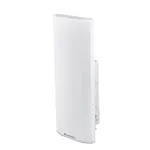
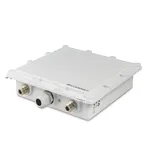
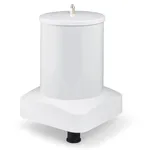
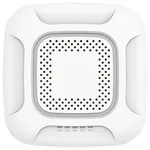
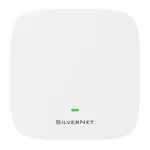
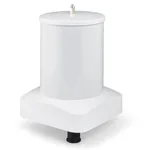
The SilverNet AP1200-360 emerges as a robust solution for expanding wireless network coverage, particularly within environments demanding high-density client support and consistent performance. Designed with enterprise-grade features, this access point aims to provide a seamless and reliable Wi-Fi experience, addressing the common pain points of signal dead zones and network congestion often found in commercial or large residential settings. Its focus on delivering stable connectivity underscores its utility for businesses that rely on uninterrupted network access for critical operations.
Leveraging advanced wireless standards, the AP1200-360 is engineered to handle a significant number of concurrent users and demanding applications. The device's internal architecture and antenna design are optimized for 360-degree signal dispersion, ensuring broad and even coverage across its operational radius. This makes it an ideal candidate for deployment in open-plan offices, warehouses, event venues, or any space where uniform wireless accessibility is paramount. The integration of these capabilities positions the SilverNet AP1200-360 as a competitive offering in the professional networking hardware market.
Key Features and Performance Analysis
The SilverNet AP1200-360 is built to deliver reliable wireless performance. While specific details on Wi-Fi standards (e.g., Wi-Fi 5, Wi-Fi 6) and maximum throughput speeds are not explicitly provided in the base specifications, the model number 'AP1200' often suggests a theoretical aggregate throughput of around 1200 Mbps. This would typically be achieved through a combination of bands, such as 2.4 GHz and 5 GHz, offering flexibility for different client devices and interference mitigation. The 360-degree coverage aspect is a significant advantage, minimizing the need for multiple access points in moderately sized areas and simplifying network planning.
For deployment, the AP1200-360 likely supports standard Power over Ethernet (PoE), which simplifies installation by allowing data and power to be transmitted over a single Ethernet cable. This reduces cabling complexity and costs, a crucial consideration for large-scale rollouts. Management of the AP1200-360 is expected to be handled through a centralized controller or a web-based interface, providing network administrators with the tools to monitor performance, configure settings, and manage security protocols. Security features, though not detailed, would be expected to include WPA2/WPA3 encryption and potentially guest network isolation capabilities, essential for protecting business networks.