

Deep Dive into Wired Network Card Technologies and Performance
Understanding Network Interface Card (NIC) Architectures
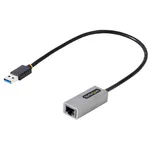
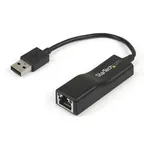
A wired network interface card (NIC) serves as the primary gateway for a device to communicate over a local or wide area network using Ethernet protocols. At its core, a NIC contains an Ethernet controller chip that manages the physical layer (PHY) and media access control (MAC) operations. The MAC address, a globally unique identifier hardcoded into the NIC, facilitates addressing frames at Layer 2 of the OSI model. The PHY component handles the electrical signaling and physical transmission over the medium, supporting various speeds and duplex modes. Modern NICs are highly sophisticated, incorporating dedicated processors and memory to offload networking tasks from the host CPU, enhancing overall system performance, particularly in high-throughput environments.
Performance Metrics and Standards
Ethernet Speed Designations and Applications
The speed of a wired NIC is a critical performance metric, directly impacting data transfer rates. Gigabit Ethernet (1GbE), utilizing IEEE 802.3ab standards, provides 1,000 Mbps throughput over Category 5e/6 copper cabling, suitable for most consumer and small-to-medium business applications. For more demanding tasks, 10 Gigabit Ethernet (10GbE), specified by IEEE 802.3ae for fiber and 802.3an for copper (10GBASE-T), offers 10,000 Mbps, essential for high-speed server connections, data center uplinks, and intensive video editing workstations. Beyond 10GbE, higher speeds like 25GbE (IEEE 802.3by), 40GbE (IEEE 802.3ba), and 100GbE (IEEE 802.3bj/bm/cd) are prevalent in hyperscale data centers, cloud infrastructure, and enterprise backbone networks, leveraging fiber optic cabling with SFP28, QSFP+, and QSFP28 transceivers, respectively. These higher speeds are crucial for minimizing latency and maximizing bandwidth for critical applications such as virtual machine migration, real-time analytics, and large-scale data backup.
PCI Express Interface Generations and Bandwidth
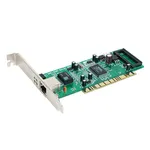
The connection between the NIC and the host system is predominantly facilitated by the PCI Express (PCIe) bus. The performance of the NIC can be severely limited if the PCIe interface does not provide sufficient bandwidth. PCIe generations (e.g., 2.0, 3.0, 4.0, 5.0) define the base transfer rate per lane, while the number of lanes (x1, x4, x8, x16) determines the total available bandwidth. For instance, a 10GbE NIC typically requires at least a PCIe 2.0 x4 or PCIe 3.0 x1 slot to achieve full throughput, whereas 25GbE and 40GbE cards often demand PCIe 3.0 x8 or PCIe 4.0 x4. Higher-speed 100GbE NICs frequently utilize PCIe 4.0 x8 or x16, or even PCIe 5.0 x8, to prevent the bus from becoming a bottleneck, ensuring that the network card can operate at its rated maximum theoretical speed. Compatibility between the NIC's PCIe generation/lane requirements and the motherboard's available slots is paramount for optimal performance.
Connectivity and Advanced Features
Copper vs. Fiber Optic Connectivity
Wired network cards support various physical media. Copper-based NICs predominantly use RJ45 connectors for twisted-pair Ethernet cables (Cat5e, Cat6, Cat6a, Cat7, Cat8), which are cost-effective and suitable for shorter distances within a rack or office environment. Fiber optic NICs, on the other hand, utilize SFP, SFP+, SFP28, QSFP+, or QSFP28 ports, requiring corresponding transceivers and fiber optic cables (multimode or single-mode). Fiber solutions offer significantly longer reach, immunity to electromagnetic interference, and are typically used for high-speed uplinks, data center interconnects, and backbone infrastructure. The choice depends on distance, required bandwidth, and environmental factors.
Hardware Offloading and Virtualization Support
Modern wired NICs incorporate advanced features to enhance efficiency and performance. TCP/IP Offload Engine (TOE) and Checksum Offloading reduce the CPU's workload by handling network protocol processing tasks directly on the NIC. Wake-on-LAN (WoL) allows a computer to be powered on remotely, a useful feature for remote administration. Jumbo Frame support enables larger Ethernet frames (up to 9KB), reducing header overhead and increasing throughput for large data transfers. For virtualized environments, Single Root I/O Virtualization (SR-IOV) allows multiple virtual machines to directly share a single physical NIC, bypassing the hypervisor for improved I/O performance and reduced latency. Remote Direct Memory Access (RDMA) over Converged Ethernet (RoCE) enables direct data transfer between server memories without CPU involvement, crucial for high-performance computing (HPC) and storage area networks (SANs).