

In-Depth Guide to Wireless Network Card Technologies
Understanding Wi-Fi Standards and Performance
The Evolution of Wi-Fi: From 802.11ac to Wi-Fi 7
Wireless network cards have undergone significant advancements, primarily driven by the evolution of IEEE 802.11 standards. Wi-Fi 5, officially 802.11ac, marked a pivotal shift by focusing on the 5 GHz band, introducing wider channels and multi-user MIMO (MU-MIMO) in its later revisions. It offered substantial speed improvements over its predecessors, making it suitable for high-bandwidth applications like HD video streaming.
Wi-Fi 6, or 802.11ax, represented a paradigm shift from pure speed to efficiency and capacity. Operating across both 2.4 GHz and 5 GHz bands, Wi-Fi 6 introduced Orthogonal Frequency-Division Multiple Access (OFDMA), allowing a single channel to be divided into smaller sub-channels, serving multiple users simultaneously. This dramatically improves efficiency in dense network environments. Further enhancements include 1024-QAM (Quadrature Amplitude Modulation) for higher data rates, Target Wake Time (TWT) for improved device battery life, and more robust MU-MIMO, supporting both uplink and downlink operations.
Wi-Fi 6E extends the capabilities of Wi-Fi 6 by adding support for the 6 GHz frequency band. This band offers up to 1200 MHz of additional spectrum, free from interference from older Wi-Fi devices and household appliances. This enables the use of wider, contiguous channels (e.g., 160 MHz channels) for significantly increased speeds and reduced latency, creating a dedicated express lane for Wi-Fi 6E-compatible devices.
The latest iteration, Wi-Fi 7 (802.11be), also known as Extremely High Throughput (EHT), builds upon these foundations. It introduces Multi-Link Operation (MLO), allowing devices to simultaneously transmit and receive data across multiple frequency bands and channels, aggregating bandwidth and dynamically steering traffic for optimal performance and resilience. Wi-Fi 7 further boosts speeds with 320 MHz channel widths and 4096-QAM, delivering unprecedented throughput and ultra-low latency, catering to future applications such as 8K streaming, VR/AR, and cloud gaming.
Frequency Bands: 2.4 GHz, 5 GHz, and 6 GHz
Wireless network cards operate across different frequency bands, each with distinct characteristics. The 2.4 GHz band offers a wider range and better penetration through walls due to its longer wavelength, but it is highly susceptible to interference from other devices like microwaves and Bluetooth, and generally provides lower speeds.
The 5 GHz band provides significantly higher speeds and greater capacity with less interference compared to 2.4 GHz. However, its shorter wavelength results in a reduced range and poorer penetration through obstacles. Most modern Wi-Fi 5 and Wi-Fi 6 devices utilize this band extensively.
The 6 GHz band, introduced with Wi-Fi 6E, is the newest frontier. It offers even greater capacity with numerous non-overlapping 160 MHz channels, drastically reducing congestion and interference. This band is ideal for high-bandwidth, low-latency applications but, like 5 GHz, has a limited range and penetration capabilities, making it best suited for use within the same room or close proximity to the access point.
Advanced Features and Connectivity
Antenna Technologies: MIMO and MU-MIMO
Multiple Input, Multiple Output (MIMO) technology uses multiple antennas on both the transmitter and receiver to improve communication performance. By sending and receiving multiple data streams simultaneously, MIMO enhances both throughput and range. MU-MIMO (Multi-User MIMO) is an evolution that allows an access point to communicate with multiple devices concurrently rather than sequentially. This is particularly beneficial in environments with many Wi-Fi-connected devices, as it significantly boosts overall network efficiency and ensures each device receives a dedicated stream, reducing wait times and improving individual user experience.
Interface Types: PCIe vs. USB
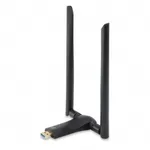
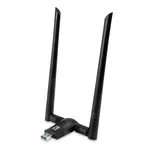
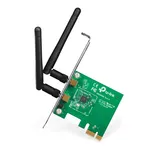
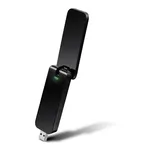
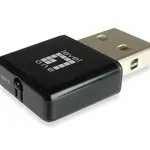
Wireless network cards are available in various interface types, primarily PCIe (Peripheral Component Interconnect Express) and USB (Universal Serial Bus). PCIe cards, typically M.2 or PCIe x1 form factors, are installed internally in desktop computers and some laptops. They offer superior bandwidth, lower latency, and a more stable connection, making them the preferred choice for high-performance and reliable wireless connectivity. USB adapters, on the other hand, are external and offer greater portability and ease of installation, compatible with a wider range of devices. While convenient, USB interfaces can sometimes be limited by the USB version's bandwidth and may experience slightly higher latency compared to PCIe solutions.
Security Protocols and Bluetooth Integration
Modern wireless network cards incorporate robust security protocols to protect data transmissions. WPA3 (Wi-Fi Protected Access 3) is the latest standard, offering stronger encryption, enhanced protection against brute-force attacks, and improved privacy for open networks through Opportunistic Wireless Encryption (OWE). Selecting a card with WPA3 support is crucial for maintaining a secure wireless environment.
Many wireless network cards also integrate Bluetooth connectivity, typically Bluetooth 5.x. This dual functionality allows a single card to provide both Wi-Fi and Bluetooth capabilities, freeing up other ports or PCIe slots. Integrated Bluetooth is convenient for connecting wireless peripherals such as headphones, keyboards, mice, and game controllers, streamlining device connectivity.