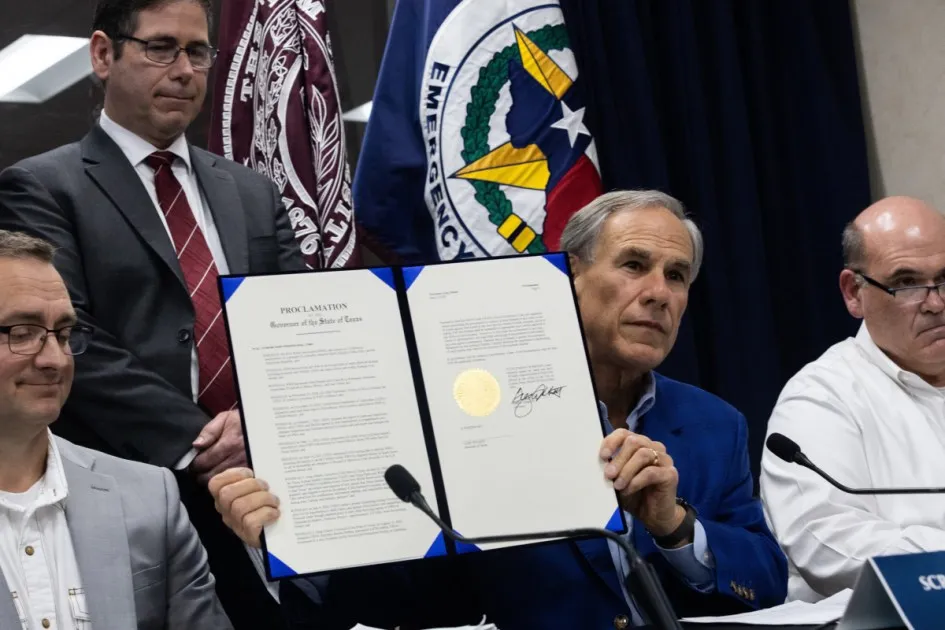
Governor Greg Abbott has significantly escalated the state’s response to the New World screwworm’s presence in Texas by issuing an expanded statewide disaster declaration. This proactive measure authorizes the full mobilization of state government resources to combat the escalating threat posed by this parasitic fly. The declaration empowers the governor to reallocate resources from across Texas as needed and to deploy state personnel, including those from university systems, to expedite the crucial tasks of distributing sterile flies and constructing a dedicated sterile fly production facility in South Texas. The primary objective behind introducing sterile flies is to disrupt and ultimately break the reproductive cycle of the screwworm, thereby preventing further infestation and damage.
The immediate focus of this intensified response is on Zavala County, where the initial case of screwworm was confirmed, and the adjacent Uvalde County. The U.S. Department of Agriculture (USDA) has implemented stringent containment measures, including a 20-kilometer quarantine zone around the infested areas. This quarantine restricts the movement of animals out of the zone without thorough inspection. A broader surveillance zone, encompassing areas like Uvalde, Lima Grande, and Crystal City, has also been established, extending around the confirmed infestation points in Zavala County and along the Nueces River. Governor Abbott’s expanded proclamation builds upon a prior disaster declaration issued in January, underscoring the evolving severity of the situation and the necessity for comprehensive governmental action.
Combating the New World Screwworm
The sterile fly strategy, championed by the USDA and supported by state efforts, involves releasing male flies that have been sterilized. These sterile males mate with wild female screwworm flies. As female screwworms can mate only once in their lifetime, these mating encounters result in the production of non-viable eggs, effectively halting the reproductive cycle. This method is considered the most efficient means of eradicating the pest population. The USDA is investing in the construction of a significant facility in Edinburg, Texas, designed to produce an estimated 300 million sterile flies weekly, though operational commencement is not anticipated until fall 2027. Concurrently, federal officials are collaborating with Mexican authorities to establish a similar facility in Metapa, Mexico, slated to open later this month. The sole currently active sterile fly production facility is located in Panama, from which sterile flies are being transported to dispersal hubs in Mexico and Edinburg, Texas.
Federal officials have already deployed substantial resources, including the distribution of over 130 million sterile flies across Texas since January. Eleven shipments, each containing between 80,000 and 100,000 sterile flies, have been released. The USDA has been actively dropping approximately 4 million sterile flies weekly over the affected areas. Despite these efforts, there is a noted urgency from some stakeholders, such as rancher Nowell Borders, who suggests that pop-up facilities could be operational much sooner, potentially within a month, and advocates for immediate dispersal of sterile flies to areas as far north as San Antonio. The scale of the screwworm threat extends beyond livestock, posing a significant concern for Texas’s multi-billion dollar wildlife and hunting industry, particularly impacting deer populations which are harder to monitor and treat.
Economic and Agricultural Implications
The economic ramifications of a widespread screwworm outbreak are substantial. According to estimates from the U.S. Department of Agriculture, the pest could inflict up to $1.8 billion in damages to the Texas economy. Given Texas’s pivotal role in the national cattle industry, an uncontrolled infestation could exacerbate already record-high beef prices across the country. The parasitic nature of the New World screwworm is particularly devastating to livestock. The flies lay eggs in open wounds on animals, and the subsequent larvae feed on the animal’s flesh. This infestation causes significant tissue damage, leading to severe illness, and in many cases, death. Cattle are especially vulnerable due to their difficulty in protecting wounds, and their body size can allow for multiple larval development sites from a single injury. Even if an animal survives, the resulting damage to its hide and overall health can be considerable, impacting its value and productivity.
The current response has not been without its critics and concerns regarding communication. Some local officials, like Val Verde County Judge Lewis Owens, have expressed frustration over a perceived lack of timely and sufficient information from federal agencies, particularly the USDA. This information gap leaves local leaders unable to effectively address constituent concerns or implement targeted prevention strategies. While the USDA has defended its response timeline, citing projections of the pest’s arrival, and has worked to assure the public that screwworms do not contaminate meat or produce, the economic and agricultural stakes remain exceptionally high. State law grants the Texas governor broad emergency powers, including the ability to waive regulations that might impede the state’s response capabilities during such crises.
Containment and Surveillance Measures
The USDA’s Animal and Plant Health Inspection Service (APHIS) has implemented a strict quarantine zone spanning 20 kilometers around the primary infestation area in Zavala County. This measure is critical in preventing the spread of infected animals, which serve as the primary vector for the screwworm flies. Animals within this zone require thorough inspection and approval before any movement is permitted. Complementing the quarantine is a wider surveillance zone, which includes neighboring counties and significant river systems, ensuring that potential secondary outbreaks are detected early. State agencies have been directed to maintain readiness, with resources from across the state being mobilized as necessary to support the ongoing containment and eradication efforts.
The confirmation of the first U.S. case involved a sample from a three-week-old calf in La Pryor, Zavala County. While subsequent inspections of the calf's herd did not reveal additional cases, and there have been no further confirmed instances nationwide to date, the potential for rapid proliferation necessitates the current level of alert. The USDA is actively working with local partners and has personnel on the ground, emphasizing that while the situation is serious, it is being managed through established protocols for invasive species control. The long-term strategy hinges on the effective mass production and widespread dispersal of sterile flies, a process that requires significant infrastructure and coordination between federal, state, and international partners to achieve eradication.
Impact Analysis
The escalating New World screwworm infestation in Texas presents a complex challenge that integrates agricultural economics, ecological concerns, and inter-agency coordination. Governor Abbott's expanded disaster declaration signifies the state's commitment to leveraging all available resources to prevent a potentially catastrophic economic downturn, particularly impacting the livestock sector. The $1.8 billion potential economic damage highlights the severity of this threat, which could reverberate through national food supply chains and contribute to increased consumer costs for beef. Furthermore, the potential impact on wildlife populations, especially deer, introduces an ecological dimension to the crisis, affecting industries reliant on hunting and tourism. The effectiveness of the sterile fly program, dependent on timely and large-scale implementation, will be crucial in mitigating these widespread impacts. Delays in facility production or distribution could significantly amplify the economic and ecological damage, underscoring the need for rapid and sustained intervention.