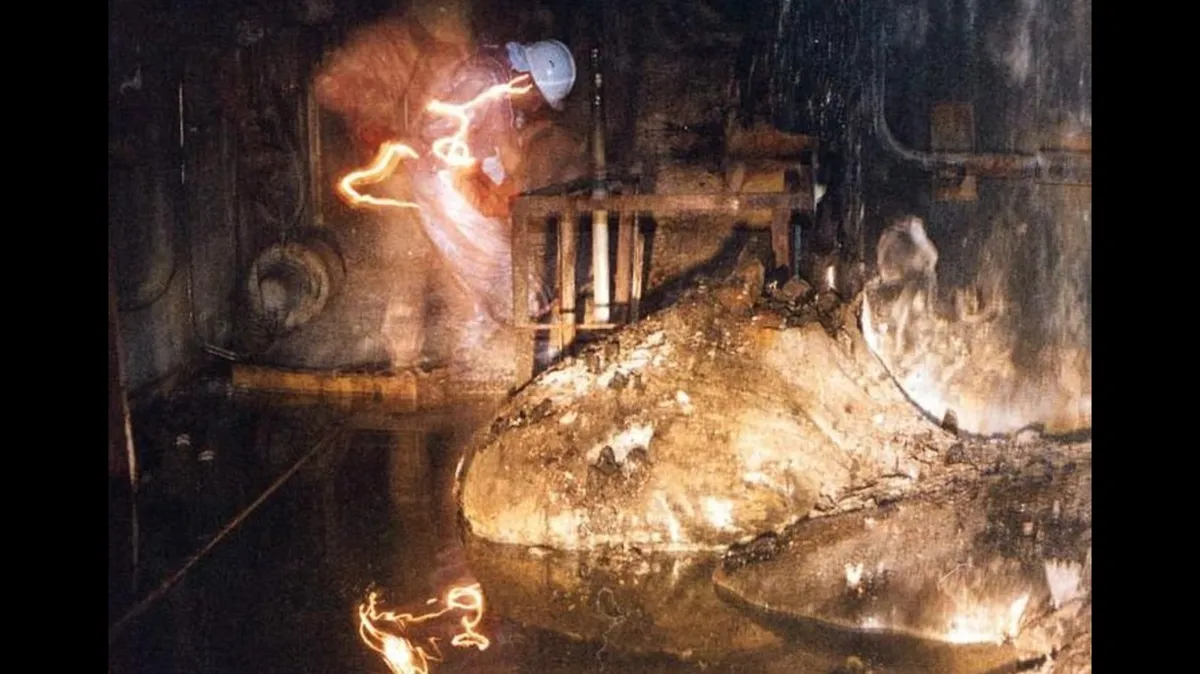
Forty years after the catastrophic meltdown of Reactor 4 at the Chernobyl Nuclear Power Plant in 1986, the site remains a stark testament to the perils of nuclear energy and the severe consequences of human error when safety protocols are compromised. While some of the radioactive scars from that devastating event have begun to fade, others persist with an undiminished intensity. Lurking beneath the surface of the Chernobyl exclusion zone, one such enduring scar is "The Elephant's Foot," an unintentional byproduct of the disaster that may well be the most hazardous man-made object ever created.
This formidable formation resides within the ruins of Reactor 4, a solidified mass of corium resembling the foot of a colossal elephant, hence its chilling moniker. Corium, scientifically termed a lava-like fuel-containing material (LFCM), is the result of nuclear fuel and reactor components melting into a molten state. In the specific case of The Elephant's Foot, its composition is further complexified by numerous other elements and materials it consumed as it burned its way through the reactor structure, ultimately settling in a maintenance corridor below where it continues to exist as a highly radioactive slag.
Chernobyl's Elephant Foot: A Unique Radioactive Amalgamation
The discovery of The Elephant's Foot occurred several months post-accident, in December 1986, when radiation monitoring teams encountered it during an investigation of the corridors beneath the reactor. The intense heat from the meltdown caused the reactor core, fuel rods, graphite moderator elements, and various nuclear fuels to fuse together. This resulted in a molten, radioactive sludge that relentlessly melted through the lower reactor structure, accumulating and fusing with other materials such as steel, glass, sand, and concrete as it descended. Upon cooling in the basement, the mass solidified into a dark, ceramic-like substance. Its final composition is a hazardous cocktail of numerous fission products, melted construction materials, and heavy elements like uranium and zirconium.
This perilous fusion of nuclear fuel and fission byproducts is what defines corium, a uniquely dangerous material born from nuclear catastrophe and human error. Corium has only been documented in a handful of instances throughout history: once at Chernobyl, once during the Three Mile Island accident, and on three separate occasions following the Fukushima Daiichi nuclear disaster. When first discovered, the corium mass of The Elephant's Foot was emitting approximately 10,000 roentgens per hour, a level of radiation that would prove lethal with only a few minutes of exposure. The Elephant's Foot represents only a fraction of the estimated 100 tons of corium present beneath the Chernobyl site. While the intense radioactivity has diminished over the decades due to the natural decay of its constituent elements, it remains a significant radiation hazard and is expected to pose risks for many more years.
Chernobylite: A Technogenic Crystal Unique to the Disaster Zone
As the corium masses within Chernobyl cooled and interacted with the surrounding environment, a distinctive crystalline mineral known as Chernobylite began to form. These crystal formations emerge when corium is exposed to air and steam and are found exclusively in the Chernobyl region. A similar, though not identical, substance is Trinitite, a glass-like radioactive material formed from the fusion of soil following the Trinity nuclear test in 1945. Chernobylite crystals represent another dangerous byproduct of nuclear fallout, containing significant concentrations of uranium and zirconium, alongside other contaminated radioactive materials from the nuclear processes.
The study of corium and Chernobylite presents considerable challenges due to their formation exclusively in the aftermath of nuclear disasters, not to mention the extreme radiation risks associated with handling real-world samples. However, scientific advancements have enabled the successful simulation of certain lava-like fuel-containing materials (LFCMs) in laboratory settings to better understand their behavior. Research published in Nature details the recreation of these LFCMs to analyze their corrosive properties, crucial information for the long-term management of sites like Chernobyl. This same study also succeeded in synthesizing a material analogous to Chernobylite, potentially offering deeper insights into its formation process during corium development. Such understanding is vital for shaping future nuclear reactor designs and ensuring enhanced safety protocols.
Impact Analysis
The existence of The Elephant's Foot and Chernobylite underscores the long-term, multifaceted dangers posed by nuclear accidents. These formations are not only immediate radiation hazards but also represent complex materials that require specialized scientific study for safe management and eventual remediation. The ongoing research into their properties, often involving synthesized analogues, contributes to a broader understanding of nuclear material behavior under extreme conditions. This knowledge is critical for improving nuclear reactor safety, developing effective disaster response strategies, and ensuring the secure handling of radioactive waste in the future, ultimately aiming to prevent the creation of similarly hazardous man-made objects.