

Deep Dive: Understanding Essential Dehydrator Components and Their Impact on Performance
Tray Systems and Food Contact Surfaces
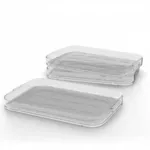
The core interface between the food and the dehydrator's environment lies within its tray systems and specialized sheets. Dehydrator trays are commonly manufactured from either BPA-free polypropylene, ensuring food safety and ease of cleaning, or stainless steel, prized for its exceptional durability, resistance to odors, and superior heat distribution properties. Stainless steel trays often provide a more even drying surface and are less prone to warping over time compared to some plastic alternatives. Mesh screens, frequently crafted from fine-weave polypropylene or silicone, are essential for preventing smaller food items from falling through grates and for delicate items like herbs. Silicone fruit roll sheets offer non-stick properties, making the removal of sticky purees effortless, while also being highly flexible and heat resistant. The design of these trays, including perforation size and spacing, directly impacts airflow dynamics, influencing drying consistency and efficiency across all levels of the dehydrator.
Material Science in Dehydrator Trays
Polypropylene (PP) is favored for its cost-effectiveness, chemical resistance, and relatively high melting point, making it suitable for standard dehydrating temperatures up to approximately 250°F (121°C). When specified as BPA-free, it negates concerns about endocrine disruptors. Stainless steel, typically Type 304 or 316, offers superior thermal conductivity and is inert, preventing any interaction with acidic foods. Its robustness ensures longevity under repeated heating and cooling cycles. Silicone, a synthetic polymer, excels in extreme temperature resistance (often -40°F to 500°F), non-stick properties, and flexibility, making it ideal for specialized applications like fruit leathers.
Core Mechanical and Electrical Components
Motor and Fan Assemblies
The motor and fan assembly is the dehydrator's heart, responsible for circulating heated air evenly across all trays. Dehydrators typically utilize either axial fans for horizontal airflow models or radial/centrifugal fans for vertical airflow units. The motor's efficiency, measured in watts, directly correlates to its ability to move a sufficient volume of air, often expressed in CFM (Cubic Feet per Minute). A powerful, yet quiet, motor paired with an optimally designed fan blade ensures uniform dehydration, preventing hotspots and cold spots that can lead to uneven drying and potential spoilage. Brushless DC motors are increasingly common in higher-end models for their longevity, lower noise output, and energy efficiency compared to traditional brushed AC motors.
Heating Elements and Thermostats
The heating element, typically a coiled resistance wire, converts electrical energy into thermal energy. Its wattage determines the maximum achievable temperature and heating speed. Precision in temperature control is provided by the thermostat, which monitors the internal air temperature and cycles the heating element on and off to maintain the set point. Modern dehydrators often incorporate digital thermostats with thermistor or thermocouple sensors, offering greater accuracy (within ±1-2°F) compared to older bimetallic strip thermostats. This precision is crucial for food safety, particularly when drying meats for jerky, where specific temperatures are required to eliminate pathogens.
Air Filters and Gaskets
While often overlooked, air filters play a role in maintaining the internal hygiene of the dehydrator by preventing dust, pet hair, or other airborne contaminants from entering the drying chamber. These are typically fine mesh screens or foam filters, requiring regular cleaning or replacement. Gaskets, usually made of food-grade silicone or rubber, are critical for sealing the dehydrator door or lid. A well-sealed chamber minimizes heat loss and maintains consistent internal humidity, thereby improving energy efficiency and accelerating the drying process. Degraded or cracked gaskets can lead to significant thermal inefficiency and extended drying times.