

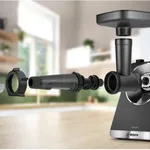

Deep Dive into Mincer Accessory Engineering and Application
The performance of a meat mincer is intrinsically linked to the engineering precision and material quality of its accessories. Understanding the technical specifications of each component is crucial for achieving desired culinary outcomes and extending equipment longevity.
Grinding Plates: The Foundation of Texture
Grinding plates, often referred to as grinding discs, are perhaps the most critical accessory for dictating meat texture. These hardened steel discs feature precisely drilled holes, ranging from ultra-fine (e.g., 3mm for pâtés or baby food) to very coarse (e.g., 12mm or kidney plates for chunky chili or stew meat). Intermediate sizes like 4.5mm (fine mince for burgers), 6mm (general-purpose), and 8mm (coarse sausage) are common. The material is typically heat-treated high-carbon steel for sharpness and wear resistance, or food-grade stainless steel for superior corrosion resistance and hygiene, especially in commercial environments. The plate’s fit against the blade is crucial; a perfectly flat, sharp plate face ensures a clean cut, minimizing smearing and heat generation.
Mincer Blades: Precision Cutting Instruments
Mincer blades, or knives, work in conjunction with the grinding plates to slice the meat as it's forced through the plate's apertures. Most common are four-wing or cross-style blades. Advanced designs include twin-sided blades, which offer twice the cutting life by simply flipping them over, and self-sharpening blades designed to maintain their edge through friction with the grinding plate. The blade material is vital; high-quality stainless steel or hardened tool steel with proper heat treatment provides exceptional edge retention and resistance to wear. A dull or poorly fitted blade leads to meat tearing, excessive heat build-up, and an undesirable mushy texture, compromising both flavor and appearance.
Sausage Stuffing Tubes: Crafting Artisanal Links
For charcuterie enthusiasts and commercial producers, sausage stuffing tubes are indispensable. These tapered nozzles attach to the mincer head, guiding ground meat into natural or synthetic casings. They come in various diameters, typically ranging from 10mm (for snack sticks or breakfast sausages) to over 30mm (for large salamis or kielbasa). Material choices include durable, food-grade plastic or hygienic stainless steel. Stainless steel tubes are preferred for their longevity, ease of sterilization, and resistance to odor absorption. The internal smoothness and consistent taper of the tube are critical to prevent casing tears and ensure a uniform fill, which is essential for consistent cooking and curing.
Specialized Attachments: Expanding Mincer Utility
Beyond the core grinding components, specialized attachments significantly expand a mincer's utility. Kibbeh attachments, for instance, are unique dies that extrude hollow meat tubes, simplifying the preparation of this traditional Middle Eastern dish. Grater and shredder attachments convert a mincer into a versatile food processor for vegetables, cheese, and even breadcrumbs, typically featuring various drum styles for different cuts (e.g., fine shred, coarse shred, slicer). These attachments require robust construction and precise fitting to ensure safe operation and efficient processing of diverse food types.
Material Science and Maintenance
The choice of material for mincer accessories is not solely about cost; it profoundly impacts hygiene, durability, and performance. Food-grade stainless steel (e.g., 304 or 420 stainless) offers superior corrosion resistance, making it ideal for wet environments and acidic foods, and is easier to sanitize. Cast iron components, while robust, require meticulous cleaning, immediate drying, and occasional oiling to prevent rust. Proper maintenance, including thorough cleaning immediately after use, complete drying, and storing parts with a thin layer of food-grade mineral oil (especially for carbon steel or cast iron components), is paramount to prevent bacterial growth, corrosion, and to ensure the longevity and safe operation of all mincer accessories.