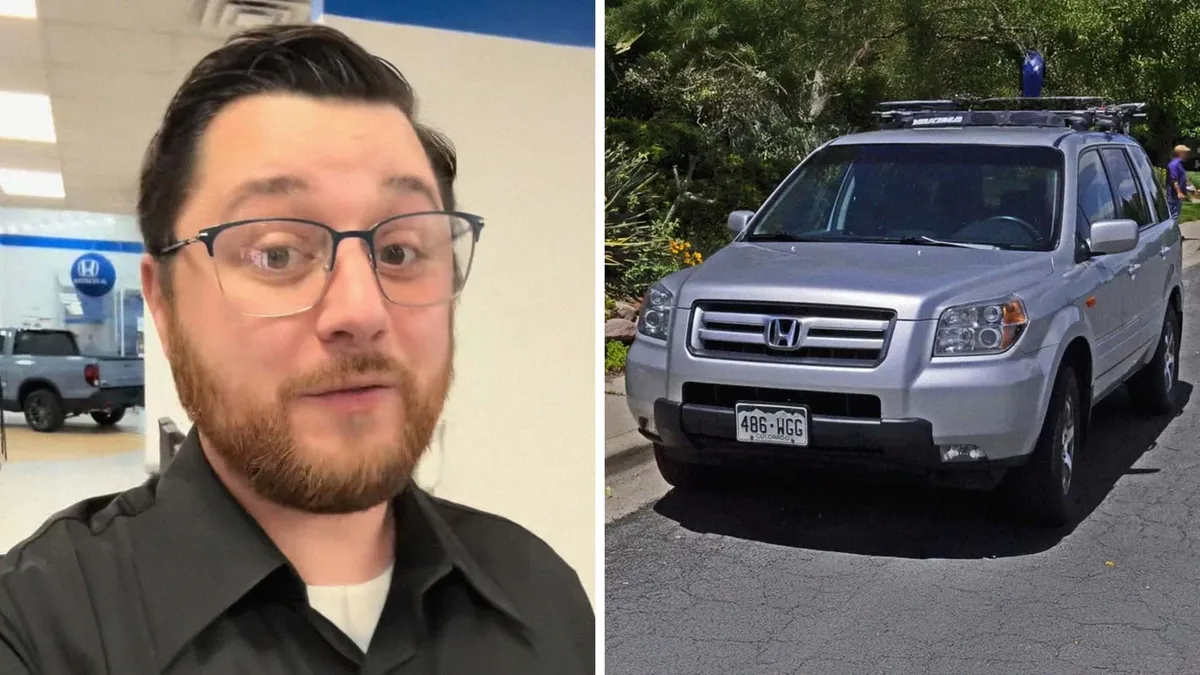
A routine service visit for a 2006 Honda Pilot took an unexpected turn when technicians at Bill Cole Automall in Bluefield, West Virginia, discovered critical structural damage. The vehicle's frame was found to be so severely compromised by rust that it was deemed unsafe to drive. This discovery led the owner to trade in the SUV rather than invest in costly repairs.
Tyler Weaver, a salesman at the dealership who documented the incident in a viral TikTok video, explained that the customer initially brought the 2006 Pilot in for an oil change and brake replacement. However, upon inspection, the team identified extensive rust compromising the vehicle's entire frame, rendering it a significant safety hazard.
A Costly Discovery for a 2006 Honda Pilot
The extent of the corrosion meant that the cost of repairing the frame, combined with the necessary brake and rotor work, oil change, and tire rotation, far exceeded the trade-in value of the vehicle. Weaver noted that visually, the Pilot appeared to be in good condition, making the discovery of the underlying structural issues even more significant.
"It was going to cost her more to fix the vehicle than it was to trade it," Weaver stated in his social media post, highlighting the economic reality for the owner. Faced with a repair bill potentially higher than a new vehicle, the customer elected to explore other options, ultimately deciding on a new Honda CR-V.
Understanding the Frame Rust Issue in First-Generation Honda Pilots
The issue encountered with the 2006 Honda Pilot is a well-documented problem affecting first-generation models produced between 2003 and 2008. These vehicles feature a unibody construction, and their rear frame mounting points are particularly susceptible to severe rust, especially in regions where road salt is used during winter months.
The corrosive process often begins from the inside out, between layers of steel, making it difficult to detect externally. This can lead to critical structural weakening over time. Honda acknowledged this vulnerability in a 2022 service bulletin, which outlined the necessary repair procedures. However, this bulletin was not a recall, meaning customers were responsible for the repair costs.
The Customer's Decision and Social Media Reactions
Ultimately, the owner opted for a brand-new 2026 Honda CR-V in Radiant Red, leaving the severely rusted Pilot behind. The TikTok video sparked considerable discussion online, with many viewers expressing skepticism and questioning the dealership's motives. Some commenters suggested a conflict of interest, given that the dealership would profit from both the diagnosis and the subsequent sale of a new vehicle.
Concerns about potential upselling and the need for independent verification of such serious repair recommendations were also raised. However, Weaver addressed some of these concerns by posting follow-up videos showing the extensive damage, and other users shared advice on preventative measures like undercoating and annual inspections for vehicles in rust-prone areas. This incident underscores the importance of thorough inspections, particularly for older vehicles in climates exposed to road salt.
Impact Analysis
This incident involving the 2006 Honda Pilot highlights a significant, albeit well-known, issue with first-generation models, specifically concerning frame rust in areas that use road salt. It underscores the importance of preventative maintenance and regular inspections for aging vehicles, especially those in harsh climates. While the dealership's diagnosis was critical for safety, the consumer's experience also points to a broader need for transparency in automotive repair. The significant cost of repair versus replacement for such issues forces difficult decisions for owners and can impact brand loyalty, as seen in the customer's switch from a Pilot to a CR-V.