The prevailing anti-establishment sentiment across Western democracies is forcing a re-evaluation of political strategies, particularly for the Democratic Party in the United States. As President Donald Trump's approval ratings face decline, attention is turning to the potential shape of a resurgent Democratic Party. Recent electoral events, such as Governor Janet Mills' withdrawal from the Maine Senate primary due to a significant deficit against challenger Graham Platner, and the complex Michigan Senate primary involving Abdul El-Sayed and podcaster Hasan Piker, highlight the volatile nature of current political allegiances and the public's appetite for alternative voices. This dynamic is setting the stage for early maneuvering in the 2028 presidential nomination race, signaling a period of introspection and strategic realignment for the party.
The core of this shift lies in understanding the electorate's profound dissatisfaction with traditional institutions. This anti-establishment mood has been the bedrock of Trump's political success and is mirrored internationally, as seen in the UK's local election results where Reform UK, led by Nigel Farage, gained traction. Western democracies are confronting a populace increasingly skeptical of established political norms, making them receptive to unconventional or even extreme alternatives as a means to express discontent and a desire for radical change. This necessitates a more direct engagement with the tangible economic concerns of voters.
Reconnecting with Working-Class Voters Through Policy and Theme
Efforts to regain the trust and support of working-class voters are a central challenge for Democrats. Analysis from sources like The Washington Post indicates a divergence in approaches. Progressive candidates are proposing specific, tangible policies aimed at improving affordability, such as caps on childcare costs and down payment assistance for first-time homebuyers. These proposals, while potentially popular, face the practical hurdle of implementation in a politically divided Congress and amidst a mounting national debt. The viability of such ambitious programs hinges on finding a consensus that can overcome legislative gridlock and fiscal constraints.
Conversely, more moderate Democrats are advocating for policies focused on economic growth and deregulation. However, these broader, less defined goals may fail to resonate with voters grappling with immediate economic pressures. The criticism suggests that a focus on abstract concepts like "regulatory reform" misses the mark, as voters prioritize issues like the cost of fuel. Furthermore, the perceived failure of the Obama administration to adequately address the 2008 financial crisis after-effects is seen as having created an opening for populist movements to gain ground, a lesson that moderates might be overlooking.
Developing a Unifying Theme: The New Social Contract
To effectively capture the electorate's attention and support, progressive economic proposals need a cohesive, easily digestible theme. Historical precedents like Franklin D. Roosevelt's "New Deal" and Lyndon B. Johnson's "Great Society" demonstrate the power of overarching narratives in uniting diverse policy initiatives. The common thread in these successful programs was a renegotiation of the social contract, adapting governmental roles to meet evolving societal needs. In the context of contemporary socioeconomic shifts, a similar reimagining is required.
The evolving role of women in the workforce and the changing structure of families, with fewer multi-generational households in close proximity, necessitate robust government support for childcare. As dual-income households become the norm, the state's role in providing accessible childcare solutions becomes paramount. This initiative, coupled with a broader re-evaluation of the responsibilities of the wealthy and corporations towards societal well-being, forms the basis of a potential new social contract. 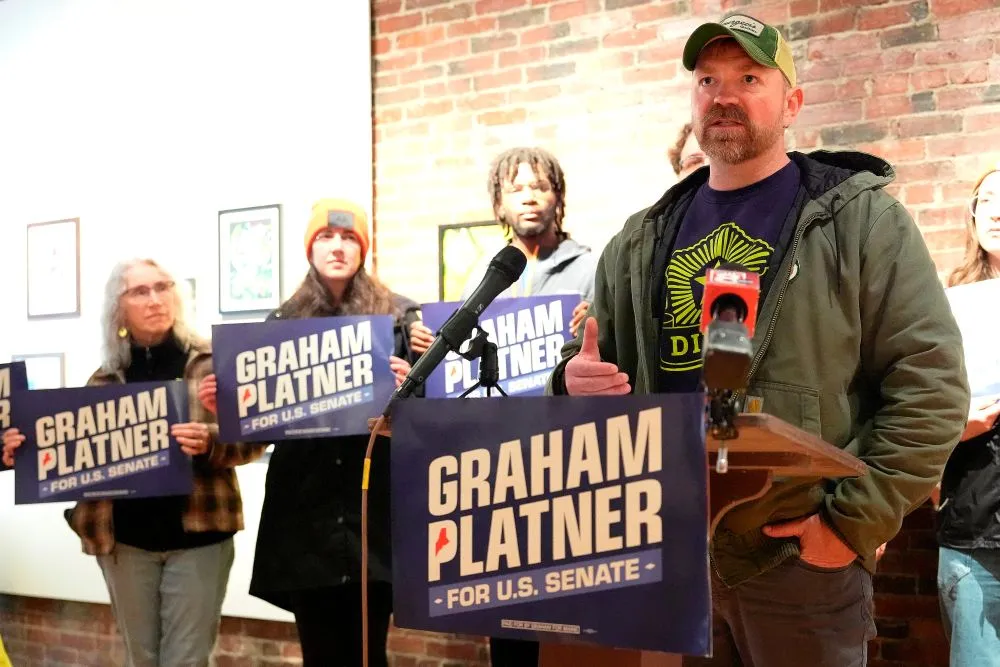
Addressing Wealth Inequality and Corruption
The era of high marginal tax rates, particularly in the post-war period, served not only to fund social programs but also to curb extreme wealth accumulation and its associated societal influence. The current economic landscape, marked by the immense wealth and power of tech titans and financial magnates, mirrors the "robber baron" era of the past. A renegotiation of the social contract is thus essential to rebalance the relationship between the economic elite and the broader public, ensuring that wealth confers responsibility, not unchecked power.
Furthermore, the increasing influence of financial interests in politics, exemplified by the substantial spending of the pro-crypto lobby in key Senate races and overall corporate campaign funding, highlights a critical area for reform. The proliferation of cryptocurrencies, often criticized as speculative vehicles facilitating gambling and illicit activities, represents a tangible symptom of an unregulated market economy's potential for corruption. Engaging in a robust fight against such financial misconduct, potentially spearheaded by figures like Ben McKenzie through public awareness campaigns, can serve as a unifying element for a broader anti-corruption movement.
Impact Analysis
The proposed strategy of framing progressive economic policies under the banner of a "new social contract" and an aggressive stance against corruption offers a powerful narrative for the Democratic Party. This dual focus addresses both the immediate economic anxieties of working-class voters and their concerns about fairness and accountability in the political and economic systems. By providing clear, actionable policy proposals linked to a compelling theme, Democrats can differentiate themselves from populist opponents and potentially forge a durable governing majority capable of enacting meaningful change. The fight against financial deregulation and the unchecked influence of wealth is likely to be a defining issue in upcoming electoral cycles.