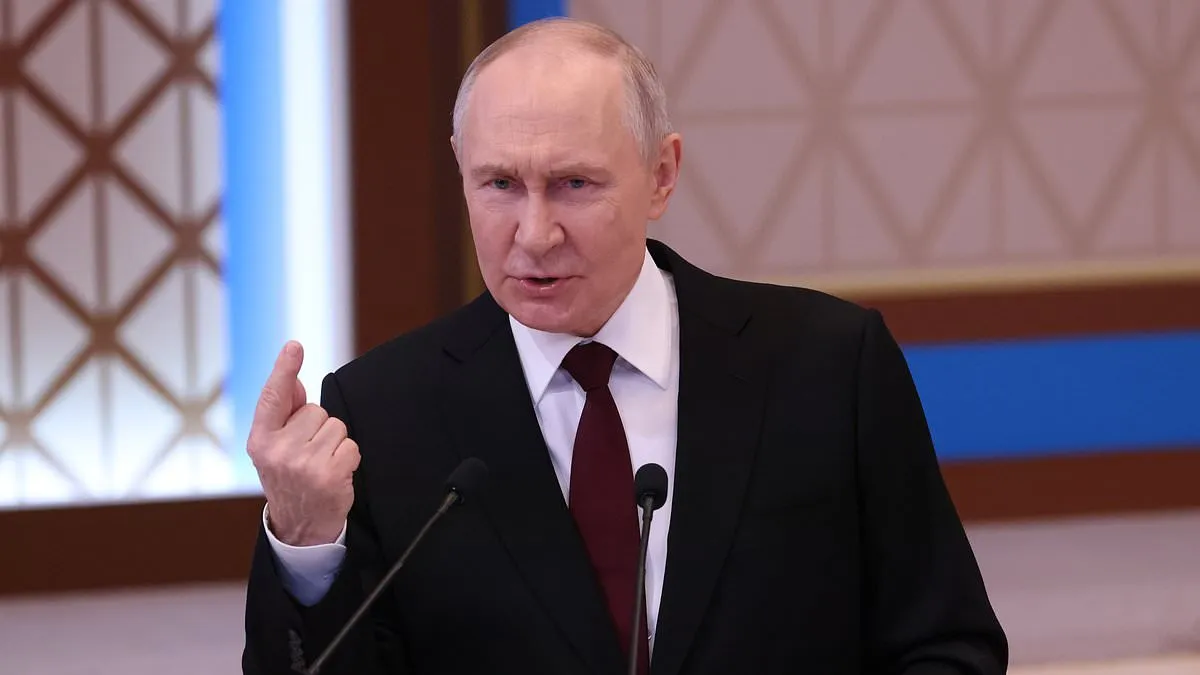
Russian President Vladimir Putin has strongly refuted claims that his nation's economy is on the verge of collapse, despite the ongoing conflict in Ukraine and stringent Western sanctions. Speaking at Russia's premier economic forum, Putin dismissed Western critiques, asserting that Russia is building a 'sovereign' economy and has not experienced the stagnation seen in some Eurozone countries. He posited that Western unilateral sanctions have fundamentally undermined global economic stability and eroded trust in international currencies like the US dollar and the Euro. By freezing Russian assets, he argued, Western nations have demonstrated that any country could potentially face similar restrictions, thereby diminishing the perceived security of holding assets in these Western currencies.
Putin articulated a perspective where global shifts, driven by geopolitical events and economic realignments, present significant opportunities alongside perceived threats. He emphasized Russia's intention to act with agility and pragmatism to leverage these changes. The Russian leader further contended that high levels of state debt within Western nations have contributed to a decline in global confidence in their financial institutions. Putin's remarks aim to project an image of economic resilience and strategic foresight, positioning Russia as a nation capable of navigating complex international pressures and charting its own economic course, independent of Western influence.
Economic Resilience and Fiscal Pressures
Despite President Putin's assertions of economic strength and a pursuit of a sovereign economic model, internal reports and analyses suggest significant fiscal pressures are mounting within Russia. Projections from Russia's Finance Ministry and its central bank indicate a widening budget deficit, particularly if current defense expenditure levels are maintained. This warning comes at a time when Russia has experienced setbacks on the Ukrainian front, with Ukraine regaining territory for consecutive months. These military developments coincide with domestic economic challenges, including reports of shortages in some regions and a general strain on the nation's financial resources.
The debate surrounding defense spending highlights a divergence of opinion among Russian policymakers. While senior defense officials and some Kremlin figures advocate for shielding military expenditure from potential cuts to support the war effort and associated industries, others, including the Finance Ministry, are pushing for reductions to address the growing budget deficit. The argument for maintaining high defense spending centers on the significant number of businesses reliant on military contracts, suggesting that cuts could have a detrimental impact on a substantial segment of the industrial economy. The ultimate decision rests with President Putin, who must balance these competing interests against the backdrop of sustained international sanctions and ongoing military operations.
Sanctions Impact and Alternative Economic Architectures
Putin's narrative directly addresses the impact of Western sanctions, arguing that they have backfired by damaging the standing of the dollar and the Euro. He posits that the freezing of Russian reserves serves as a cautionary tale for other nations, highlighting the risks associated with reliance on Western financial systems. This perspective fuels Russia's drive toward developing a more 'modern, flexible, and responsible financial architecture,' one that is purportedly free from the 'risks, bans, and barriers' imposed by unilateral sanctions. The emphasis is on building an independent financial infrastructure that can withstand external pressures and facilitate international trade and investment on Russia's terms.
The macroeconomic stability highlighted by Putin is contrasted with the potential for a widening budget deficit, particularly if defense expenditures continue at their current pace. Official data indicates a significant budget shortfall for the initial months of the year, already a substantial portion of the target for the entire year. While Russia's state debt is reportedly lower than that of many Western countries, the strain on liquid reserves in the National Wellbeing Fund and the fiscal challenges posed by the ongoing conflict necessitate careful management. The government's efforts to maintain fiscal discipline, including tax increases, underscore the complex economic environment Russia is navigating.
Military Spending Debate and Fiscal Realities
The internal discussions regarding budget priorities reveal a strategic dilemma for the Kremlin. Some officials had initially anticipated a potential resolution to the conflict in Ukraine, which would have allowed for defense spending reductions in the medium term. However, the persistence of the war and the associated high costs have led to a re-evaluation of fiscal planning. The Defense Ministry is reportedly seeking additional funding to cover wartime expenses, potentially exacerbating the budget gap. This situation forces a difficult choice between sustaining military operations, supporting defense-related industries, and managing the broader national budget to avoid unsustainable deficits.
Sources close to the Russian government suggest that President Putin has been briefed on these mounting fiscal pressures for some time. The debate over spending cuts is not new and predates recent geopolitical events. The Ukrainian Ministry of Economy's projections for economic growth have been revised downward, indicating a potential move towards recession. This economic slowdown, coupled with the sustained costs of the conflict and the impact of sanctions, creates a challenging environment for economic policy. The effectiveness of higher oil prices in mitigating these pressures is also viewed with skepticism by some officials, who believe deeper structural reforms are necessary to ensure long-term economic health.
On-the-Ground Realities and Economic Outlook
While official rhetoric emphasizes resilience, on-the-ground reports and analyses suggest a more complex economic picture. The net territorial gains made by Ukraine in recent months, coupled with ongoing military actions, indicate the continued strain of the conflict. Reports of petrol shortages in regions like Crimea and the broader economic impact of sustained military engagement paint a picture of an economy under considerable pressure. The reliance on defense contracts for a significant portion of industrial output means that any shift in military spending could have ripple effects across various sectors.
The Russian economy's performance is closely scrutinized, with GDP growth forecasts being revised downwards. The admission by officials that the economy is facing challenges, despite rising oil revenues linked to Middle Eastern conflicts, underscores the multifaceted nature of Russia's economic situation. The widening budget deficit, combined with a significant reduction in the National Wellbeing Fund's reserves compared to pre-invasion levels, highlights the financial costs associated with the protracted conflict and international isolation. The long-term economic outlook remains contingent on the resolution of the conflict, the effectiveness of domestic economic reforms, and the evolving landscape of international sanctions and trade relations.
Impact Analysis
President Putin's efforts to project economic strength and champion a 'sovereign' economic model are crucial for maintaining domestic confidence and projecting an image of geopolitical resilience internationally. However, the underlying fiscal pressures, particularly the widening budget deficit and the ongoing debate over defense spending, reveal significant challenges. The conflict in Ukraine and the extensive sanctions regime continue to exert pressure on Russia's economy, forcing difficult choices between military imperatives and fiscal stability. The success of Putin's strategy will depend on his administration's ability to navigate these competing demands, foster genuine economic diversification beyond defense industries, and find sustainable solutions to structural economic weaknesses. The global financial architecture itself is also being tested, as countries reassess their reliance on traditional Western-dominated systems in light of geopolitical volatility.