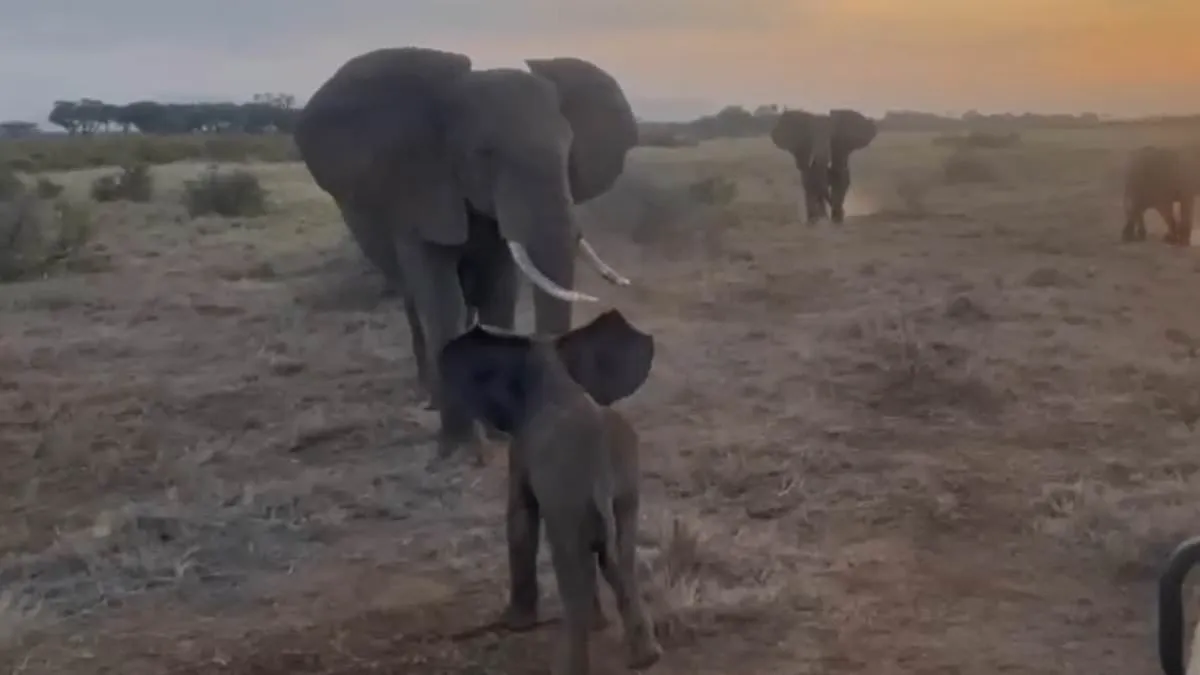
A deeply moving incident unfolded in Kenya's Samburu National Reserve, where a four-month-old elephant calf, separated from its family, was successfully reunited with its herd. The calf had inadvertently wandered into a tourist camp, prompting staff to contact local elephant researchers. Professor George Wittemyer of Colorado State University, leading the research effort, and his team embarked on a critical mission to locate the missing elephant's family.
The operation involved extensive scouring of the vast Samburu reserve. Upon identifying a herd with a high probability of being the calf's family, the researchers initiated the reunion process. After ensuring the distressed calf was hydrated and received a cooling mud bath, it was carefully transported back to the potential family group. The veterinarians and researchers observed with bated breath as the young elephant tentatively emerged from the transport trailer.
The Emotional Reunion and Elephant Social Dynamics
The moment of truth arrived when Adelaide, the calf's aunt, recognized the young one and approached. A series of trumpets and answering calls from the calf initiated a cascade of recognition throughout the herd. This led to what Professor Wittemyer described as a 'greeting ceremony,' a powerful display of elephant social bonding. Each member of the herd approached the calf, encircling it in a clear demonstration of communal welcome and acceptance.
Professor Wittemyer elaborated on the profound social structures of elephants, highlighting their lifelong, robust bonds. He likened these intricate social networks to the fabric of human societies, emphasizing their crucial role in shaping the complex behaviors observed in elephant populations. These social connections are not merely incidental; they are fundamental to the survival and well-being of individual elephants and the herd as a collective.
The Role of Extended Family in Calf Rearing
Tragically, researchers later discovered the remains of the calf's mother, who had succumbed to natural causes. Despite this loss, the tight-knit social fabric of elephant families ensured the calf's continued survival. Other matriarchal figures within the herd, notably Adelaide and Markle, stepped in to provide care. Markle, who had herself lost a calf earlier in the year, demonstrated remarkable maternal instinct by nursing the orphaned calf upon its return, underscoring the adaptive and nurturing capabilities within elephant social structures.
The calf experienced a moment of anxiety for the researchers the following morning when found lying motionless in a river depression. The herd had moved to higher ground, raising fears of the calf's demise overnight. However, the young elephant awoke and began calling for its aunts. Adelaide, guided by the calf's calls, led the family back, surrounding the young one before continuing their journey, showcasing the vigilance and protective instincts of the herd.
Challenges to Elephant Survival and Conservation Efforts
Elephants inhabit a matriarchal social system, with dominant older females, known as matriarchs, leading the herds. Their deeply empathetic relationships have long fascinated scientists, revealing profound bonds of kinship and friendship. Professor Wittemyer emphasized the elephants' sentience, describing them as among the most relatable species on Earth. This social intelligence is indispensable for their survival in challenging environments like the savanna.
The nomadic lifestyle of elephants, driven by the constant search for water and vegetation, places immense demands on young calves. Born after a 22-month gestation, they must be capable of keeping pace with the herd from birth. Research indicates that herd speeds barely decrease on the day of a birth and return to full pace the next day, necessitating the immediate physical readiness of newborns, with crucial support from older female relatives.
Habitat Shrinkage and Human-Elephant Conflict
Professor Wittemyer's research, utilizing drone technology and GPS tracking, highlights the increasing difficulties elephants face in sustaining their traditional migratory patterns. Human population growth and expanding agricultural lands are encroaching upon vital elephant habitats. This encroachment forces elephants to venture onto farmland and into populated areas in search of sustenance, inevitably leading to conflict with human communities.
Over the past two decades, elephant movement patterns have significantly contracted in areas experiencing substantial human population expansion and the development of wilderness for human use. Professor Wittemyer stressed the critical importance of landscape integrity and protection for the species' long-term survival, particularly given projections of Africa's human population growth. Simultaneously, developing strategies that mitigate human-elephant conflict while fostering appreciation for these magnificent animals is paramount.
The African elephant population, particularly the savanna elephant, has seen a dramatic decline, facing significant threats from poaching and habitat loss. While conservation efforts in areas like the Samburu National Reserve have led to population recovery, the increasing pressure from human development poses a continuous risk. The ongoing challenges underscore the urgent need for integrated conservation strategies that balance the needs of both wildlife and human populations.