Meghan Markle, the Duchess of Sussex, is currently facing significant criticism regarding her public statements on the dangers of social media for children, juxtaposed with her own online activities. The controversy stems from an Instagram post featuring her daughter, Lilibet, shared shortly before Markle's departure for Geneva to deliver a speech on the detrimental effects of social media on young individuals.
Royal commentator Tom Sykes, with over 15 years of experience covering the royal family, has characterized the situation as "breathtaking hypocrisy." Sykes articulated his strong disapproval on his blog, The Royalist, describing the Instagram image as "boastful," "vain," and "staggeringly tone-deaf." This sentiment highlights a perceived disconnect between Markle's advocacy and her personal online conduct.
Addressing Online Dangers: The Geneva Speech
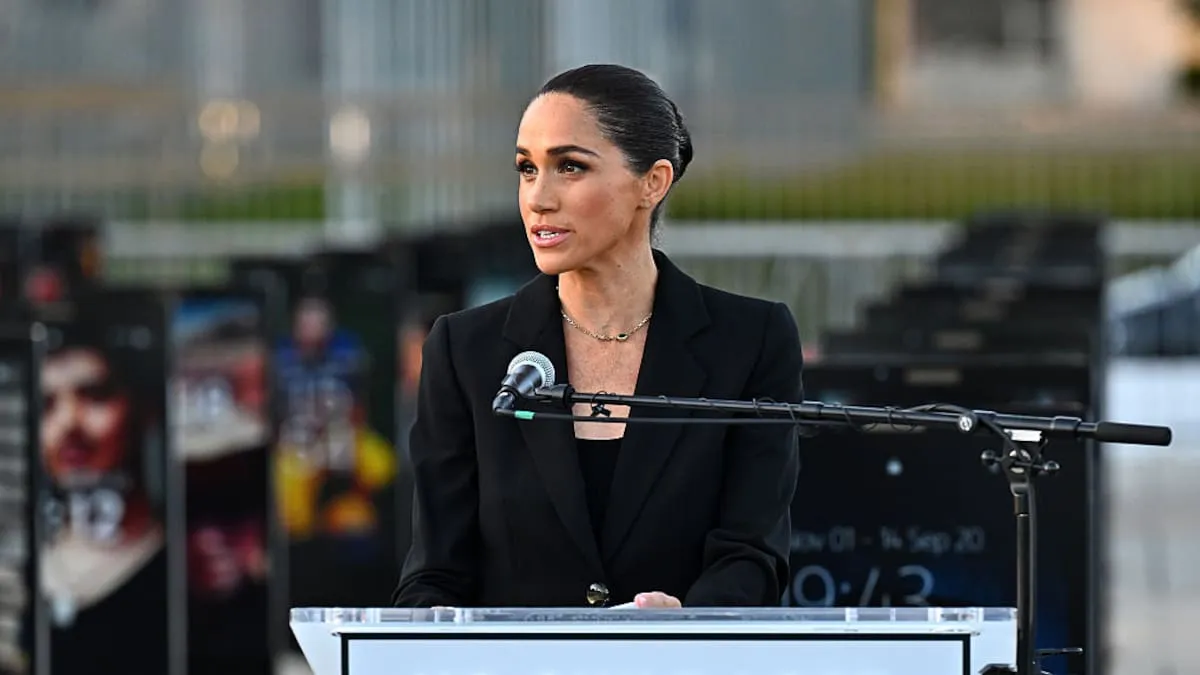
During her engagement in Geneva, Markle addressed attendees at a World Health Organisation (WHO) event, emphasizing that the safety of children online constitutes a critical "public health issue." She met with WHO Director-General Dr. Tedros Adhanom Ghebreyesus and stood before a public installation known as the Lost Screen Memorial. This exhibit featured 50 lightboxes, each displaying the lock screen of a phone belonging to a child who died by suicide following experiences of online bullying and digital harm.
Markle spoke passionately about the memorial, stating, "Behind me stands the Lost Screen Memorial. Not statistics. Not avatars. Not data points. Children. Each name belonged to a child who was loved beyond measure. A child whose laughter once filled a kitchen. Whose shoes once waited by a front door. Whose future once felt limitless." She posed a critical question to the global community: "Now their faces ask the world questions we can no longer avoid: How many more millions of children will be harmed by products that, while innovative, are still designed without sufficient safeguards?" She further elaborated on the pervasive influence of digital platforms, noting, "Children today are being shaped by systems designed to capture attention at any cost: relentless algorithms, exploitative engagement, and endless exposure to harmful content that they are not seeking out."
The Social Media Post and Accusations of Inconsistency
The crux of the criticism directed at Meghan Markle lies in an Instagram post she shared the evening before her speech. The post, a mirror selfie with her four-year-old daughter Lilibet, was captioned "Mama’s little helper." This action, according to Sykes and other critics, directly contradicts the message of caution regarding children's exposure to social media that she was set to deliver.
Sykes argued that Markle's actions demonstrated a voluntary exposure of her own child to social media, seemingly for self-promotion, which he found particularly problematic given her upcoming address on online harms. He pointed out that Markle's Instagram account serves as a "public-facing shop window" designed to drive traffic to her various business ventures, describing her social media presence as a "commercial operation." The commentator further contended that Lilibet is increasingly becoming a central figure in this commercial enterprise, and that the practice of posting images of her, even without showing her face, does not absolve the Duchess of responsibility. Sykes suggested that such tactics could even manufactured curiosity, potentially increasing interest rather than mitigating it.
Expert Commentary on Child Consent and Online Presence
A significant point raised by critics, including Sykes, pertains to the issue of consent for minors in the digital realm. He argued that "A 4-year-old cannot meaningfully consent to having their image broadcast to millions of strangers." This statement underscores a broader ethical debate surrounding the digital footprint of children and the responsibilities of parents, especially those in the public eye.
The commentary suggests that while the intention behind Markle's speech may be to raise awareness about critical online safety issues, her own use of social media, particularly in relation to her child, has led to accusations of hypocrisy. This has sparked a wider conversation about the complexities of advocating for digital safety while simultaneously participating in the very platforms that are often implicated in the problems being discussed.
Impact Analysis
The controversy surrounding Meghan Markle's social media use prior to her speech on child online safety raises pertinent questions about authenticity and perceived hypocrisy in public advocacy. For parents and individuals concerned about the impact of digital platforms on children, the incident underscores the challenges of navigating personal online behaviour alongside public messaging. It highlights the heightened scrutiny faced by public figures and the public's expectation for consistency between an individual's actions and their stated positions.
Furthermore, the criticism directed at Markle implicitly calls attention to the responsibilities of parents and guardians in managing their children's exposure to social media. The debate touches upon consent, privacy, and the commercialization of childhood online. As discussions around digital well-being continue, such incidents serve as a catalyst for deeper reflection on best practices and ethical considerations in the digital age, particularly concerning the protection of minors.