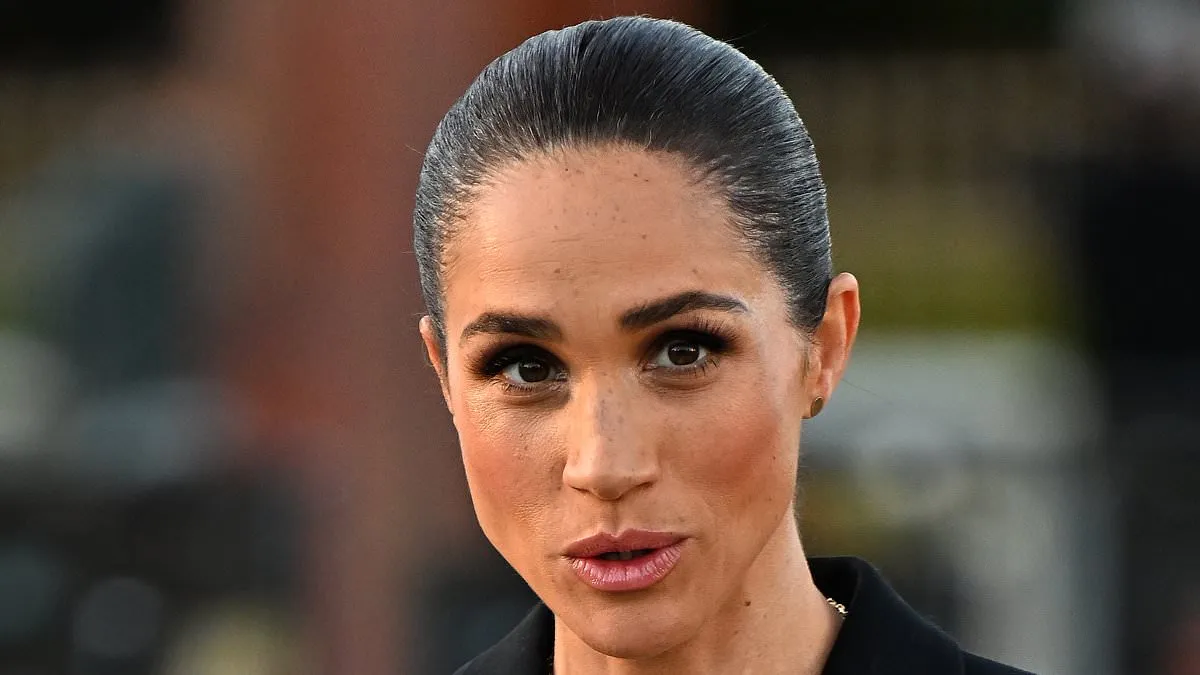
Meghan Markle, the Duchess of Sussex, is facing criticism following a social media post showcasing her daughter Lilibet amidst a designer wardrobe, just prior to delivering a significant speech on the dangers of social media for children. The incident has drawn sharp rebukes from royal commentators who deem the timing and content of the post as highly hypocritical, given the subject matter of her address.
Speaking at a World Health Organization (WHO) event in Geneva, Switzerland, as part of the 79th World Health Assembly, Markle passionately argued that children's online safety is a critical public health issue. She emphasized that children should not be treated as mere products or expendable elements in the digital landscape, and condemned social media platforms for prioritizing profit over user well-being. Her speech highlighted the profound impact these platforms have on shaping young lives and the urgent need for robust global protections.
Criticism Over Social Media Post Before Key Speech
Royal expert Tom Sykes, who was present in Geneva, characterized the Duchess's pre-speech Instagram post as a "staggeringly tone-deaf image" and a "boastful" and "vain" display. The post, shared with her 4.5 million followers, featured a mirror selfie with her four-year-old daughter, Lilibet, captioned "Mama's little helper." The image appeared to show Lilibet in a room filled with designer clothing, with a prominent Armani coat visible. This was shared just hours before Markle's address on the harms of social media.
Sykes pointed out the stark contrast between the Duchess's public advocacy and her personal actions. "The Geneva speech is the rhetoric. The closet photograph is the reality," he stated, suggesting that the wardrobe in the photograph featured outfits valued at a minimum of $250,000. He further argued that Markle's Instagram account serves as a "shop window" that drives traffic to her lifestyle brand, Archetypes podcast, and Netflix content. The claim that not showing a child's face protects their privacy was dismissed as absurd, with Sykes suggesting it instead manufactures curiosity, potentially contributing to a child's social media star status.
Markle's Speech on Online Child Safety
In her address, Meghan Markle spoke emotionally about the dangers children face online, framing it as a public health crisis. She stood before a memorial installation, featuring 50 illuminated light boxes, each displaying the mobile phone lock screen of a child who had tragically died due to digital harm. These were not just statistics, she emphasized, but children who were deeply loved, with vibrant futures tragically cut short.
The Duchess highlighted the insidious nature of online systems designed to capture attention, including relentless algorithms and exploitative engagement. She noted that emerging technologies, such as artificial intelligence, are not only repeating past mistakes but amplifying them, leading to dangers that spread globally and rapidly. Markle stressed that current systems are often ill-equipped to respond to these evolving threats, which affect children on an alarming scale and across borders. She firmly advocated for a principle of safety by design, rather than by chance, arguing that protections must be as immediate, invisible, and intimate as the dangers themselves.
Support and Counterarguments
Despite the criticism, Meghan Markle's supporters have lauded her speech, describing her words as powerful and moving. Many parents who lost children to online harms expressed that her advocacy resonated deeply with their experiences. Social media users defended the Duchess, dismissing photographs that appeared to show a sparse crowd at her event. They argued that her message transcends the need for large physical audiences, stating that her global icon status ensures her message is heard worldwide.
Supporters also pointed to the number of invited guests and members of the public present, estimating between 60 to 70 invited guests and approximately 50 members of the public. They countered claims of embarrassment by asserting that Markle "doesn't need anyone to show up" and that her story is being disseminated globally. Her powerful oratory skills were praised, with fans hoping her message gains significant traction to improve child safety online.
Previous Advocacy and Personal Reflections
The Duchess of Sussex, alongside her husband Prince Harry, has a history of advocating for enhanced online child safety measures. Their charitable organization has supported initiatives such as the Lost Screen Memorial, which aims to raise awareness about the devastating consequences of digital harm. Previously, they have backed social media bans for individuals under 16 in Australia and unveiled a similar memorial in New York City.
Markle has also spoken about the personal challenge of protecting their own children, Archie and Lilibet, from online risks as they grow up. This personal reflection underscores her commitment to the cause, even as she navigates public scrutiny regarding her own use of social media and its presentation of her family.
Impact Analysis
The incident involving Meghan Markle's social media post and subsequent speech highlights a persistent challenge in public advocacy: the perception of hypocrisy when personal actions appear to contradict public messaging. While Markle's supporters emphasize the sincerity of her message and the global reach of her platform, critics focus on the apparent disconnect between her advocacy for children's online privacy and a highly curated, potentially consumerist, depiction of her own daughter on social media. This event underscores the critical importance of perceived authenticity for public figures, particularly when addressing sensitive issues like child welfare and digital responsibility. It raises questions about the standards applied to public figures versus private individuals, and the complexities of balancing personal life with public advocacy in the age of social media.