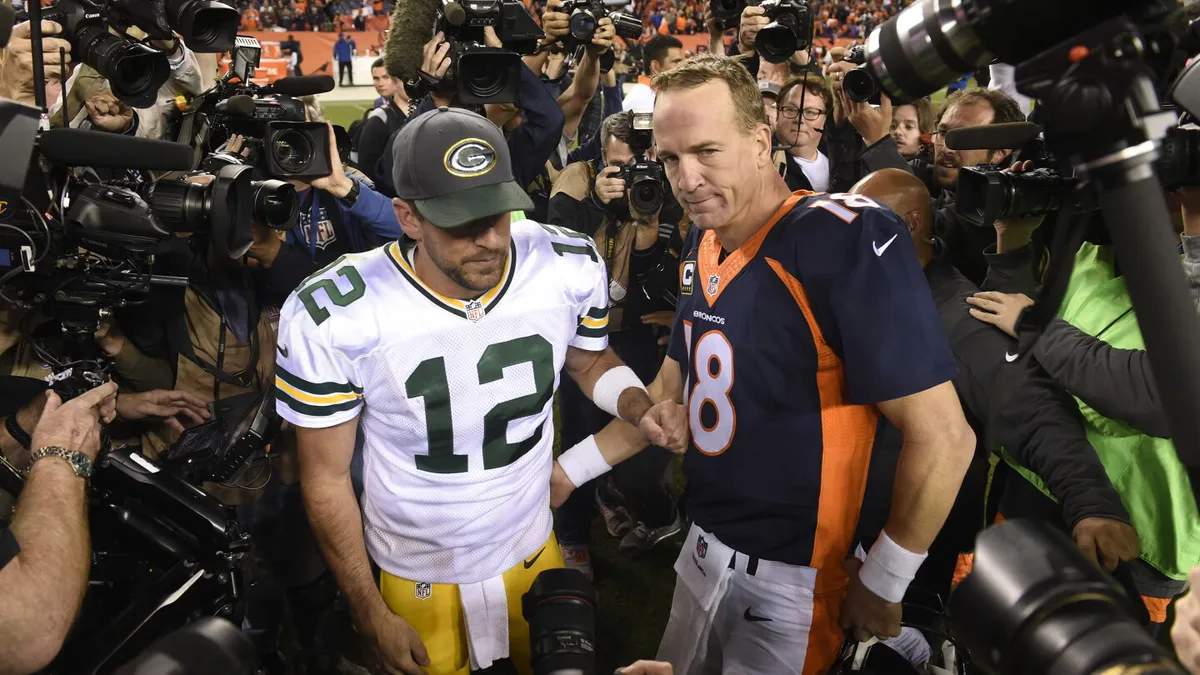
As Aaron Rodgers officially returns to the NFL for his 22nd season, he stands on the precipice of further cementing one of the most remarkable statistical legacies in professional football history. The veteran quarterback, entering his age 43 season, is positioned to ascend historical leaderboards, particularly in the crucial category of touchdown passes. His career touchdown tally currently stands at 527, placing him just 13 shy of surpassing Peyton Manning's 539 career touchdowns. This milestone appears within reach early in the upcoming season, provided Rodgers remains healthy.
Beyond Manning, Rodgers' sights could potentially be set on Drew Brees' 571 career touchdown passes for second place, a feat likely requiring at least two more seasons of play. The all-time record of 649 touchdown passes, held by Tom Brady, remains a distant, seemingly insurmountable target. However, Rodgers' pursuit of historical greatness is not without potential challenges, as certain career records he currently holds are also under threat.
Statistical Landscape and Potential Record Shifts
Career Passer Rating in Jeopardy
Rodgers currently shares the distinction of the highest career passer rating in NFL history, with both he and Baltimore Ravens quarterback Lamar Jackson holding a rating of 102.2. However, the dynamics of this record are shifting rapidly. Last season, Jackson recorded a passer rating of 103.8, while Rodgers' rating was 94.8. If this trend continues, Jackson is poised to claim sole possession of the top spot in career passer rating by the end of the season, assuming comparable performance levels from both quarterbacks.
Furthermore, Rodgers' position at the pinnacle of career passer ratings could be challenged by other elite quarterbacks. Joe Burrow currently ranks third with a 101.1 rating, followed closely by Patrick Mahomes at 100.8. Given the caliber of these younger signal-callers, Rodgers' record for the best career passer rating is one he may not be able to retain through the upcoming season.
Interception Percentage Vulnerability
Another statistical benchmark where Rodgers faces potential shifts is his all-time lowest career interception percentage. He has thrown 123 interceptions over 8,743 career passes, resulting in an interception rate of 1.41 percent. This figure places him in a very tight race at the top.
Jacoby Brissett of the Arizona Cardinals is closely trailing with a career interception rate of 1.42 percent. Other notable quarterbacks like Justin Herbert (1.7 percent) and both Burrow and Mahomes (1.8 percent) are also in contention, though slightly further back. This narrow margin means that Rodgers' long-held record for the lowest interception percentage is also vulnerable to being surpassed.
Legacy Beyond the Numbers
While the statistical achievements and potential record changes are noteworthy, the ultimate impact on Aaron Rodgers' legacy may extend beyond mere numbers. He is already widely recognized as an all-time great quarterback, a status secured by his past accomplishments and impact on the game.
Nevertheless, the upcoming season presents an intriguing narrative arc, with the potential for both advancement on key leaderboards and the relinquishing of other prestigious records. How these statistical developments unfold will add another layer to the storied career of one of the NFL's most accomplished players.
Impact Analysis
Aaron Rodgers' continued presence in the NFL, even at this advanced stage of his career, generates significant interest not only for his team but also for the broader statistical landscape of the league. His pursuit of Manning's touchdown record and the potential shifts in career passer rating and interception percentage records highlight the enduring relevance of veteran performance and the constant evolution of statistical leadership in the sport. These developments underscore the competitive nature of the NFL, where even established legends are subject to the relentless progress and rising performance of new generations of talent. The narrative surrounding Rodgers' final seasons is thus intrinsically linked to the ongoing history of quarterbacking excellence.