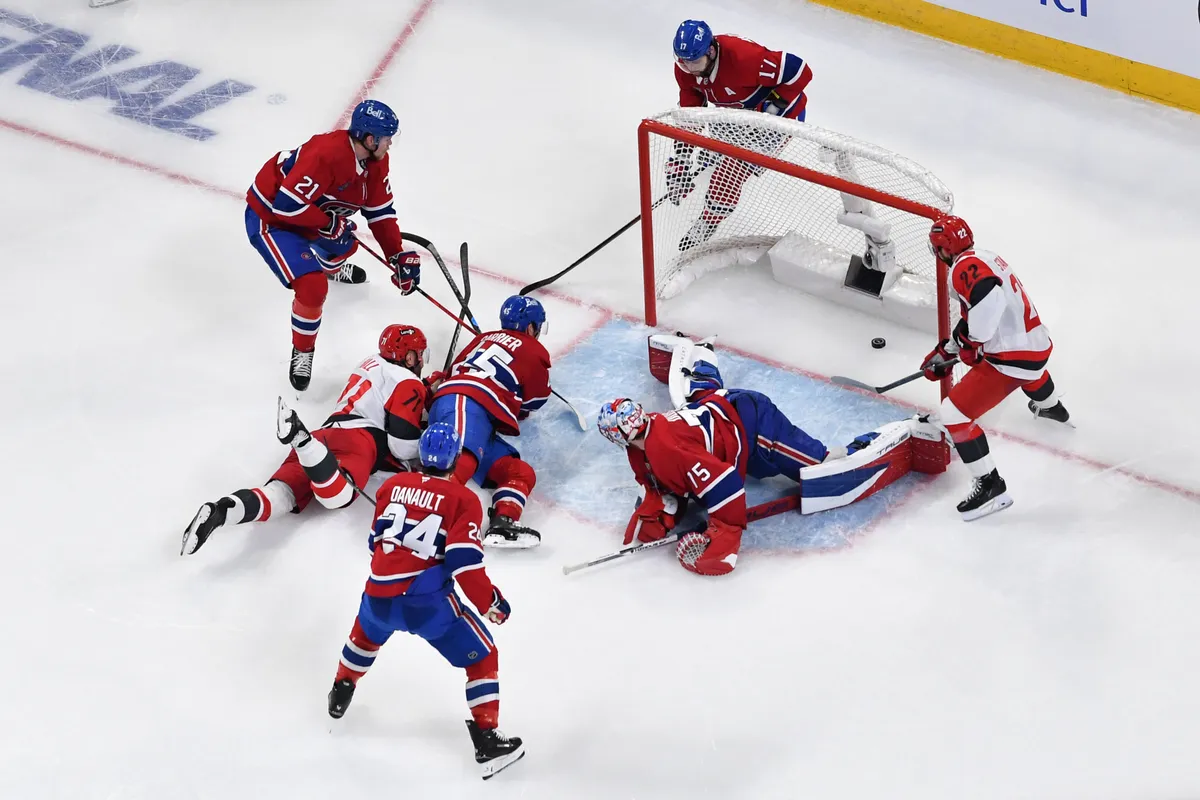
The Montreal Canadiens found themselves on the wrong side of a tight playoff contest once again, falling 3-2 to the Carolina Hurricanes in overtime during Game 3. This latest defeat, mirroring the outcome of Game 2, underscores a growing concern for the Canadiens: their inability to generate consistent offensive pressure against a formidable Hurricanes defense. The shot differential in Game 3, a stark 38-13 in favor of Carolina, paints a clear picture of the territorial dominance the Hurricanes exerted throughout the match. Montreal's struggles were evident in their difficulty advancing the puck up the ice without conceding possession to Carolina's relentless forecheck and structured defensive zone play. Despite the lopsided possession metrics, the Canadiens managed to keep the game close for over 74 minutes, a testament to their resilience and timely execution on a few key opportunities.
Shayne Gostisbehere opened the scoring for Carolina early in the first period, but the Canadiens responded with a goal from defenseman Mike Matheson. Matheson capitalized on a favorable bounce beneath the net and a quick pass, firing a shot past Freddie Andersen from a prime scoring position. Taylor Hall briefly tied the game for Carolina before intermission, but Montreal's collective effort saw them into the second period trailing by only one goal, despite being outshot 15-5. The second period was a tighter affair, with the Canadiens managing to equalize on a power-play goal orchestrated by their young stars. Lane Hutson, known for his playmaking, fed a pass to Cole Caufield, who then returned it to Hutson near the crease. Hutson finished the play, showcasing the offensive chemistry that has become a hallmark of Montreal's younger core.
Canadiens' Offensive Challenges and Key Moments
Lane Hutson later took responsibility for the turnover that led to the game-winning goal, but his earlier contributions, including a remarkable end-to-end rush culminating in a breakaway pass to Nick Suzuki in overtime, highlighted the flashes of individual brilliance that Montreal can rely on. These moments, however, are often not enough to overcome the sustained pressure applied by Carolina. The Canadiens' offensive strategy, when it works, relies on opportunistic plays and individual skill rather than overwhelming offensive zone time. This approach proved insufficient against a deep and skilled Hurricanes team that systematically stifles opponents.
A pivotal moment in the third period saw what appeared to be a go-ahead goal for Montreal, scored by Nikolaj Ehlers deflecting a Noah Dobson centering pass. However, the Hurricanes successfully challenged the play for an offside infraction, as Caufield had entered the offensive zone fractionally too early. The disallowed goal shifted the momentum, and Montreal was unable to find the back of the net again. This near-miss underscored the fine margins in playoff hockey and how crucial it is for teams to capitalize on every opportunity. The controversial call, while technically correct based on the replay, left the Canadiens with a sense of what might have been.
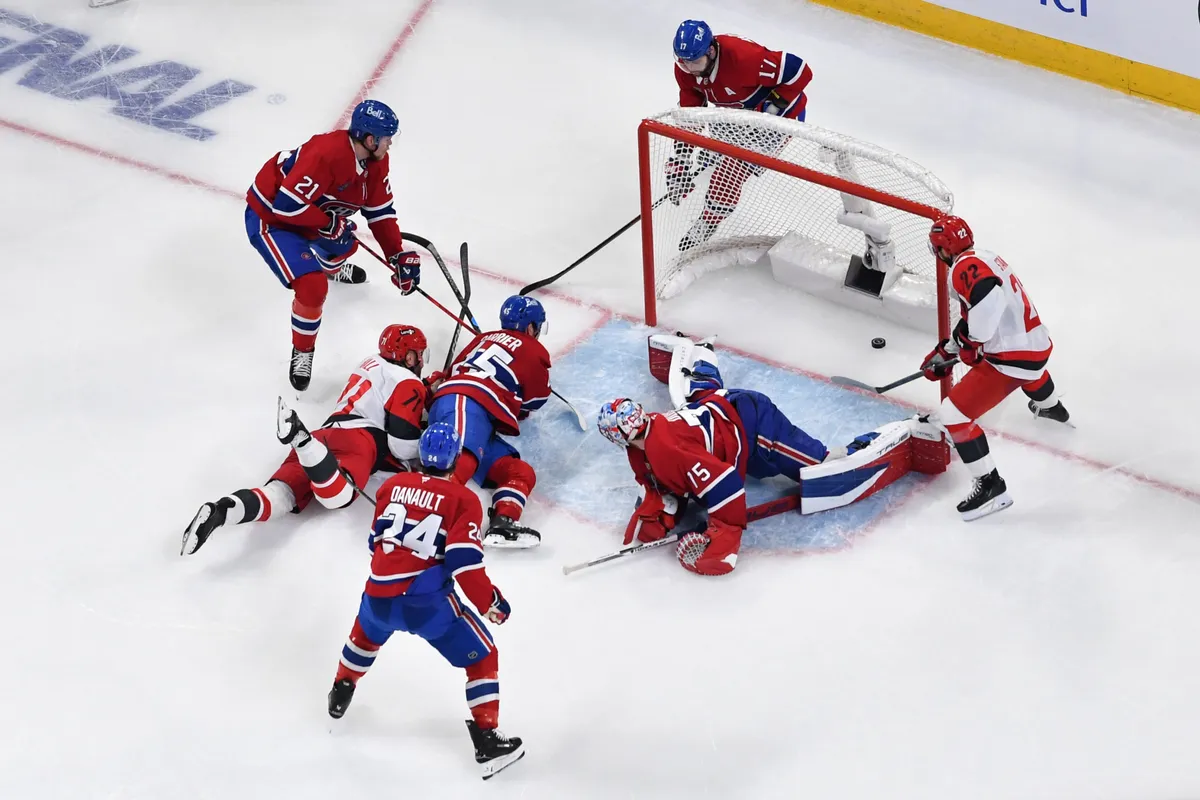
The game-winning goal came in overtime from Andrei Svechnikov, who fired a shot through traffic to seal the victory for Carolina. This marked the Hurricanes' 10th win of the postseason, extending their deepest run since their Stanley Cup victory in 2006. Despite the series deficit, the mood in the Montreal locker room remained cautiously optimistic.
Analysis of the Series Dynamics
Defenseman Mike Matheson commented on the team's perspective, stating, "We're two shots away from being up 3-0 in the series." While technically true in terms of near-goals and close calls, this statement highlights the team's resilience but also potentially glosses over the fundamental issues in their game. The reality is that the Canadiens are two losses away from elimination. Their ability to generate offense against a structured Carolina defense will be paramount in their ability to extend the series. The Hurricanes' depth and consistent pressure have exposed the Canadiens' vulnerabilities, particularly in transition defense and offensive zone possession.
For the Canadiens to succeed, they need to find ways to create more sustained offensive pressure, reduce turnovers in critical areas, and perhaps get more consistent secondary scoring. Relying on individual efforts and occasional power-play success against a team like the Hurricanes is a precarious strategy. Head coach Martin St. Louis and the veteran players will need to rally the team, focusing on execution and minimizing mistakes as the series heads back to Montreal. The challenge for the Canadiens is to adapt and overcome the Hurricanes' suffocating style of play, or their promising season will come to an abrupt end.