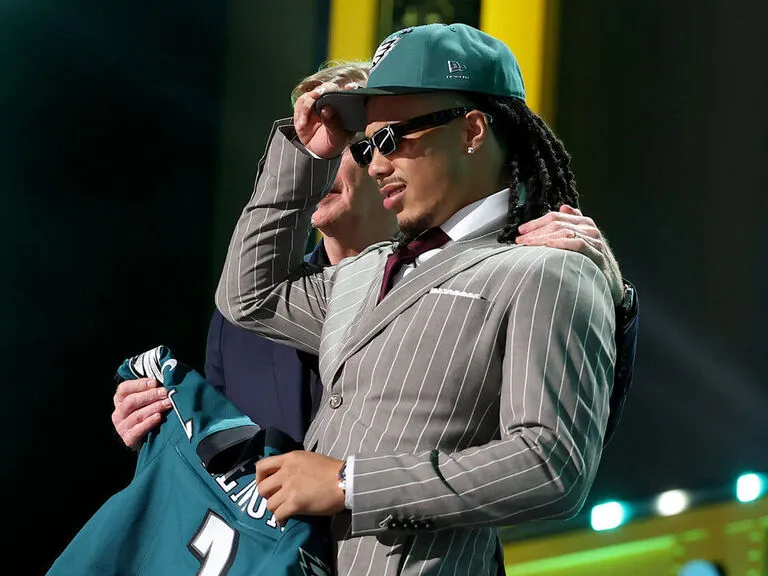
A significant trade that sent shockwaves through the NFL draft landscape unexpectedly altered the trajectories of multiple teams, most notably the Philadelphia Eagles and Pittsburgh Steelers. The Philadelphia Eagles, holding the No. 10 overall pick, engineered a move up the draft board to select dynamic wide receiver A.J. Brown, a move that directly impacted the Steelers' strategic options at pick No. 20.
While the Cowboys, holding the No. 17 overall pick, were widely expected to address their defensive needs, the Eagles' aggressive maneuver to acquire Brown preempted Pittsburgh's anticipated offensive target. This strategic chess match unfolded in real-time, with Brown himself finding himself at the center of a whirlwind of draft-day decisions and team interests.
NFL Draft Trade Dynamics and Wide Receiver Talent
The Eagles' acquisition of A.J. Brown involved a notable trade package, securing the prolific receiver from the Tennessee Titans. This move not only bolstered Philadelphia's receiving corps but also served to deny the Pittsburgh Steelers a player they were reportedly targeting with their first-round selection. Sources indicated that the Steelers were prepared to select a player at No. 20, likely an offensive piece, assuming Dallas would select a defender.
However, the Eagles' strategic move to secure Brown, whom they then signed to a significant contract extension, meant that the No. 20 pick, initially thought to be a potential target for an offensive weapon for Pittsburgh, was now unavailable. This trade is a prime example of how preemptive strikes and player valuations can dramatically reshape draft outcomes and team strategies across the league. The intricate dance of trades and picks highlights the constant pursuit of talent and the strategic positioning required in the modern NFL draft.
Player Performance and Potential Impact
A.J. Brown, a product of Ole Miss, brought a compelling resume to the Eagles. Prior to the trade and subsequent signing, Brown had established himself as a formidable presence in the NFL. During his tenure with the Titans, he consistently demonstrated elite receiving capabilities, making significant contributions to their offensive success.
In his final season with the Titans, Brown recorded career highs, showcasing his development and impact on the field. He garnered 79 receptions, amassing 1,156 receiving yards, and scoring 11 touchdowns. These statistics underscore his ability to be a primary target and a game-changer in the passing game, a skillset that the Eagles clearly valued highly and aimed to integrate into their offensive scheme for immediate and long-term impact.
Team Strategy and Draft Implications
The Eagles' decision to aggressively pursue and secure A.J. Brown, coupled with the contract extension, signals a clear commitment to building a potent offense around their quarterback. By trading for Brown and extending him, the Eagles are not just acquiring a talented player for the upcoming season but investing in a cornerstone of their receiving attack for years to come.
For the Pittsburgh Steelers, the Eagles' move forced an immediate pivot in their draft strategy. While they ultimately selected offensive tackle Broderick Jones at No. 14 overall (after a trade up), the initial plan may have been altered. The ripple effect of the Eagles' trade highlights the complex decision-making process involved in the NFL draft, where teams must constantly adapt to the actions of others while staying true to their own long-term vision and immediate needs.
Draft Day Maneuvers and Player Movement
The scenario described illustrates a common, albeit high-stakes, occurrence on NFL draft day. Teams often have multiple potential targets and contingency plans, and the actions of one franchise can trigger a cascade of adjustments for others. The Eagles' trade for Brown, before he was even officially available to them at their original pick, demonstrates a decisive approach to acquiring difference-making talent.
The Dallas Cowboys, who were also involved in draft-day maneuvering, made their own strategic picks. After trading down from No. 17 with the Eagles, they acquired additional assets and still managed to select pass-rusher Marshawn Kneeland at No. 52 overall. This series of transactions underscores the dynamic nature of the draft, where team needs, player availability, and draft capital are constantly being weighed and re-evaluated.