In the intricate world of golf, adherence to established norms and principles is paramount for consistent performance. Beyond the widely understood etiquette of the game, such as respecting playing lines and caddies, lie fundamental instructional tenets that separate proficient players from the rest. Among these, a specific putting posture has been highlighted by a leading golf instructor as a crucial element, deemed a "non-negotiable" for achieving world-class putting standards.
Stephen Sweeney, a GOLF Top 100 Teacher and a consultant for PGA Tour professionals, has articulated a clear stance on a common putting setup flaw. He asserts that he has "yet to see a world-class putter that putts good with a closed stance." This observation underscores the profound impact that even seemingly minor adjustments in setup can have on a golfer's ability to execute consistent and effective putts. Sweeney's emphasis on this particular aspect suggests it's a foundational element often overlooked or incorrectly implemented by many golfers aiming for improvement.
The Case Against a Closed Stance
Sweeney's Putting Imperative
PGA Tour putting consultant Stephen Sweeney has made it clear that a closed stance is a fundamental error he actively discourages. "There are certain things that are non-negotiable for me," Sweeney stated. "The one thing that I hate to see is any sort of closed stance with the feet, and open shoulder." This dichotomy—closed feet paired with open shoulders—is precisely the setup Sweeney identifies as detrimental to effective putting. It creates an inherent imbalance and encourages compensatory movements that undermine the repeatable stroke necessary for success on the greens.
Sweeney elaborated on this in a recent instructional session featured in 'The Lab with Stephen Sweeney.' He explained that a closed stance often forces golfers to inadvertently aim to the right of their intended target. This misalignment necessitates compensations, leading to a loss of consistency and control over the putter face throughout the stroke. The golfer's body attempts to correct the initial error, resulting in a less fluid and predictable motion, ultimately hindering their ability to roll the ball accurately and with the desired pace.
Achieving a Square Putting Setup
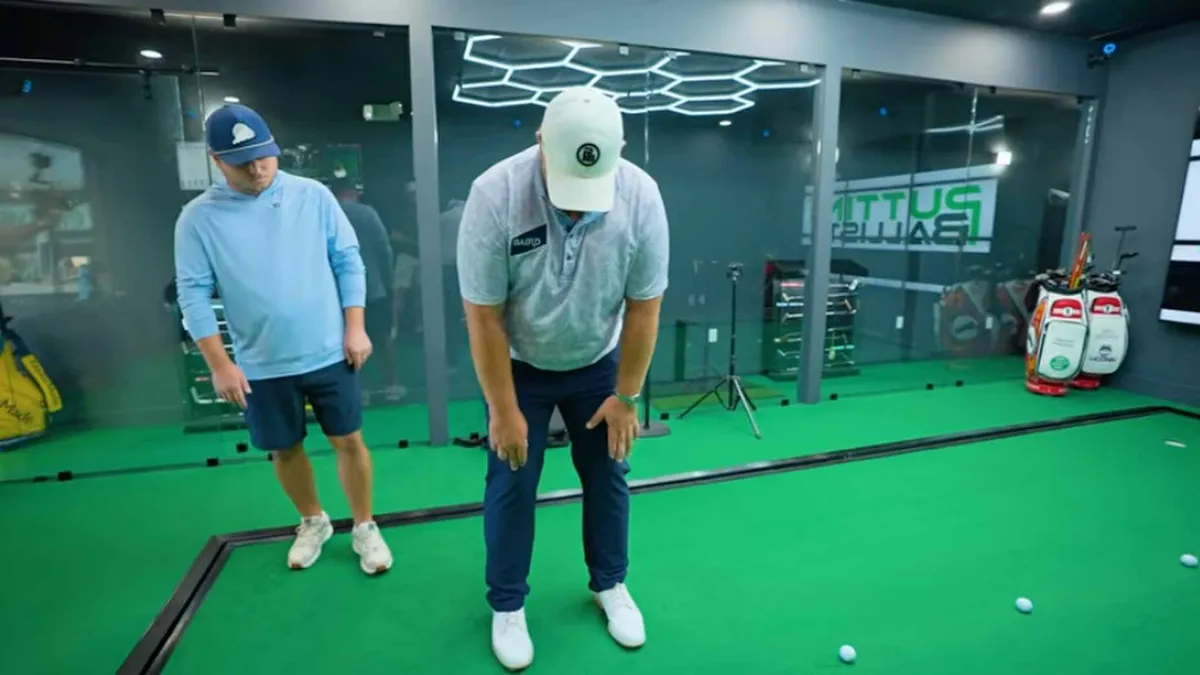
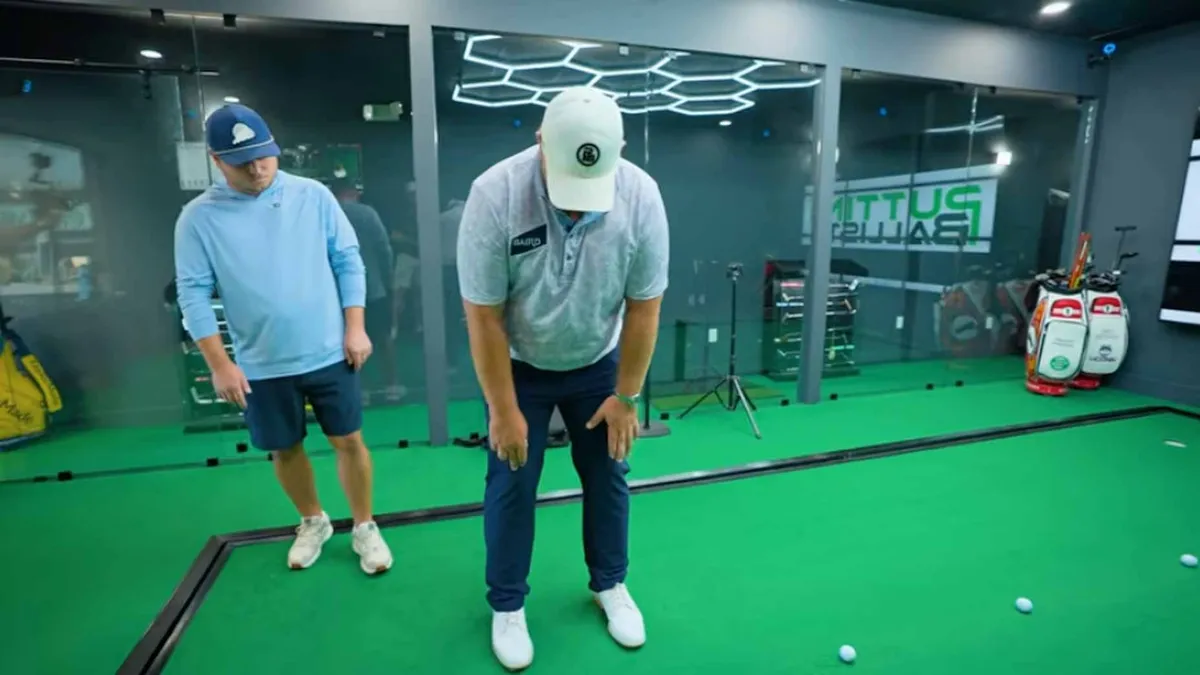
Fortunately, Sweeney offers a straightforward method to correct this common issue and establish a proper putting posture. The recommended technique involves setting the feet at approximately shoulder-width apart, allowing the arms to hang naturally from the shoulders. From this relaxed position, the golfer should slide their hands down their thighs until their fingertips rest comfortably on the kneecaps. This specific hand placement is designed to promote a more neutral and square alignment of the body relative to the target line.
The goal, according to Sweeney, is to achieve a state where "everything [is] square: knees, hips, shoulders, chest." This balanced setup ensures that the golfer's body is aligned in a way that facilitates a straight-back, straight-through putting stroke, minimizing extraneous body movement. This drill not only addresses the foot and shoulder alignment but also plays a crucial role in positioning the golfer's head and eyes correctly. The intention is to place the eyes directly over or slightly inside the ball, a position that enhances the golfer's ability to perceive the correct line and execute a precise stroke.
Sweeney emphasizes that achieving this correct eye position is vital. "I want you to get to a point where you feel like your eyes are over the golf ball," he advises. While Sweeney utilizes advanced tools like lasers to guide golfers into this ideal setup, he acknowledges that simpler aids such as putting mirrors or alignment rods can be equally effective. The core objective remains the same: cultivating a square, consistent address position that empowers the golfer to consistently start the ball on their intended path.
Impact Analysis
The principle advocated by Stephen Sweeney directly addresses a common cause of putting inconsistency among amateur golfers. By highlighting the detrimental effects of a closed stance and offering a simple, actionable correction, this advice has the potential to significantly improve a golfer's performance on the green. For coaches and players alike, understanding and implementing this fundamental aspect of setup can lead to reduced three-putts, more consistent lag putts, and an overall lower score. The emphasis on a square, balanced posture and correct eye alignment provides a tangible pathway for golfers to gain greater control and confidence on the greens, impacting their score and enjoyment of the game.