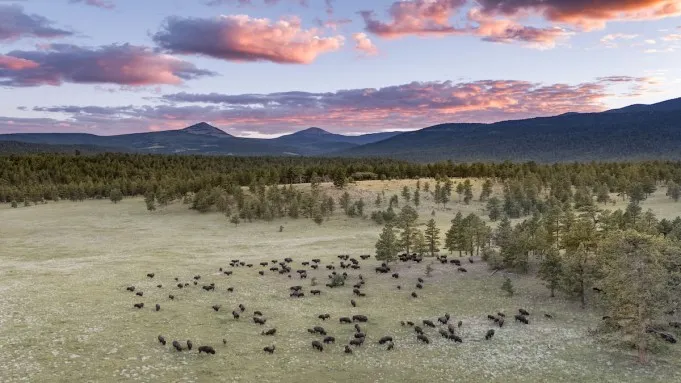
The vast plains of Ted Turner Reserves, stretching from New Mexico into Colorado, are echoing with the thunder of hooves once more. Here, the Castle Rock bison herd, genetic descendants of foundational North American lineages, roam freely across 558,000 acres. These 1,400 animals are more than just a majestic sight; they are a keystone species in Vermejo's ambitious regenerative grazing and rewilding initiatives, a vision championed by the late media mogul and conservationist Ted Turner. Turner, who passed away in 2026 at 87, dedicated much of his later life to acquiring and restoring vast tracts of land across the American West, leaving a powerful legacy of environmental stewardship that will continue through a posthumous nonprofit institute.
Turner's vision extends beyond Vermejo, encompassing fifteen properties that are poised to carry forward his rewilding mission. This initiative is part of a broader, global movement where a cohort of philanthropists, including luminaries like Patagonia CEO Kris Tompkins, tech entrepreneur Greg Carr, and Scottish philanthropist Paul Lister, have invested significantly in large-scale ecological restoration. These efforts, often spanning decades and millions of dollars, focus on bringing back not only native species but also the intricate ecological processes that define healthy landscapes. The success of these private conservation endeavors is now intersecting with a growing global demand for authentic, nature-driven travel experiences.
The Rise of Rewilding Tourism
The tangible results of these ambitious rewilding projects, from the reintroduction of jaguars in Argentina to the resurgence of bison in New Mexico, are capturing the attention of travelers seeking unique, impactful experiences. A 2024 McKinsey report highlights a growing trend among ultra-high-net-worth individuals for exclusive, one-of-a-kind adventures, precisely what these privately restored ecosystems offer. New lodges and camps within these vast reserves provide not only luxury accommodations but also unparalleled access to environments previously degraded or inaccessible. Critically, tourism dollars generated from these destinations are reinvested into ongoing conservation efforts, creating a sustainable model that supports both ecological restoration and local economies.
For many of the private stewards behind these rewilding initiatives, opening their doors to guests is an integral part of the conservation strategy. Beyond financial contributions, engaging visitors fosters a vital connection between people and the wild. Jade McBride, president of Ted Turner Reserves, articulates this philosophy: “Ted wanted us and the ones we love to connect and protect the other species we share the planet with.” This approach transforms conservation from an abstract concept into a tangible experience, encouraging guests to develop a personal stake in the preservation of these natural wonders.

Vermejo: A Model of Ecological Restoration
Ted Turner's acquisition of Vermejo Park Ranch marked the beginning of a comprehensive restoration project. Miles of barbed wire fences were removed, cattle were phased out, and an intensive effort to revitalize the landscape commenced across all of Turner's New Mexican properties. The ranch's headquarters now serves as a hub for a wide array of activities, including guided wildlife safaris, bison expeditions, hiking, biking, and fishing in alpine lakes. The dedicated staff, comprising biologists, foresters, and naturalists, share a deep passion for the land and possess extensive knowledge of the ranch's history and its ongoing ecological transformation. This commitment to long-term study, often exceeding the timelines of government or university projects, attracts significant partnerships with organizations like the New Mexico Department of Game and Fish, the U.S. Fish and Wildlife Service, and various universities.
Currently, Vermejo hosts 21 active conservation projects. These initiatives are meticulously managed, addressing everything from fostering the growth of native tree species to reintroducing apex predators like the Mexican gray wolf. Strategic exclusion zones have been established along riverbanks to allow native willows and cottonwoods to flourish, thereby preventing erosion and improving water quality. In a testament to the ecosystem's recovery, wild beavers have naturally returned to Vermejo, constructing dams that help restore natural water cycles and wetland habitats. These ongoing efforts underscore the importance of private land stewardship in large-scale conservation, enabling interventions like the restoration of native cutthroat trout populations across 60 miles of the ranch's upper tributaries—the largest inland trout restoration project in the country.

Philanthropy Driving Global Conservation
The dedication of private individuals to rewilding reflects a profound desire to mend the intricate web of life. Mark Burget, vice president of strategic initiatives at Re:Wild, observes that for many wealthy individuals, their involvement in nature conservation represents the most meaningful work of their lives. The ability to actively support or reintroduce nearly extinct species offers a unique sense of purpose and connection to the act of creation itself. This stands in contrast to current federal policies that sometimes appear to undermine environmental protections, such as policies affecting public lands and wildlife management. The sustained, decades-long scientific and research projects undertaken on private lands like Vermejo provide invaluable, long-term data that informs conservation strategies far beyond short-term governmental cycles.
As the Ted Turner nonprofit institute solidifies its structure, opportunities for guests to actively participate in conservation are expanding. Activities such as range monitoring, where guests use frames to measure native grass growth, directly contribute to understanding the carrying capacity for the bison herd. Similarly, guests can assist in measuring the Vermejo River's daily temperature, aiding in the monitoring of conditions vital for trout and other aquatic life. These hands-on experiences not only provide valuable data for researchers but also deepen the guests' connection to the environment they are helping to restore.
“Their work with nature is the most meaningful they’ve done in their lives. To actively support or return species that are almost gone—you can’t get closer to ‘creation’ than that.” —Mark Burget, VP of strategic initiatives at Re:Wild

Expanding the Vision: Global Rewilding Destinations
The principles of rewilding and conservation tourism are not confined to Ted Turner Reserves. In Mozambique, Greg Carr's extensive efforts in Gorongosa National Park have seen the reintroduction of key species and the restoration of a landscape devastated by civil war. Gorongosa Safaris offers immersive experiences at lodges like Muzimu Lodge and the mobile Expedition Camp, emphasizing the integration of human well-being with ecological health.
In Patagonia and the Iberá Wetlands, Kris and Doug Tompkins' legacy is preserved through vast national parks and educational lodges such as Explora Patagonia and Rincon del Socorro Lodge. Their work has not only reintroduced species like the jaguar but also established regenerative economies focused on wildlife tourism, empowering local communities and fostering a deep connection between people and nature. This philosophy is echoed in Scotland's Alladale Wilderness Reserve, where Paul Lister champions the reintroduction of apex predators and has planted over a million trees. Alladale offers a window into a wilder Scotland, with accommodations like Alladale Lodge and Eagle's Crag, aiming to educate visitors about the historical landscape and the importance of conservation.

Impact Analysis
The growing success of privately funded rewilding projects, exemplified by Ted Turner Reserves and similar global initiatives, demonstrates a powerful alternative model for conservation. By leveraging private capital, scientific expertise, and a commitment to long-term ecological health, these endeavors are achieving significant biodiversity restoration and habitat recovery. Furthermore, the integration of tourism provides a sustainable funding mechanism and, crucially, fosters a deeper human connection to the natural world. As these landscapes are revitalized, they not only serve as vital ecological sanctuaries but also as destinations that inspire a greater sense of stewardship, proving that private enterprise can be a potent force for environmental good when aligned with conservationist principles.