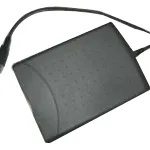
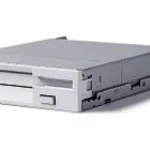
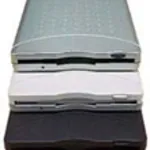
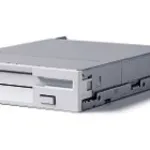
In an era dominated by high-capacity solid-state drives and cloud storage, the re-emergence or continued relevance of legacy storage solutions can seem anachronistic. However, for professionals and enthusiasts working with archival data, legacy systems, or specialized industrial equipment, the need for a reliable floppy disk drive persists. The Sony External USB Floppy Disk Drive in black addresses this niche requirement with a straightforward, plug-and-play solution.
This external drive connects via USB, eliminating the need for proprietary interfaces or internal installation, making it compatible with a wide range of modern computers equipped with USB ports. Its compact and lightweight design ensures portability, allowing for easy integration into different workstations or for use in the field. The drive is designed to read and write standard 3.5-inch floppy disks, offering a maximum storage capacity of 1.44MB per disk. While this capacity is minuscule by today's standards, it is precisely what is needed for accessing or migrating data from older systems where floppy disks remain the primary or sole storage medium.
Key Features and Market Positioning
The primary appeal of the Sony External USB Floppy Disk Drive lies in its simplicity and compatibility. It functions as a standard USB mass storage device, meaning it requires no special drivers on most modern operating systems, including Windows and macOS, facilitating immediate use. This ease of deployment is crucial for tasks such as data recovery from old computers, software updates for industrial machinery, or accessing educational materials from the pre-CD era. The drive's robust construction, typical of Sony's peripheral products, suggests a degree of durability for regular use, although the inherently fragile nature of floppy disks themselves remains a limiting factor for data longevity.
Its market positioning is clearly defined: it is not a mainstream storage device but a specialized tool. For users who do not have a specific need to interact with floppy disks, this product offers no practical value. However, for those who do, it represents a vital link to past technologies, enabling crucial data access that would otherwise be impossible. The USB interface ensures that even relatively new computers can interface with this older technology, bridging the gap between legacy data formats and modern computing environments.