

Technical Deep Dive: Architecting Solutions with Network Media Converters
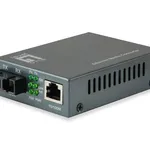
Network media converters fundamentally bridge the physical layer gap between disparate cabling types, most commonly converting copper-based Ethernet signals to fiber optic signals. This conversion is critical for overcoming distance limitations inherent to copper (typically 100 meters for Cat5e/6/7) and enhancing network resilience against electromagnetic interference (EMI) or radio-frequency interference (RFI) prevalent in industrial, outdoor, or critical infrastructure environments. The selection of a converter necessitates a comprehensive understanding of the specific network requirements, including data rates, fiber type, and environmental conditions to ensure optimal performance and reliability.
Understanding Fiber Optic Interfaces and Wavelengths
Fiber optic media converters operate with either multimode or singlemode fiber, dictated by the desired transmission distance and bandwidth. Multimode fiber (MMF) is suitable for shorter distances (typically up to 2 km) and often utilizes LED or VCSEL sources at 850nm or 1300nm wavelengths. Singlemode fiber (SMF), conversely, supports significantly longer distances (up to 120 km or more) utilizing laser transceivers at 1310nm or 1550nm. Furthermore, advanced deployments might leverage Wavelength Division Multiplexing (WDM) or Coarse WDM (CWDM) and Dense WDM (DWDM) technologies to transmit multiple data streams over a single fiber strand using different wavelengths, thereby maximizing fiber utility and reducing cabling costs. Connector types like LC, SC, and ST must also align with existing or planned fiber infrastructure.
Advanced Features and Operational Considerations
Modern media converters often integrate sophisticated features that extend their utility beyond simple media conversion. Link Fault Pass-Through (LFP), for instance, is a crucial diagnostic tool that immediately relays a link loss on one media type to the other, ensuring that upstream and downstream devices are aware of a fault and can react appropriately, preventing data black holes. Power over Ethernet (PoE or PoE+) compatible converters are invaluable for deploying IP cameras, wireless access points, or VoIP phones in remote locations where direct power outlets are scarce, delivering both data and power over the same Ethernet cable. Managed media converters offer advanced network management capabilities via SNMP, CLI, or web interfaces, allowing administrators to monitor link status, configure VLANs, apply QoS settings, and perform remote diagnostics, which is indispensable for large-scale or mission-critical deployments.
Industrial Applications and Environmental Robustness
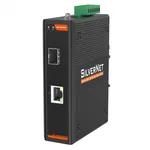
For deployment in harsh environments, industrial-grade media converters are essential. These devices are engineered to withstand extreme temperatures (typically -40°C to +75°C), high humidity, shock, vibration, and electrical noise. They often feature ruggedized enclosures, fanless designs, and redundant power inputs to ensure continuous operation in challenging settings such as factory floors, outdoor surveillance systems, or intelligent transportation systems. Compliance with specific industrial standards like IEC 61850 for substations or NEMA TS-2 for traffic control systems further underscores their suitability for specialized infrastructure applications, guaranteeing reliability and longevity under duress.