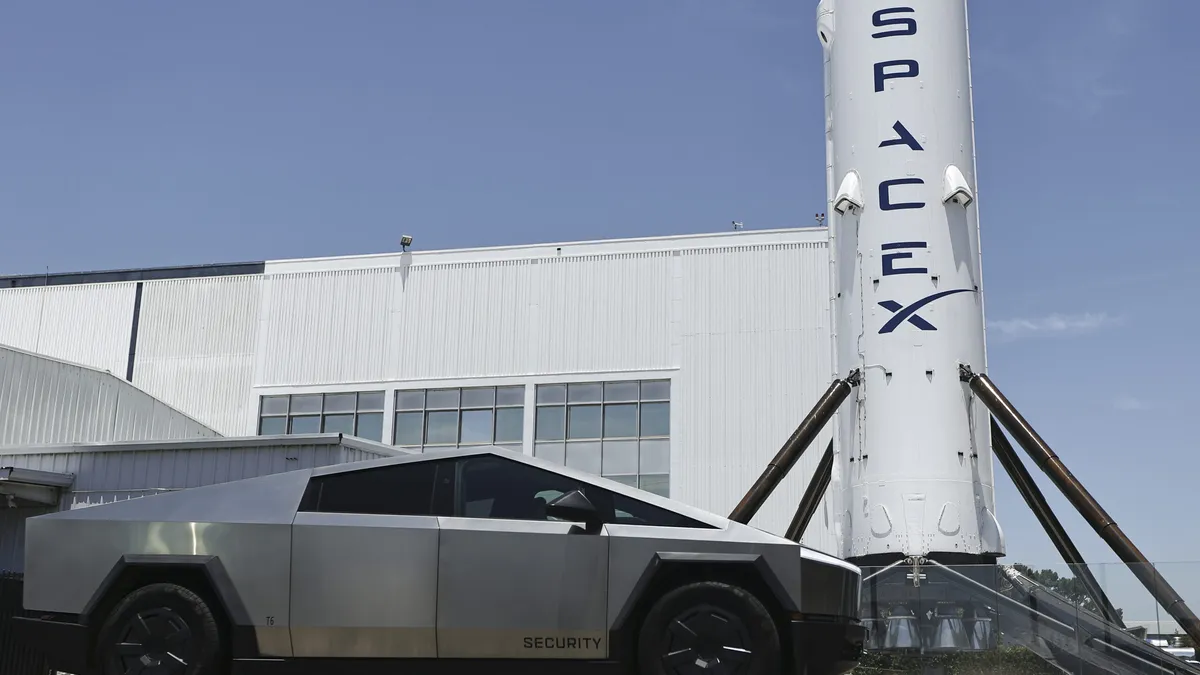
SpaceX's ambitious bid to secure expedited entry into major stock market indexes, including the prestigious S&P 500, has been met with a firm denial from S&P Dow Jones Indices. The decision, announced on June 4, means that SpaceX will not benefit from the automatic influx of capital from passive investment funds that track the S&P 500. This outcome quashes hopes that a precedent might have been set for other high-profile AI companies like OpenAI and Anthropic to gain similar accelerated access post-IPO.
The S&P 500, a benchmark for the largest and most profitable U.S. companies, has maintained its established criteria, refusing to waive standard listing requirements for Elon Musk's space and artificial intelligence venture. This adherence to protocol is likely to be viewed positively by investors and financial planners concerned about increasing exposure of retirement savings and passive investment portfolios to the inherent market risks associated with SpaceX's aggressive expansion into AI and its speculative orbital data center projects. These ventures, particularly in AI, face significant hurdles in data center construction and escalating operational costs, with companies already shifting a greater financial burden onto consumers through revised pricing models.
S&P Dow Jones Indices Consultation and Rationale
To evaluate the possibility of accommodating SpaceX's unique market position, S&P Dow Jones Indices conducted a month-long consultation. The consultation explored potential modifications to the eligibility criteria for 'MegaCap' companies, defined by their unprecedented market capitalizations. These proposed adjustments included a reduction of the typical 12-month 'seasoning period' for newly public companies to six months. Furthermore, considerations were made to waive the 'investable weight factor' (IWF) requirement, which mandates that at least 10 percent of a company's shares must be available for public trading, and to relax the stringent profitability requirements, which normally demand positive earnings in the most recent quarter and the preceding four quarters.
The proposed rule changes were specifically tailored to address SpaceX's intended IPO structure, which planned to offer only approximately 3 percent of its shares to the public. Additionally, these waivers would have accommodated SpaceX's current financial standing; the company is not yet profitable, carrying a substantial debt load of $29 billion, largely attributable to its significant investments in AI infrastructure and development.
Implications for AI and Tech IPOs
The refusal to bend established index inclusion rules has significant implications for the broader technology and artificial intelligence sectors. By maintaining its stringent criteria, S&P Dow Jones Indices signals a commitment to the integrity and stability of the S&P 500 index. This decision may encourage other companies, particularly in capital-intensive sectors like AI, to focus on achieving sustained profitability and meeting traditional listing requirements rather than relying on potential waivers for index inclusion.
For investors, this decision provides a clearer understanding of the pathway to S&P 500 inclusion. It reinforces the importance of fundamental financial health and public float size over rapid expansion or speculative ventures when seeking broad market investment. The rejection also highlights the challenges faced by companies with complex business models or aggressive growth strategies that may not align with the traditional metrics of public market readiness.
Impact Analysis
Broader Market and Investment Strategy Considerations
The S&P 500's decision underscores a prevailing sentiment in financial markets regarding the balance between innovation and established financial prudence. While companies like SpaceX and its AI-focused counterparts are pushing technological boundaries, their path to broad market integration via major indexes remains subject to rigorous financial scrutiny. This approach aims to protect the integrity of benchmark indexes and, by extension, the stability of the trillions of dollars in assets that are passively invested through them.
For the average investor, this means that while disruptive technologies and companies are vital for future growth, their inclusion in major market indexes will likely follow a more conventional trajectory. It emphasizes the need for thorough due diligence on companies, especially those in cutting-edge fields, assessing not just their technological potential but also their financial viability and adherence to market standards before significant investment. This rigorous approach helps mitigate systemic risks and promotes a more sustainable growth environment for both companies and investors.