A minor air leak detected in the Russian segment of the International Space Station (ISS) prompted NASA to direct its crew members to temporarily shelter in a SpaceX Dragon spacecraft on Friday. The precautionary measure involved four NASA astronauts from the SpaceX Crew-12 mission and NASA astronaut Chris Williams, who entered the Dragon capsule as a safety protocol while engineers assessed the situation. Fortunately, the situation was resolved relatively quickly, and the astronauts returned to their standard operations aboard the orbiting laboratory after a few hours.
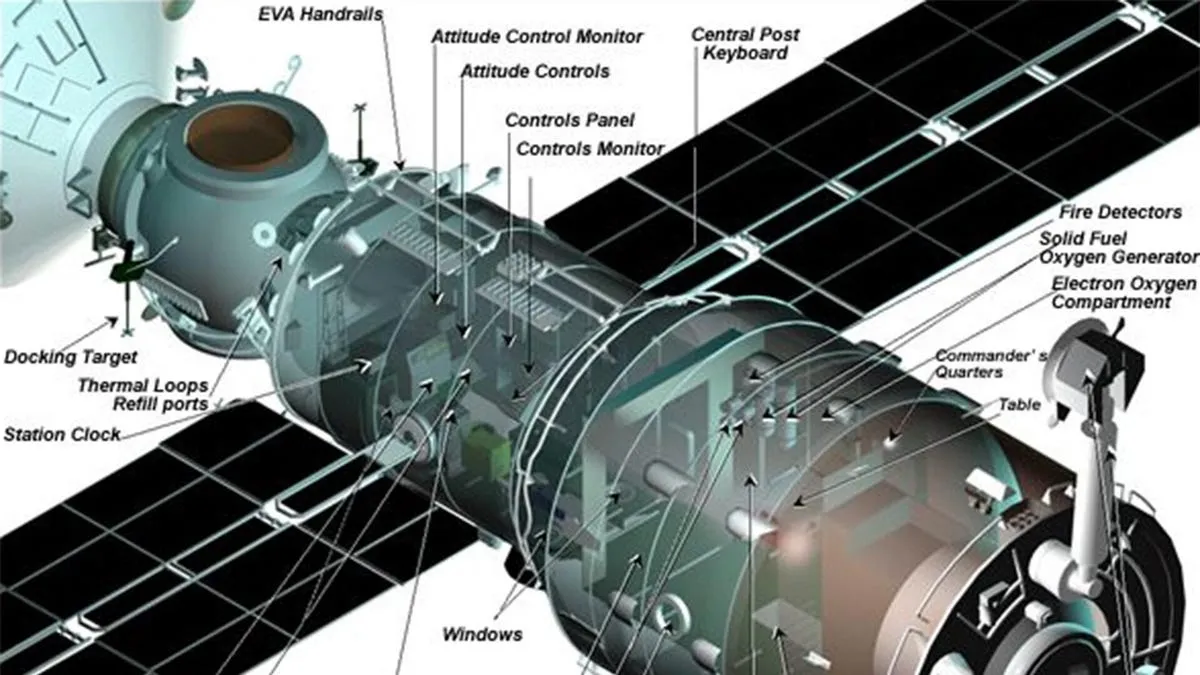
The discovery involved two new breaches identified in the transfer tube situated adjacent to the Zvezda service module. This module, a critical component of the Russian orbital segment, serves as the primary living quarters and houses essential life support systems for the station. While Russian cosmonauts successfully repaired one of the leaks, the decision was made to undertake a more comprehensive repair operation for the second, more significant leak.
ISS Air Leak Mitigation and Repair Efforts
The Zvezda service module has been a source of ongoing concern for both NASA and Roscosmos, Russia's space agency, due to persistent air leaks. First observed around 2019, these pressure drops have focused attention on the transfer compartment area that connects Zvezda to the rest of the ISS. Despite numerous repair attempts, the precise origin of these leaks remains unconfirmed. Engineers continue to investigate potential causes, including material fatigue and structural integrity issues within the module's joints, as well as the general aging of the component, which entered service in 2000.
To manage such occurrences, robust safety procedures are in place. The hatch leading to the transfer area, known as the PrK, which links Zvezda to docked spacecraft within the Russian segment, is kept sealed when not in use. Similarly, when the area is accessed, the hatch connecting to the U.S. orbital segment is secured. This compartmentalization ensures that any significant event would primarily affect only the Russian orbital segment of the ISS, limiting potential impacts on the broader station infrastructure.
SpaceX Dragon's Role in Emergency Preparedness
The SpaceX Dragon spacecraft, designed for both cargo and crew transport, plays a crucial role in the ISS's emergency preparedness strategy. In instances like the recent air leak, the Dragon capsule serves as a readily accessible safe haven. Its proximity and readiness allow for rapid evacuation of crew members from the station's main modules should an immediate threat arise. This capability underscores the importance of commercial partnerships in maintaining the safety and operational continuity of human spaceflight missions.
The deployment of astronauts into the Dragon spacecraft highlights NASA's commitment to crew safety above all else. While the leaks were minor and contained, the agency's directive reflects a conservative approach to space operations, where potential risks are meticulously evaluated and mitigated proactively. The successful return of the crew to regular duties signifies the effectiveness of these protocols and the resilience of the ISS systems, even when facing unexpected challenges.
Future of the International Space Station
The current trajectory for the ISS involves its operational lifespan extending until the end of 2030. NASA's definitive plan includes the utilization of a specialized SpaceX spacecraft to safely de-orbit the station, guiding it back to Earth. However, discussions are ongoing among U.S. lawmakers regarding a potential extension of the ISS's operational life, with proposals suggesting it remain active until 2032. This extension would provide additional time for the development and launch of a successor platform.
The envisioned replacement for the ISS is expected to be developed by private commercial partners, a strategy NASA hopes will foster innovation and create new commercial opportunities in low Earth orbit. These planned commercial space stations are slated for completion and operational deployment prior to the eventual decommissioning of the ISS. This transition marks a significant shift towards a more commercialized future in space exploration and utilization.