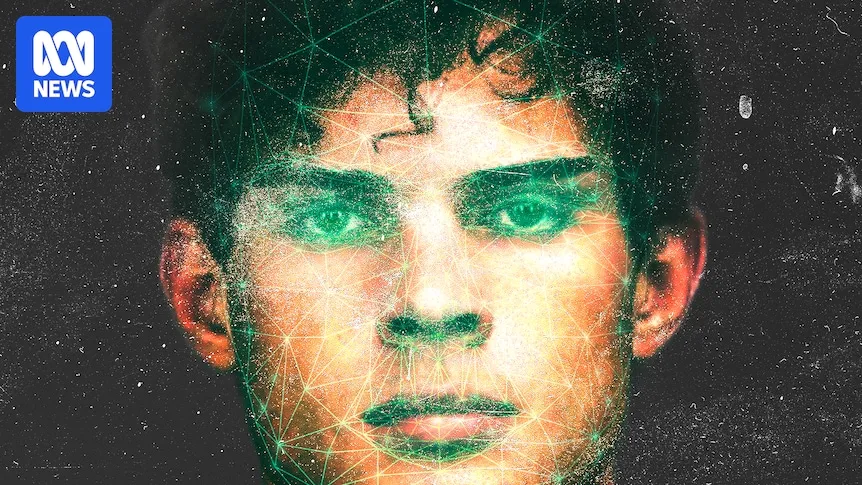
For many young men, the desire to present an appealing image is a familiar concern. Fifteen-year-old Levi notes the importance of "looking good" to maintain a positive reputation among peers, a sentiment echoed by his 15-year-old friend Nate, who emphasizes the need to "make sure I'm always looking good and sharp." While caring about one's appearance is not new, a burgeoning social media trend known as "looksmaxxing" is pushing this focus to extreme and potentially harmful levels. This movement, primarily targeting young men, advocates for maximizing physical attractiveness through any means necessary, including extreme dieting, surgical procedures, and the use of performance-enhancing drugs.
The methods described by some young men involved in this trend are alarming. Corbin, 16, mentions "cheek biting," a practice involving intensely gripping the inside of the cheeks to alter jawline appearance. Nate has observed individuals using peptides and steroids to enhance their physique, while Levi describes a practice known as "bone smashing"—reportedly hitting the jaw with a hammer—to achieve a more defined jawline, acknowledging that such actions can lead to significant complications. These extreme practices highlight a concerning escalation in the pursuit of idealized physical attributes, often fueled by online content.
The Digital Roots and Mainstream Creep of Looksmaxxing
The origins of looksmaxxing can be traced to the more obscure corners of internet forums, where individuals often attributed personal failures to perceived deficiencies in their physical appearance. Now, experts like Simon Copland, a sociology researcher at the Australian National University, express concern that these extreme viewpoints are migrating into mainstream discourse. Dr. Copland observes a societal shift over the last two decades, with an increasing emphasis on individual success, including physical attractiveness for both young men and women.
Historically, the focus on appearance and body image has predominantly centered on young women. However, Dr. Copland explains that the so-called "self-help" industry, amplified by social media influencers, has begun to actively target young men, presenting them with a new set of appearance-based pressures. This digital environment, with its constant stream of curated images and perceived ideals, plays a significant role in shaping these evolving beauty standards. 
Young Men Under Pressure
Dr. Copland further elaborates that the "self-help" industry, alongside social media influencers, has become a driving force in directing attention toward young men's appearances. This surge in online content creates an environment where specific aesthetic goals are constantly promoted. The constant exposure to these ideals can foster a sense of inadequacy and pressure among young men to conform to these often unattainable standards.
Seventeen-year-olds Alex and Raven, while not directly participating in looksmaxxing, have encountered similar content online and view it as another manifestation of toxic beauty standards. Alex likens the current pressures to those faced by young people in the early 2000s regarding weight, noting that looksmaxxing reflects a similar pattern of imposing narrow definitions of attractiveness. Raven specifically calls looksmaxxing a "hyper-masculine term" that reinforces detrimental stereotypes about male identity and behavior, ultimately arguing that it is harmful to everyone involved.
Exploitation of Insecurities
Zac Seidler, a psychologist specializing in men's mental health, points out that while societal biases favoring appearance, such as the "halo effect" or "pretty privilege," do exist, much of the advice disseminated within the looksmaxxing community is rooted in pseudoscience. He argues that these trends often prey on the fears and insecurities of young men, offering seemingly logical but ultimately unfounded solutions. 
Dr. Seidler emphasizes the importance of a scientific perspective when analyzing these trends, particularly because young men are often socialized to value data-driven, logical reasoning. He notes that the emotional component is often stripped away in looksmaxxing content, presenting a rigid, black-and-white view of attractiveness that is difficult to challenge. This deterministic approach can be particularly persuasive to young men seeking definitive answers to complex social pressures.
The Pseudoscience of Attractiveness Metrics
Dr. Copland concurs with Dr. Seidler, stating that looksmaxxing influencers frequently employ "dodgy science" to define what constitutes an attractive man. He asserts that there is no empirical validity to these claims, labeling them as pseudoscientific. These influencers often rely on a set of quantifiable measures, including facial symmetry, jawline definition, and a concept called "canthal tilt" (the angle of the outer eye corners).
By attempting to measure these traits quantitatively, looksmaxxing creates a perceived hierarchy of attractiveness. Dr. Copland explains that this quantitative approach inherently leads to a system where individuals are ranked, fostering competition and a drive to "out-mog" others, a term referring to surpassing someone in perceived attractiveness. This hierarchical structure is precisely what critics like Raven find problematic, as it exacerbates existing beauty standards and promotes a culture of comparison rather than self-acceptance.
Understanding 'Mogging' and its Digital Manifestations
The term "mogging" itself originates from the concept of AMOG (Alpha Male of the Group), a term historically used in online communities that promote notions of male dominance and hierarchy. This concept is central to the philosophy underpinning looksmaxxing. 
A website called Omoggle has emerged, leveraging the pseudoscience of looksmaxxing and transforming it into a gamified experience. Users on Omoggle are anonymously matched, their faces are scanned and scored based on looksmaxxing criteria, and a winner is declared, who has "mogged" the other participant. The site, launched in May, has already faced attempts by schools to block it due to concerns about its potential impact on young users, including the risks associated with interacting with strangers online and sharing biometric data, not to mention the significant detrimental effects on mental health.
The Gamification of Appearance and its Consequences
Dr. Seidler highlights a significant concern: the creation of a potentially endless pursuit for validation. He notes that young men may come to believe that there is a solvable problem with their appearance, but the goalposts continuously shift, leaving them in a perpetual state of seeking improvement without ever reaching a definitive endpoint. This can lead to persistent dissatisfaction and a decline in self-esteem.
Pablo Rogers, the creator of Omoggle, describes the ratings as merely a "game mechanic" rather than an objective judgment, intended for users over 18. However, experts caution that this distinction may not be clear, especially to younger individuals. Even if the creators intend it as a game, a segment of the user base takes the underlying principles of looksmaxxing far more seriously, leading to concerning psychological outcomes. 
Eighteen-year-old Ethan observes the substantial impact platforms like Omoggle can have on the mental well-being of young people. He believes the intense focus on physical appearance contributes significantly to damaged self-esteem and heightened self-consciousness among his peers.
Navigating Subjective Beauty Standards
Dr. Copland advises that while it is natural to care about one's appearance, it is crucial to understand how beauty standards have evolved historically and will continue to change. He stresses that the concept of attractiveness is inherently subjective, and what is considered beautiful varies greatly across individuals and cultures. 
He advocates for individuals to focus on their unique attributes and what makes them feel confident, rather than striving to meet a singular, idealized standard of beauty. This approach encourages self-acceptance and a more balanced perspective on physical appearance. He believes that beauty is not a fixed, universal concept but rather a fluid and personal experience.
Seventeen-year-olds Ruby and Lola echo this sentiment, emphasizing the importance of self-acceptance and recognizing individual uniqueness. Ruby states, "Everyone's unique and beauty's unique." Lola adds that beauty trends are constantly shifting, reinforcing the idea that there is no single, enduring ideal. Both emphasize the importance of self-love and embracing oneself regardless of prevailing societal standards.