1.8 teraflops (TFLOPS) represents a specific metric quantifying computational performance, particularly within the domain of floating-point operations per second. A teraflop signifies one trillion (1012) floating-point operations. Therefore, 1.8 TFLOPS indicates that a processing unit can execute 1.8 trillion such operations in a single second. This metric is predominantly used to assess the raw processing power of hardware accelerators, such as Graphics Processing Units (GPUs), or general-purpose processors (CPUs) when engaged in computationally intensive tasks like scientific simulations, complex mathematical calculations, and artificial intelligence model training and inference. The 'floating-point' aspect is critical, as it refers to arithmetic operations on numbers that have a fractional component, represented in a computer using a mantissa and an exponent, which is fundamental for handling non-integer data common in scientific and graphical computations.
The significance of a 1.8 TFLOPS performance value lies in its direct correlation with the speed at which complex algorithms can be processed. In applications demanding high parallelism and extensive numerical computation, a higher TFLOPS rating generally translates to faster execution times, enabling more intricate models, larger datasets, and more detailed analyses. For instance, in deep learning, the training phase of neural networks involves a vast number of matrix multiplications and convolutions, operations inherently suited for floating-point arithmetic. A system capable of 1.8 TFLOPS would process these operations at a rate of 1.8 trillion per second, directly impacting the feasibility and efficiency of deploying sophisticated AI models. Similarly, in high-performance computing (HPC), this metric informs the selection of hardware for tasks ranging from climate modeling to molecular dynamics simulations, where cumulative computational workload is immense.
Understanding Floating-Point Operations
Precision and Data Representation
Floating-point numbers are essential for representing real numbers with a wide range of magnitudes and precision. In computing, they are typically represented using formats defined by the IEEE 754 standard, such as single-precision (32-bit, FP32) and double-precision (64-bit, FP64). FP32 offers a balance of range and precision suitable for many graphics and AI workloads, while FP64 provides higher accuracy, crucial for scientific simulations where cumulative errors can significantly impact results. The TFLOPS metric can be further qualified by the precision of the operations it measures (e.g., FP32 TFLOPS, FP64 TFLOPS). For a given hardware architecture, the number of TFLOPS achievable often differs between FP32 and FP64 due to the increased complexity and memory bandwidth requirements of double-precision calculations.
The 'Tera' Prefix
The SI prefix 'tera' denotes a factor of 1012. Thus, one teraflop is equivalent to 1,000,000,000,000 floating-point operations per second. This astronomical number underscores the immense computational throughput required for modern scientific and technological challenges. The evolution of computing hardware has seen performance metrics escalate from megaflops (MFLOPS, 106 FLOPS) to gigaflops (GFLOPS, 109 FLOPS), and subsequently to teraflops and even petaflops (PFLOPS, 1015 FLOPS) and exaflops (EFLOPS, 1018 FLOPS) in supercomputing environments. A value of 1.8 TFLOPS positions a device within the mid-to-high range of consumer GPUs or professional workstations, capable of handling demanding tasks but distinct from the multi-petaflop capabilities of the world's most powerful supercomputers.
Hardware Architecture and Performance
Parallel Processing Architectures
Achieving high TFLOPS figures is fundamentally enabled by massively parallel processing architectures. GPUs, with their thousands of specialized cores (e.g., CUDA cores for NVIDIA, Stream Processors for AMD), are designed for executing numerous operations simultaneously. Each core can handle floating-point arithmetic, and when multiplied across the entire array of cores, they contribute to the aggregate TFLOPS rating. The specific architecture, clock speed, number of cores, and memory bandwidth of a GPU or CPU all influence its theoretical peak TFLOPS performance. For example, a GPU with 2500 cores each capable of 0.72 GFLOPS would theoretically achieve 2500 * 0.72 GFLOPS = 1800 GFLOPS, which equates to 1.8 TFLOPS.
Bottlenecks and Real-World Performance
While theoretical peak TFLOPS provide a useful benchmark, actual application performance is often constrained by other system factors. These bottlenecks can include memory bandwidth (the rate at which data can be transferred between the processor and memory), latency, CPU limitations, thermal throttling, and the efficiency of the software algorithms being executed. A system rated at 1.8 TFLOPS may not always achieve this peak in practice if, for instance, it frequently waits for data from slower system RAM or if the algorithm is not well-suited for parallel execution. Therefore, understanding the TFLOPS rating requires context regarding the specific hardware configuration and the nature of the workload.
Applications and Use Cases
Artificial Intelligence and Machine Learning
The training of deep neural networks is a prime example where TFLOPS are a critical performance indicator. Models with millions or billions of parameters require extensive matrix operations. A processing unit capable of 1.8 TFLOPS can accelerate the iterative process of model training, allowing researchers and engineers to experiment with more complex architectures and larger datasets more efficiently. For inference (deploying trained models), while demands might be lower, higher TFLOPS still enable faster response times and the processing of more concurrent requests, crucial for real-time applications.
Scientific Computing and Simulations
In fields like computational fluid dynamics (CFD), finite element analysis (FEA), weather forecasting, and bioinformatics, complex simulations involving partial differential equations are standard. These simulations demand significant floating-point computations. A hardware component offering 1.8 TFLOPS can process these simulations considerably faster than lower-spec hardware, enabling higher resolution, longer simulation times, or the exploration of more parameter variations within a given time frame. This is vital for scientific discovery and engineering design.
Gaming and Graphics Rendering
While game developers often refer to GPU performance in terms of frame rates and resolutions, the underlying computational power is measured in TFLOPS. A GPU with a theoretical performance of 1.8 TFLOPS can handle sophisticated graphical effects, high polygon counts, complex shaders, and advanced rendering techniques at higher resolutions and detail settings. This translates to smoother gameplay and more visually immersive experiences, especially in modern, graphically demanding video games.
Performance Metrics and Standards
Theoretical vs. Actual Performance
The 1.8 TFLOPS figure is typically a theoretical peak performance rating. It is calculated based on the processor's clock speed and the number of floating-point operations it can perform per clock cycle per core, multiplied across all relevant cores. Actual performance, however, is measured through benchmarks that simulate real-world workloads. Benchmarks like SPECviewperf, NVIDIA's CUDA-Z, or application-specific performance tests provide a more practical assessment of a system's capabilities, accounting for architectural efficiencies and potential bottlenecks.
Comparison Table: Illustrative TFLOPS Values
The following table provides illustrative TFLOPS values for different classes of computing hardware. Note that these are approximate and can vary significantly based on specific models, generations, and precision (FP32 vs. FP64).
| Hardware Class | Illustrative TFLOPS (FP32) | Typical Use Case |
|---|---|---|
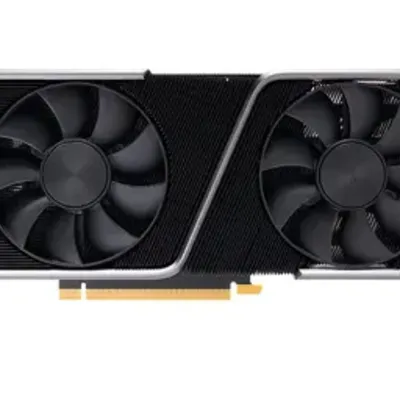
| High-End Consumer GPU (e.g., NVIDIA GeForce RTX 3070) | ~16-20 TFLOPS | Gaming, AI Development, Content Creation |
| Mid-Range Consumer GPU (e.g., NVIDIA GeForce RTX 3060) | ~13 TFLOPS | Gaming, Entry-Level AI/ML |
| Integrated Graphics (e.g., Intel Iris Xe) | ~1-2 TFLOPS | Light Gaming, Everyday Computing, Basic Media |
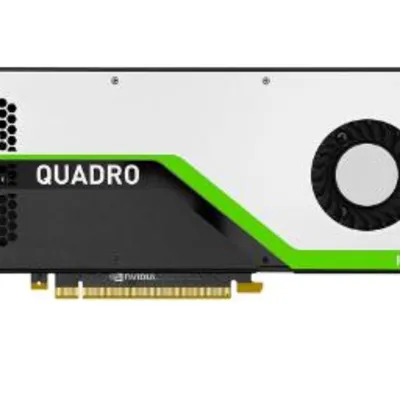
| Professional Workstation GPU (e.g., NVIDIA Quadro RTX 4000) | ~10-15 TFLOPS | Professional Design, CAD, Simulation |
| Mobile SoC GPU (e.g., Snapdragon 8 Gen 1) | ~1-3 TFLOPS | Smartphones, Tablets |
A device with exactly 1.8 TFLOPS FP32 performance would likely fall within the range of integrated graphics solutions or certain mobile processors, offering moderate computational capabilities for its class.
Future Outlook and Technological Evolution
The demand for higher computational throughput continues to drive advancements in processor architecture, manufacturing processes (e.g., smaller nanometer nodes), and specialized hardware like AI accelerators. While 1.8 TFLOPS is a notable figure for certain hardware categories, the industry trend is towards increasing TFLOPS ratings exponentially, particularly in HPC and AI domains, pushing towards petaflops and exaflops. Future hardware will likely incorporate more efficient floating-point units, novel parallel processing paradigms, and improved interconnects to mitigate bottlenecks, further increasing the practical utility of high TFLOPS values.