

A Deep Dive into Sous Vide Technology and Precision Cooking Principles
Understanding the Core Technology of Sous Vide
The essence of sous vide cooking lies in its unparalleled temperature control, a method where food, typically vacuum-sealed, is immersed in a water bath maintained at a precise temperature. This technique ensures that the food cooks evenly to its desired doneness from edge to edge, eliminating the common problem of overcooked exteriors and undercooked interiors. The fundamental components enabling this precision are the heating element and the circulation system, working in conjunction with highly accurate temperature sensors and sophisticated proportional-integral-derivative (PID) controllers.
Immersion Circulators Explained
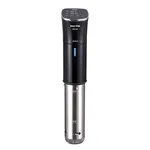
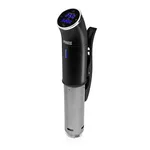
Immersion circulators represent the most popular form of sous vide equipment. These compact devices clamp onto the side of almost any heat-safe container, effectively turning it into a precision water bath. Their design incorporates a heating element to warm the water and a pump or impeller to continuously circulate it. This constant movement is crucial, as it ensures that the water temperature remains uniform throughout the entire bath, preventing hot or cold spots that could compromise cooking consistency. Technical specifications like wattage (e.g., 1000W-1200W for faster heating and recovery) and flow rate (measured in liters per minute, typically 8-12 LPM) directly impact their performance and efficiency, especially when cooking larger volumes or quantities of food.
Dedicated Sous Vide Water Ovens
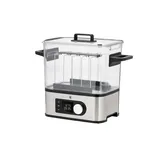
In contrast to immersion circulators, dedicated sous vide water ovens are self-contained units featuring an integrated water tank, heating element, and circulation system. These appliances often come with insulated walls, which contribute to greater energy efficiency and reduced water evaporation over extended cooking times, making them ideal for long cooks or professional environments. While they offer a fixed internal capacity and are less portable than immersion circulators, their all-in-one design provides a clean, often quieter, and highly stable cooking environment without the need for an external pot.
Precision Temperature Management and Sensors
The accuracy of a sous vide machine hinges on its temperature sensing and control system. Most high-quality units employ advanced thermistors or resistance temperature detectors (RTDs) which provide precise feedback to the PID controller. The PID algorithm then intelligently adjusts the power to the heating element to maintain the target temperature within a very narrow tolerance, typically ±0.1°C or even tighter. This minute control is paramount for achieving specific textures in proteins and ensuring food safety, particularly when cooking delicate items like fish or eggs.
Connectivity and User Interface Enhancements
Modern sous vide machines frequently incorporate smart features, offering Bluetooth or Wi-Fi connectivity. These functionalities allow users to control and monitor their cooks remotely via a smartphone application, access extensive recipe libraries, receive notifications, and even update the device's firmware. Beyond connectivity, the on-device user interface, encompassing the display clarity, button responsiveness, and intuitive navigation, plays a significant role in overall user experience, ensuring ease of setup and operational feedback.