

Deep Dive into Multi Cooker Accessory Engineering and Functional Enhancement
Understanding Material Science in Multi Cooker Accessories
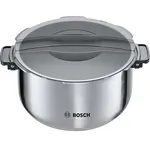
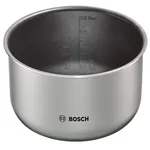
The performance and safety of multi cooker accessories are fundamentally dictated by their material science. Stainless steel, predominantly SUS 304 (18/8 food-grade) or SUS 316 (surgical grade), is favored for its exceptional corrosion resistance, high thermal conductivity, and inertness, ensuring no chemical leaching into food even under high-pressure, high-temperature conditions. Silicone components, such as sealing rings and trivet inserts, must be FDA-approved, BPA-free, and capable of enduring extreme temperature fluctuations from freezing to upwards of 450°F (232°C) without degradation or off-gassing. Non-stick coatings, when present on baking pans or sauté inserts, demand robust PFOA-free formulations that can withstand abrasive scrubbing and repeated thermal cycles without chipping or flaking, ensuring longevity and consistent food release.
Precision Engineering for Enhanced Functionality
Beyond material, the engineering precision of each accessory is critical. Steam racks and baskets, for instance, are designed with specific leg heights to maintain optimal distance from the pot bottom, preventing scorching and ensuring even steam circulation for delicate vegetables or seafood. Their perforation patterns are calculated to allow maximum steam penetration while retaining smaller food items. Trivets are dimensioned to securely hold bakeware or serving dishes above the liquid, facilitating pot-in-pot cooking. Specialized springform pans or fluted cake molds are often constructed with thicker gauge aluminum or carbon steel for superior heat distribution, critical for uniform baking results within the enclosed, high-humidity environment of a multi cooker.
Advanced Sealing and Pressure Management Components
The integrity of a multi cooker's pressure system heavily relies on its sealing components. The primary sealing ring, typically made from food-grade silicone, is engineered with precise tolerances to form an airtight seal between the lid and the inner pot under varying thermal expansion and contraction cycles. Its durometer (hardness) and elasticity are carefully selected to provide both resilience and compressibility. Redundancy is often built in with additional float valve seals and exhaust valve seals, all critical for maintaining pressure and preventing steam leakage, which could lead to undercooked food or safety hazards. Regular inspection and replacement of these wear-and-tear items are paramount to ensure sustained peak performance and safety.
Expanding Capabilities with Specialized Inserts and Lids
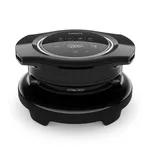
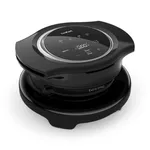
The evolution of multi cooker accessories extends to highly specialized components that dramatically expand the appliance's utility. Air fryer lids, for example, integrate a heating element and powerful fan to circulate hot air, transforming a pressure cooker into a convection oven capable of crisping, roasting, and dehydrating. These lids require precise temperature controls and robust safety interlocks to prevent operation outside safe parameters. Yogurt makers often come with specific incubation containers designed to maintain a stable, low temperature environment (typically 100-115°F / 38-46°C) crucial for beneficial bacterial fermentation. Even simple egg bite molds are engineered with specific cavity sizes and non-stick properties to facilitate consistent cooking and easy demolding, illustrating the meticulous design considerations across the entire accessory ecosystem.