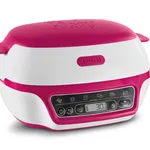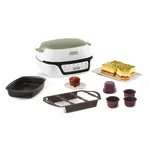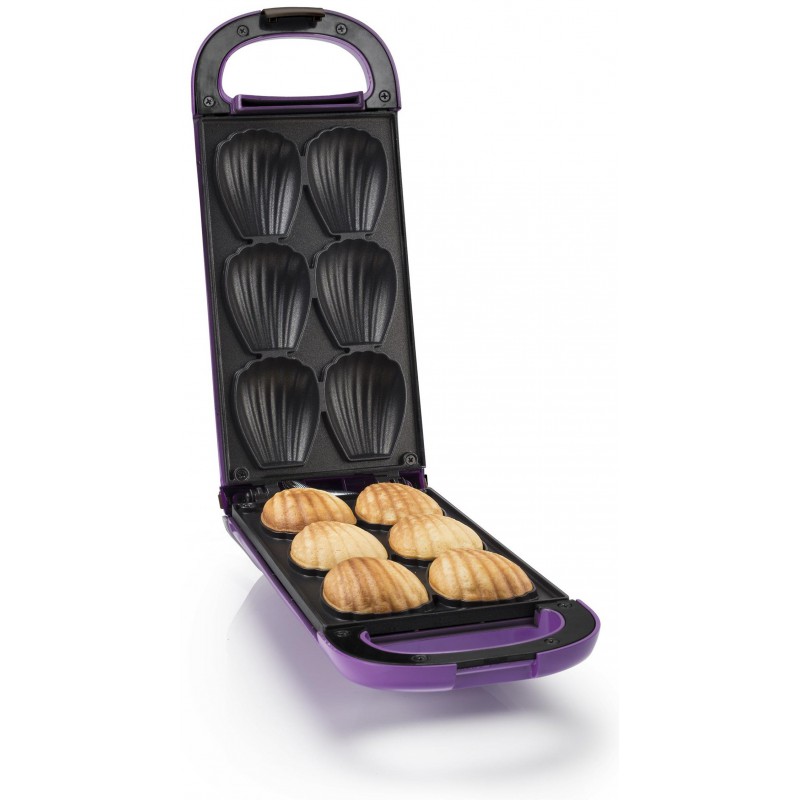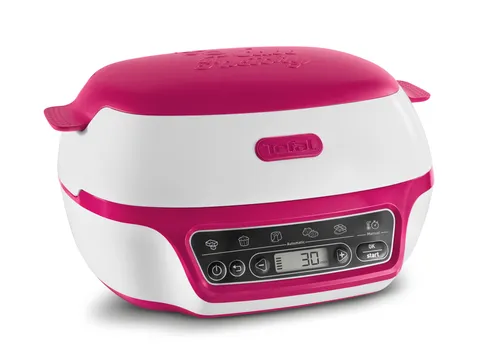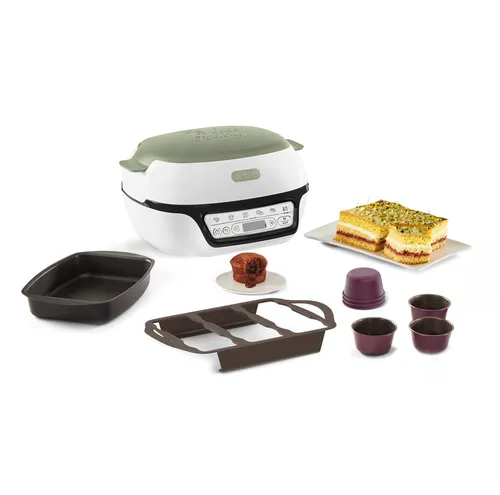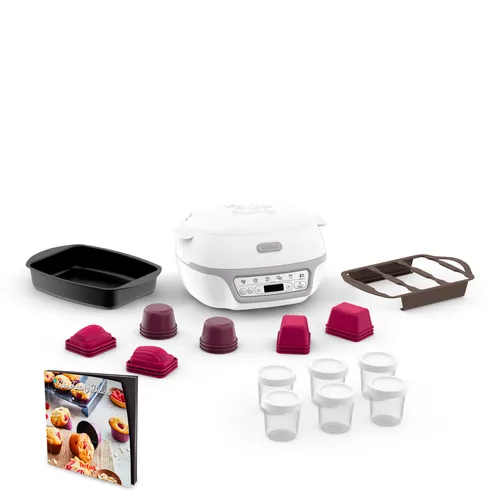


Tefal Cake Factory Cake Pop Maker
Specifications
Features
Features
| Power |
1100
W
81% better than others
|
|---|---|
| Non-stick coating |
Yes
77% have it
|
| Product colour |
White
|
| Handle(s) |
Yes
91% have it
|
Weight & dimensions
Weight & dimensions
| Width |
305
mm
56% better than others
|
|---|---|
| Depth |
335
mm
59% better than others
|
| Height |
195
mm
61% better than others
|
| Weight |
5.6
kg
93% better than others
|
Packaging data
Packaging data
| Package width |
348
mm
81% better than others
|
|---|---|
| Package depth |
379
mm
40% better than others
|
| Package height |
266
mm
61% better than others
|
| Package weight |
7.71
kg
31% better than others
|
Packaging content
Packaging content
| Recipe book |
Yes
84% have it
|
|---|
Logistics data
Logistics data
| Products per pallet layer |
6 pc(s)
|
|---|---|
| Products per pallet |
18 pc(s)
|
Other features
Other features
| Country of origin |
China
|
|---|
Disclaimer: Information on this page may need review. If you notice any discrepancies, please report them

The Tefal Cake Factory, specifically its Cake Pop Maker variant, enters the burgeoning market of specialized home baking appliances with a clear focus on convenience and ease of use. Designed for the modern home cook who seeks quick and consistent results without the fuss of traditional baking methods, this device aims to simplify the creation of popular cake pops. Its compact form factor and user-friendly interface suggest it's geared towards both novice bakers and those looking to streamline their dessert-making process for parties or everyday treats.
Analyzing its place in the market, the Tefal Cake Factory competes in a segment that values speed, predictability, and minimal cleanup. While traditional oven baking offers versatility, appliances like the Cake Factory promise a more controlled and dedicated experience for specific items. The appeal lies in its ability to deliver perfectly shaped and uniformly cooked cake pops, reducing the learning curve associated with achieving consistent results through conventional means. This review will delve into how its design and functionality stack up against user expectations and market trends for compact, specialized kitchen gadgets.
Key Features and Performance Analysis
The Tefal Cake Factory's primary function is the efficient production of cake pops. While specific technical specifications regarding heating elements, temperature control precision, or wattage are not detailed here, the product's design implies a system optimized for evenly distributing heat to multiple cake pop molds simultaneously. The non-stick coating on the molds is a critical feature, directly impacting the ease of cake pop removal and subsequent cleaning, which is often a pain point in similar appliances.
The intended user experience likely revolves around a straightforward operation: prepare a batter, fill the molds, close the lid, and wait for the indicator lights or timer to signal completion. The success of such an appliance hinges on its ability to cook the cake pops thoroughly without burning the exterior while leaving the interior undercooked. The consistency of size and shape across all cake pops produced in a single batch is another performance metric that users will keenly observe. Without detailed technical data on internal thermoregulation, we infer its performance is based on Tefal's reputation for developing reliable kitchen appliances.
Pros & Cons
Pros
What we love about this product
- Dedicated Cake Pop Molds: The appliance is purpose-built to create multiple cake pops simultaneously, ensuring uniform shape and size.
- Non-Stick Surface: Facilitates easy release of cooked cake pops and simplifies the cleaning process after use.
- Simplified Baking Process: Designed for user-friendliness, aiming to reduce the complexity and time typically associated with making cake pops.
- Compact Design: Likely occupies minimal counter space, making it suitable for kitchens with limited room.
Cons
Points to consider before buying
- Limited Versatility: Primarily designed for cake pops, restricting its use for other types of baked goods.
- Lack of Advanced Controls: Specific details on precise temperature settings or timer functions are not provided, suggesting a more basic operational model.
- Batch Size Limitation: The number of cake pops made per batch is determined by the mold capacity, potentially limiting output for larger gatherings.