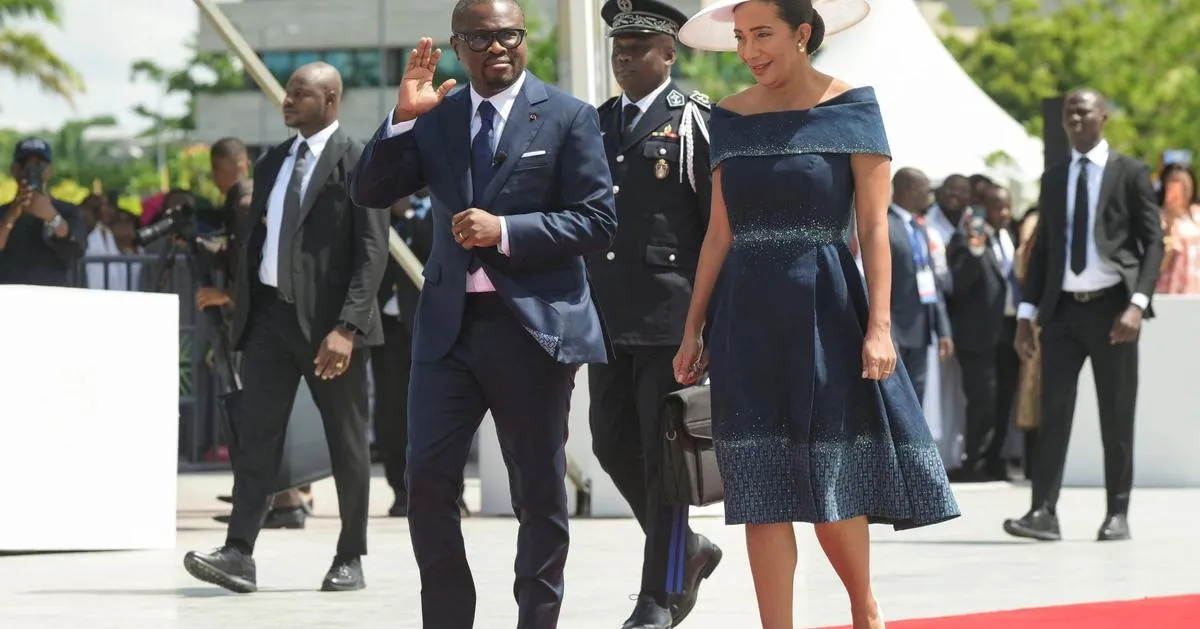
Benin's newly inaugurated President, Romauld Wadagni, has pledged to ensure that the nation's robust economic expansion translates into tangible improvements in the daily lives of its citizens. Sworn into office following a successful electoral term, Wadagni, who previously served as Finance Minister, inherits an administration that has steered the country towards significant economic achievements. Last year, Benin recorded an impressive economic growth rate of 7.5%, the highest since 1990, signaling a period of considerable economic momentum.
The International Monetary Fund (IMF) forecasts continued economic growth for Benin, projecting a 7% expansion for the current year while maintaining inflation at approximately 2%. Despite these promising macroeconomic indicators, President Wadagni emphasized that the true measure of national progress lies in its impact on the populace. This focus is particularly critical given that over a third of Benin's population currently lives below the poverty line, and the nation continues to grapple with persistent food insecurity, a challenge highlighted by international organizations.
Economic Growth and Social Equity
President Wadagni's administration is embarking on a mission to bridge the gap between national economic performance and the lived realities of ordinary Beninese citizens. The significant economic growth achieved in recent years, while a positive development, has not uniformly benefited all segments of society. A substantial portion of the population remains vulnerable, facing challenges related to poverty and access to essential resources. The president's commitment indicates a strategic shift towards inclusive growth, aiming to implement policies that ensure the benefits of economic expansion are widely distributed.
The administration is expected to focus on targeted interventions to alleviate poverty and enhance food security. This may involve investments in agricultural productivity, rural development, and social welfare programs designed to support vulnerable communities. The challenge lies in translating abstract economic figures into concrete improvements such as increased employment opportunities, better access to education and healthcare, and improved living standards across the nation. The success of Wadagni's term will largely depend on his ability to foster an economic environment that is not only growing but also equitable.
Navigating Regional Instability and Security Threats
Jihadist Insurgency and Border Security
Compounding the economic and social challenges, Benin is also contending with an escalating security situation, particularly along its northern borders. The country shares frontiers with Burkina Faso and Niger, both of which are currently under military rule and facing significant internal security threats. This proximity has led to an unfortunate spillover effect, with Benin experiencing an increase in jihadist attacks in recent times.
The gravity of this security threat was starkly illustrated by a recent attack in March, where 15 soldiers were killed at an army base. This incident underscores the precarious security environment and the substantial pressure on Benin's military and security forces. The government under President Wadagni will undoubtedly need to prioritize enhancing border security measures and strengthening counter-terrorism efforts to protect its citizens and maintain stability. The strategic location of Benin, bordering regions experiencing significant instability, necessitates a proactive and robust security posture.
Impact of Regional Instability on National Development
The persistent security threats emanating from neighboring countries pose a considerable risk to Benin's ongoing development efforts. Increased military spending to combat insurgency diverts resources that could otherwise be allocated to critical sectors like education, healthcare, and infrastructure. Furthermore, the instability can deter foreign investment, disrupt trade routes, and hinder economic activity, thereby undermining the very growth the new president aims to leverage for poverty reduction.
Addressing these intertwined issues of economic development, social equity, and regional security will be paramount for President Wadagni. His administration faces the complex task of balancing the demands of national defense with the imperative of fostering inclusive economic growth and improving the welfare of the Beninese people. The success of his presidency will be measured not only by economic statistics but by the tangible progress made in ensuring a secure and prosperous future for all citizens.