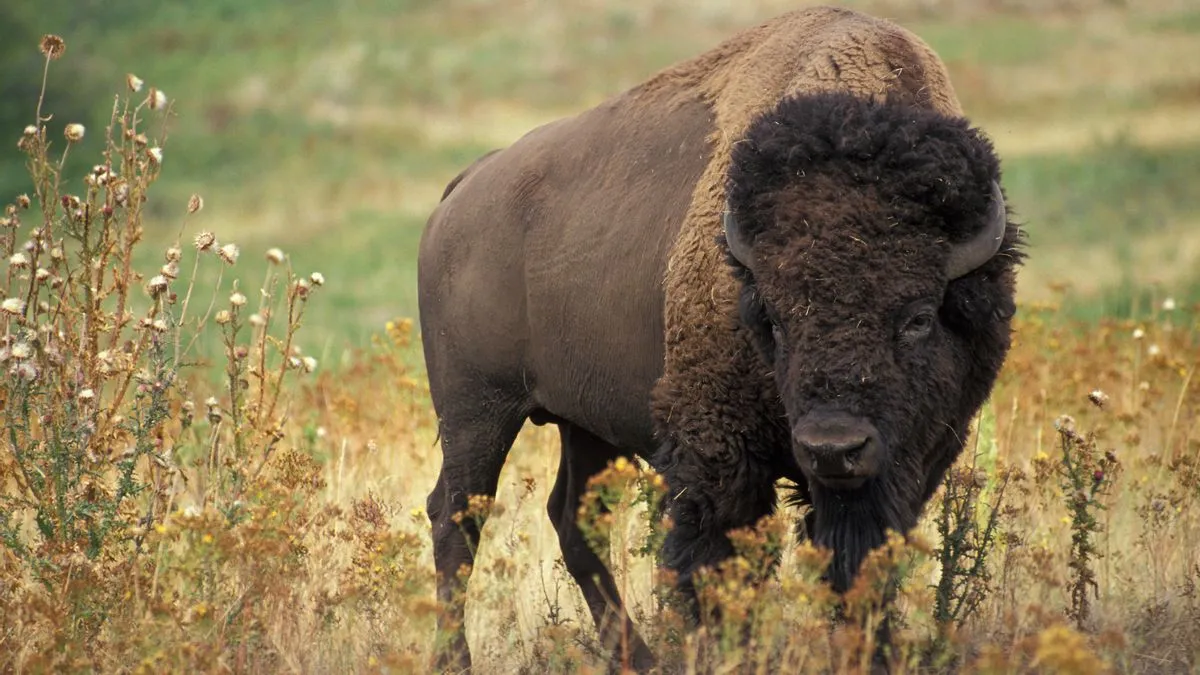
In May 2026, a wave of social media posts propagated a narrative that the U.S. administration was initiating the eviction of wild bison herds from federal grasslands. This interpretation, however, significantly misrepresented a nuanced decision by the U.S. Bureau of Land Management (BLM) concerning grazing permits held by the conservation group American Prairie. The core of the controversy lies in the BLM's re-evaluation of whether bison managed by conservation groups should be classified as domestic livestock, a classification critical for the issuance of grazing permits on federal lands.
The underlying issue stems from a proposed decision in January 2026, later finalized in May, by the BLM to revoke existing grazing permits for bison managed by American Prairie. This action was predicated on the administration's argument that the bison in question were not being treated as domestic livestock, thus falling outside the BLM's purview for granting such permits. This interpretation sparked concern among conservationists and Native American tribes, who feared broader implications for bison management on public lands, even though the BLM stated the decision was specific to American Prairie.
BLM's Grazing Permit Decision for American Prairie
The Bureau of Land Management oversees livestock grazing on an extensive 155 million acres of public land, a process managed through renewable 10-year permits and leases granted to ranchers. Historically, these permits have been for traditional livestock such as cattle. American Prairie, a conservation organization, had been granted permits allowing its bison to graze on certain BLM-administered lands since 2005, with a more comprehensive permit issued in 2022. This arrangement allowed American Prairie to manage a herd exceeding 900 bison on these public allotments, which were previously designated solely for cattle.
The BLM's proposed decision in January 2026, and its subsequent finalization in May, aimed to reverse the previous allowances for bison grazing by American Prairie. The agency stated its intent to cancel these bison grazing permits and reissue permits specifically for cattle. This move was met with praise from Montana's Republican Governor Greg Gianforte and the Montana Stockgrowers Association, who viewed it as a win for cattle ranchers. Conversely, American Prairie and the Coalition of Large Tribes, an organization representing over 50 Native American tribes, voiced strong opposition and initiated protests against the decision.
The Debate Over 'Domestic Livestock' Classification
Central to the BLM's justification for revoking the permits is its redefinition of 'domestic livestock' in the context of the Taylor Grazing Act of 1934. This legislation forms the bedrock of current laws governing grazing permits on public lands, authorizing the Secretary of the Interior to issue permits for grazing livestock. The BLM's proposal argued that its authority to grant grazing permits is limited to animals that are 'domestic' and are intended for 'production-oriented purposes.' This interpretation was derived from dictionary definitions of 'live,' 'stock,' and 'domestic,' leading the BLM to exclude animals perceived as 'wild' or intended for release into the wild.
The BLM's proposal further elaborated that 'stock' is inherently tied to commerce, thus necessitating 'production-oriented purposes' such as the production of meat, milk, or fiber. This created a point of contention, as American Prairie and the Coalition of Large Tribes challenged these definitions. They argued that the Taylor Grazing Act and related laws do not contain such definitions or the phrase 'production-oriented purposes.' They also referenced Montana state law, which distinguishes between domestic and wild bison based on ownership, and U.S. Forest Service regulations, which define livestock more broadly as 'animals of any kind kept or raised for use or pleasure.' The coalition specifically highlighted that tribal herds, even when managed within fences and used for production, might be classified as wild under the BLM's interpretation, posing a threat to their grazing rights.
Impact on Other Bison Herds and Federal Lands
Concerns were amplified by the potential for the BLM's new definition of 'domestic livestock' to affect other bison herds on federal lands, particularly those managed by Native American tribes. While the BLM's final decision explicitly stated that it was specific to American Prairie's allotments and would not impact tribal bison herds, the Coalition of Large Tribes expressed apprehension that such a precedent could lead to future challenges for tribal grazing permits. The coalition noted that many tribal buffalo herds are managed similarly to American Prairie's, often within fenced areas and utilized for production, while still being treated as wild by the tribes.
The decision also raises questions about the broader management of bison on federal lands. The BLM had previously issued 41 grazing permits for bison as of January 2025. Beyond BLM-managed lands, significant wild bison populations exist, notably in Yellowstone National Park, managed by the National Park Service (NPS). The Yellowstone herd is often considered the last truly wild plains bison herd. The NPS has sole authority over bison within Yellowstone and supports approximately 11,000 bison across ten national park units for conservation purposes. These populations are generally not subject to the same grazing permit regulations as those on BLM lands, though their existence can be impacted by inter-agency and state-level management decisions.
Impact Analysis
The Bureau of Land Management's decision to revoke American Prairie's bison grazing permits, based on a redefinition of 'domestic livestock,' has significant implications for wildlife management and conservation policy on public lands. By emphasizing 'production-oriented purposes' and distinguishing between wild and domestic animals based on these criteria, the BLM is setting a precedent that could affect how other conservation groups and Native American tribes manage bison herds. The legal challenges initiated by American Prairie and the Coalition of Large Tribes underscore the contentious nature of these definitions and their potential to alter long-standing practices. The outcome of these challenges could clarify the legal standing of bison as domestic livestock or wildlife in the context of federal grazing laws, impacting conservation efforts and the ecological role of bison on western rangelands.