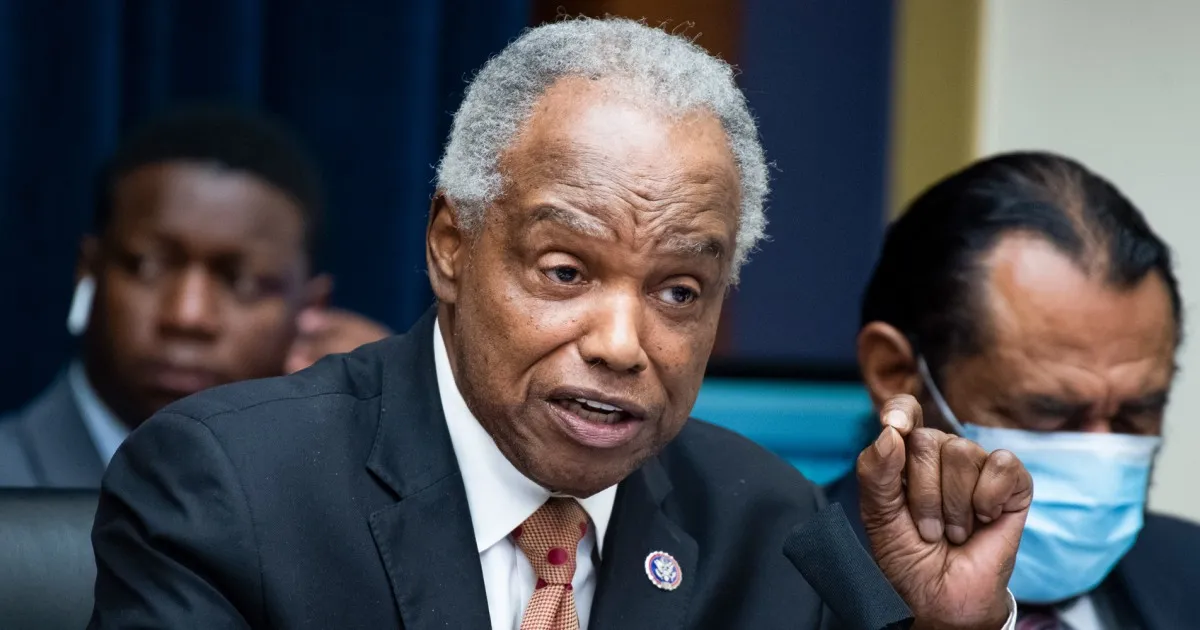
The esteemed career of Congressman David Scott, a pivotal figure in American agricultural policy and a trailblazer as the first African American to chair the House Agriculture Committee, has concluded. Scott, representing a district near Atlanta, Georgia, passed away at the age of 80. His office confirmed his death on Wednesday, marking a significant loss for the U.S. House of Representatives and the agricultural sector he so diligently served. Scott's journey from humble beginnings to a leadership position in Congress underscored a life dedicated to public service and advocacy for his constituents.
House Minority Leader Hakeem Jeffries, D-N.Y., expressed profound sorrow over Scott's passing, highlighting his role as a "trailblazer" who "served the district that he represented admirably." Jeffries further emphasized Scott's deep commitment to the people of Georgia and his unwavering dedication to legislative action, stating, "He cared about the people that he represented... and he'll be deeply missed." Scott's tenure in Congress, beginning in 2002, spanned over two decades as he sought re-election for his 13th term, a testament to his enduring connection with his electorate.
Legacy and Legislative Impact
Throughout his extensive service, Congressman Scott wielded significant influence over national agricultural policy. As the leading Democrat on the House Committee on Agriculture, he played a crucial role in shaping legislation that impacted farm subsidies, food security programs like the Supplemental Nutrition Assistance Program (SNAP), and essential services such as school lunches. His leadership on this committee was instrumental in navigating the complexities of modern agriculture, addressing the needs of farmers, rural communities, and consumers alike. The committee's purview extends far beyond traditional farming, encompassing vital programs for housing, energy, and nutritional support, making Scott's role exceptionally impactful.
Atlanta Mayor Andre Dickens lauded Scott as a "tireless advocate for the people he served," detailing the congressman's decades-long commitment to Georgia's agricultural community, veterans, and constituents at the grassroots level. Dickens noted Scott's consistent efforts to support Georgians through job and health fairs, directly impacting tens of thousands of lives. He characterized Scott's legacy as one of "service, perseverance and deep commitment to this state," underscoring the tangible benefits Scott's work brought to his home state. Scott's background, rooted in a tobacco farm in South Carolina and nurtured by opportunities facilitated by the very people his parents served, instilled in him a profound understanding of the challenges and resilience inherent in agricultural life.
Congressional Career and Health Considerations
Elected to the House of Representatives in 2002, Scott represented a district that included parts of Atlanta and its surrounding areas. His political career was marked by a consistent focus on the needs of his constituents, often engaging directly through community outreach programs. However, in recent years, reports emerged that raised questions about his health. Politico noted in 2022 that Scott appeared to have slowed noticeably, a sentiment echoed by those close to him. A public incident in 2024, where Scott reacted strongly to a photographer, highlighted the challenges he faced with public scrutiny regarding his health. Despite these concerns, Scott continued to participate in legislative proceedings, casting votes as recently as the day before his passing.
Scott's death impacts the delicate partisan balance in the House, shifting the Republican majority to 217 members, with Democrats holding 212 seats and one independent. Under Georgia's election laws, a special election will be required to fill the vacancy, necessitating a declaration by the governor followed by an election held at least 30 days later. This process ensures a timely replacement, although the specific timing and candidates will become clearer in the coming weeks. The loss of Scott, alongside other recent congressional departures due to various reasons, underscores the dynamic and often turbulent nature of legislative service in the current political climate.
Personal Life and Family Ties
Beyond his public service, David Scott's life was enriched by significant family connections. His brother-in-law was the legendary baseball Hall of Famer Hank Aaron, a towering figure in sports history. More recently, his grandson, Kimani Vidal, has emerged as a promising running back in the National Football League. These familial ties highlight a life that, while deeply embedded in the political arena, also embraced cultural and athletic spheres, connecting him to prominent aspects of American life and culture.
The passing of Congressman Scott also brings into focus the aging demographic within Congress. As of January, a notable number of House lawmakers were aged 80 or older and were seeking re-election. Scott was among this cohort, representing a generation of legislators who have served for extended periods. His death, alongside those of other recently deceased members such as Representatives Sylvester Turner, Raúl Grijalva, Gerry Connolly, and Doug LaMalfa, serves as a reminder of the human element within the legislative process and the considerable experience that is lost with the departure of seasoned lawmakers.
Impact Analysis
The death of Congressman David Scott creates a significant vacancy, particularly given his leadership role on the House Agriculture Committee. His institutional knowledge and influence over critical legislation affecting American farmers, food assistance programs, and rural development will be keenly missed. The subsequent special election will not only determine who represents his Georgia district but could also have subtle implications for committee assignments and the overall legislative agenda, especially concerning agricultural and food policy. Furthermore, the shift in party numbers in the House, though minor, can influence voting dynamics on closely contested issues. Scott's passing also contributes to a broader conversation about generational change within Congress and the ongoing challenges faced by older lawmakers in maintaining public service careers.