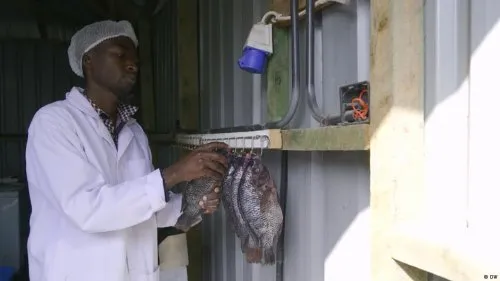
In the arid regions of Kenya, where water scarcity poses a significant challenge to traditional agriculture, innovative farming techniques are emerging to ensure food security and economic development. One such groundbreaking approach is the implementation of solar-powered vertical fish farms. These systems represent a paradigm shift in aquaculture, enabling the cultivation of fish in environments previously considered unsuitable, thereby addressing critical issues of food production and sustainable resource management.
The concept leverages vertical farming principles combined with renewable energy, specifically solar power, to create controlled environments for raising fish. This method drastically reduces the water footprint compared to conventional fish ponds, a crucial advantage in drought-prone areas. By recirculating and filtering water, these farms minimize water loss through evaporation and discharge, making them an eco-friendly and resource-efficient solution. The integration of solar energy further enhances sustainability by reducing reliance on fossil fuels and lowering operational costs.
Innovations in Kenyan Aquaculture
Kenya's agricultural sector is increasingly exploring innovative solutions to overcome environmental and economic hurdles. The adoption of vertical fish farming is a testament to this adaptability, particularly in regions like Baringo, where drought has historically impacted livelihoods dependent on traditional farming and livestock. This high-rise aquaculture system is designed to maximize space efficiency, allowing for significant fish production within a relatively small footprint. The controlled environment also offers protection from predators and diseases that often plague open-water fish farms, leading to higher survival rates and improved yield.
The vertical setup involves stacking tanks or raceways vertically, allowing for a multi-level production system. Water is pumped from a source, treated, and circulated through the tanks, with waste filtered out and often utilized as fertilizer for other agricultural purposes, creating a symbiotic farming ecosystem. The solar power system, typically comprising photovoltaic panels and battery storage, ensures consistent energy supply for water pumps, aeration systems, and lighting, even during power outages or at night. This self-sufficiency is vital for maintaining optimal conditions for fish growth.

Technological Integration and Sustainability
The operational efficiency of these solar-powered vertical fish farms is heavily reliant on integrated technology. Advanced water filtration systems, including mechanical and biological filters, are essential for maintaining water quality by removing ammonia, uneaten food, and other waste products. Aeration systems, powered by solar energy, ensure adequate dissolved oxygen levels crucial for fish health. Monitoring systems, which can range from simple manual checks to sophisticated sensor-based automation, help farmers track key water parameters like temperature, pH, and dissolved oxygen, allowing for timely interventions.
Sustainability is the cornerstone of this aquaculture model. Beyond water conservation and solar energy utilization, the system minimizes land degradation. Unlike traditional ponds that require large land areas and can lead to soil erosion, vertical farms occupy a minimal land footprint. Furthermore, the fish feed used can be optimized for efficiency, and any by-products, such as nutrient-rich wastewater, can be repurposed for hydroponic farming or soil enrichment, embodying circular economy principles within agriculture.
Challenges and Future Prospects
Despite the promising advantages, the widespread adoption of solar-powered vertical fish farms in Kenya faces certain challenges. The initial investment in infrastructure, including tanks, filtration systems, solar panels, and pumps, can be substantial, posing a barrier for smallholder farmers. Access to technical expertise for installation, operation, and maintenance is also crucial. Ensuring a consistent supply of fingerlings (young fish) and appropriate feed, along with market access for the harvested fish, are further considerations for the long-term viability of these ventures.
However, the potential benefits far outweigh these challenges. With increasing global demand for protein and the escalating impacts of climate change on traditional food production, sustainable aquaculture methods like vertical farming are poised for significant growth. Government support, private sector investment, and educational initiatives aimed at training farmers in these advanced techniques will be instrumental in scaling up these operations across Kenya and potentially other regions facing similar environmental conditions. The success of these farms offers a model for resilient and sustainable food systems in the face of environmental adversity.
Impact Analysis
The proliferation of solar-powered vertical fish farms in Kenya's arid regions signifies a critical advancement in climate-resilient agriculture. By decoupling fish production from water-intensive land use and harnessing renewable energy, these farms contribute significantly to food security and economic diversification, particularly for communities vulnerable to drought. This innovation not only provides a vital source of protein but also creates employment opportunities and fosters technological adoption within the agricultural sector. Furthermore, it serves as a replicable model for sustainable aquaculture development in other water-scarce regions globally, highlighting the potential of technological innovation to address pressing environmental and food system challenges.