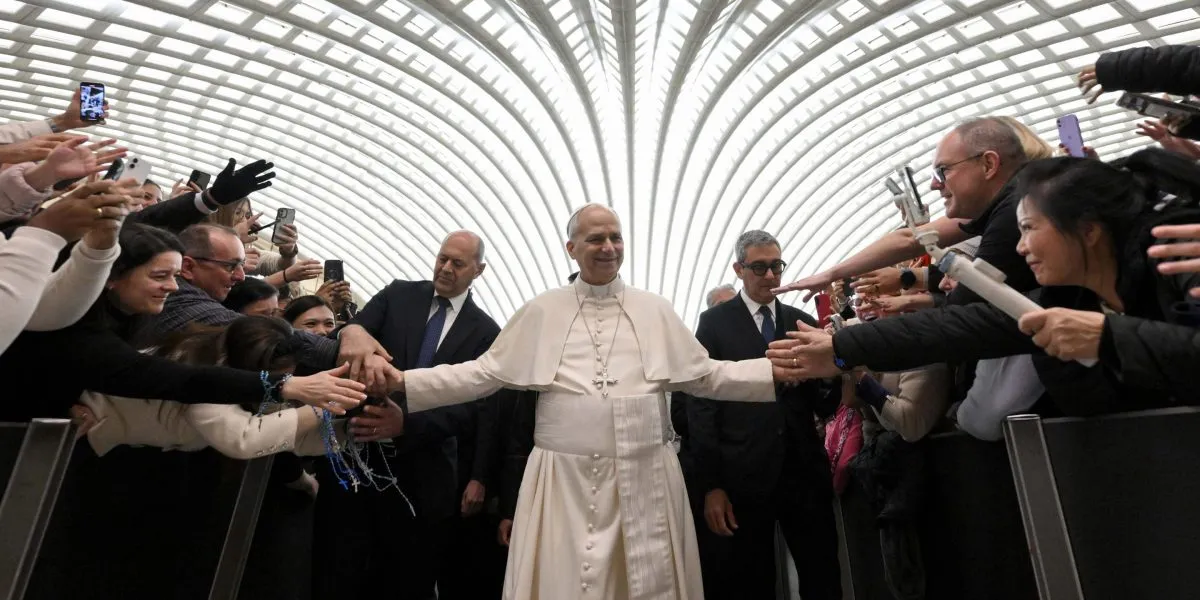
The Catholic Church, through the Vatican, has taken a significant step in addressing the rapidly evolving landscape of artificial intelligence by approving the establishment of a new Vatican commission dedicated to AI. This strategic move, sanctioned by Pope Leo XIV on May 16th, underscores the growing global apprehension surrounding the pervasive influence and potential real-world harms of AI technologies. The commission's formation precedes the Pope's inaugural papal encyclical on AI, highlighting the Church's intent to actively engage with and guide discussions on the ethical implications and societal impact of artificial intelligence.
This initiative marks a historic moment, representing the first time the Catholic Church has formally consolidated its efforts and engagement with AI under a unified body. It arrives at a critical juncture where international governmental bodies remain divided on the necessity and implementation of AI regulation. The Vatican's proactive stance aims to contribute a moral and ethical framework to the global dialogue, focusing on principles of human dignity, justice, and the common good, distinct from the predominantly risk-based regulatory approaches being considered by secular governments.
Vatican's AI Commission: Mandate and Composition
The newly formed commission is tasked with fostering collaboration and facilitating the exchange of crucial information among various Vatican departments concerning AI activities and projects. A key aspect of its mandate includes the development and implementation of policies governing AI usage within the Holy See itself. This comprehensive body draws its representatives from seven integral Vatican institutions, ensuring a broad spectrum of expertise and perspectives. These include influential bodies such as the Dicastery for the Doctrine of the Faith, the Pontifical Academy for Life, and the Pontifical Academy of Sciences, demonstrating a commitment to a well-rounded approach to AI governance.
Cardinal Michael Czerny, the prefect of the Dicastery for Promoting Integral Human Development, articulated the commission's vital role, stating it would empower the Roman Curia to effectively "address the challenges of artificial intelligence both internally and for the whole Church, and the whole world." The Vatican's engagement with AI policy is not entirely new, having been involved in discussions for over a decade. Pope Francis previously addressed the G7 on AI ethics in June 2024, and Vatican officials have engaged in private dialogues with technology leaders from companies like Google and Microsoft regarding AI ethics. However, these prior efforts lacked the centralized coordination that this new commission is designed to provide. Furthermore, the Vatican had already enacted internal AI guidelines effective January 1, 2025, which mandate the disclosure of AI-generated content, prohibit AI that contradicts the Church's mission, and establish an internal compliance commission.
The Papal Encyclical on Artificial Intelligence
The establishment of the AI commission coincides with the impending release of Pope Leo XIV's first papal encyclical, a significant document expected to address artificial intelligence through the prism of Catholic social teaching. The encyclical is anticipated to delve into critical issues such as labor rights, social justice, and the intrinsic value of human dignity in the age of advanced technology. Reportedly titled Magnifica Humanitas (“Magnificent Humanity”), this seminal work is poised to examine the profound effects of AI on both individual lives and the dynamics of working environments worldwide.
Pope Leo XIV has deliberately drawn a parallel between his forthcoming encyclical and Rerum Novarum, the landmark 1891 encyclical issued by Pope Leo XIII. That historic document addressed the burgeoning labor rights issues during the Industrial Revolution. Echoing this historical precedent, Pope Leo XIV stated shortly after his election in May 2025, “In our own day, the Church offers to everyone the treasury of her social teaching in response to another industrial revolution and to developments in the field of artificial intelligence.” This linkage highlights the Vatican's view of the current AI revolution as a transformative period comparable to past industrial shifts, necessitating a robust ethical and social response grounded in Church doctrine.
Pope Leo XIV's Stance on AI
Pope Leo XIV, born Robert Francis Prevost and notably the first American pope, brings a unique background to his pontificate, having studied mathematics before pursuing a religious vocation. In his initial address to the cardinals in May 2025, he identified AI as a central challenge of his papacy, cautioning against its potential to threaten "human dignity, justice, and labor." This early declaration set a tone of critical engagement with the technology, emphasizing its potential downsides alongside its advancements.
In subsequent public statements, including his first media address in May 2025, he acknowledged the "immense potential" of AI but stressed the imperative for responsible usage to "ensure that it benefits everyone." Speaking at the Second Annual Rome Conference on AI, Ethics, and Corporate Governance in June 2025, he reiterated this concern, warning that AI "must never forget human dignity" and must not impede proper human development, particularly for children and adolescents. His admonishments extended to younger generations, as he advised teenagers in 2025 to utilize AI mindfully, ensuring they retain independent thinking skills should the technology become unavailable. He also issued a stark warning to Gen Z and Gen Alpha against an over-reliance on chatbots, fearing a potential erosion of critical thinking and inherent wisdom. More recently, in a May 2026 address at La Sapienza University in Rome, he decried investments in AI and advanced weaponry as escalating global risks and pushing humanity toward a "spiral of annihilation."
AI and Geopolitical Dynamics
The Vatican's AI commission emerges amidst a complex geopolitical climate, notably including an escalating public dispute between Pope Leo XIV and U.S. President Donald Trump. This contentious relationship has reportedly influenced interactions between the White House and the Vatican since the commencement of the U.S. war in Iran. AI has even played a role in this public feud, evidenced by an AI-generated image depicting Trump in a Christ-like pose, which was posted and subsequently deleted from his account. This incident illustrates how AI is becoming entangled in political narratives and public image construction.
In contrast to governmental regulatory frameworks that typically focus on product risks, market access, and enforcement mechanisms—such as the European Union's comprehensive AI Act or the more fragmented U.S. approach—the Vatican's strategy prioritizes moral teaching centered on human dignity, labor, and the common good. The EU's AI Act, for instance, imposes significant fines for prohibited AI uses, while the U.S. grapples with a divided federal landscape and a collection of state-level regulations. The Vatican's commission, therefore, functions less as a traditional regulator and more as an organized advocate, seeking to amplify the Church's voice in the global discourse on AI and influence its development and deployment based on ethical and humanitarian principles.
Impact Analysis
The Vatican's establishment of a dedicated AI commission and the impending release of a papal encyclical on the subject signal a significant development in the global conversation around artificial intelligence. By integrating theological and ethical perspectives with technological advancements, the Church aims to provide a distinct moral compass in a field often driven by technological possibility and commercial interests. This move could influence public discourse, particularly among the vast global Catholic population, potentially shaping demand for ethically developed AI and encouraging greater accountability from technology developers and policymakers. Furthermore, the Vatican's approach, emphasizing human dignity and the common good, offers a complementary perspective to existing regulatory efforts, potentially fostering a more holistic and human-centric framework for AI governance worldwide.