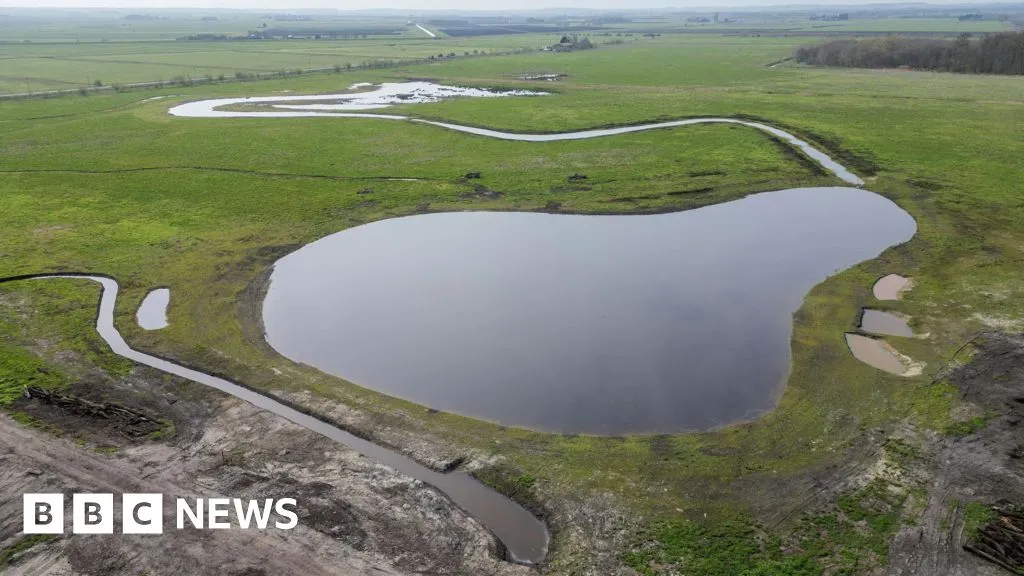
A significant ecological transformation is underway at the Great Fen nature reserve near Ramsey, Cambridgeshire, with the near completion of a new 25-hectare wetland area. This ambitious project, spanning a full year of development, has successfully converted arable land into a vibrant habitat featuring a new mere, intricate channel systems, and extensive reedbeds. Early indications are highly promising, as various wildlife species have already begun to explore and inhabit the nascent ecosystem, signaling its potential as a vital natural resource.
The creation of this wetland represents a crucial step in the ongoing Peatland Progress initiative, a key component of the larger Great Fen vision. This phase of development, significantly supported by funding from the National Lottery Heritage Fund, is dedicated to reconnecting two historically fragmented ancient fen landscapes: Woodwalton Fen and Holme Fen. The overarching goal of the Great Fen project, initiated in 2000 by the Wildlife Trust for Bedfordshire, Cambridgeshire and Northamptonshire in collaboration with other environmental organizations, is to meticulously restore and expand a rich wetland environment.
Great Fen Wetland Development and Wildlife Influx
The newly established wetland, covering an area approximately equivalent to 60 football pitches, has been engineered to provide a rich and varied habitat. Project managers have observed initial signs of wildlife engagement, with lapwings noted surveying the area for potential feeding opportunities. The transformation involved extensive earthworks to create the shallow waters of the mere and the network of channels, complemented by the planting and natural colonization of reedbeds, which are essential for aquatic and semi-aquatic species.
Lorna Parker, the Great Fen project manager, expressed optimism about the project's progression. She highlighted the successful filling of the mere and channels due to recent rainfall, stating, "Wherever there is water, there is life." This natural influx of water is critical for establishing the foundational elements of the wetland ecosystem, creating the conditions necessary for diverse flora and fauna to thrive. The focus now shifts from construction to allowing natural processes to fully establish the ecological balance.
Ecological Significance and Habitat Creation
The design of the wetland, with its gently sloping muddy edges along the waterways, is particularly beneficial for invertebrate populations. These moist environments are ideal breeding grounds for insects and molluscs, which form a crucial food source for a variety of bird species. Parker noted that these organisms will "provide a feast" for wading birds, including lapwings, redshank, and snipe, which are expected to utilize the reserve for breeding and feeding.
The introduction of these specific habitat features is a deliberate strategy to support specialist species that rely on wetland environments. The presence of a diverse insect and mollusc population is a strong indicator of a healthy aquatic ecosystem and is a precursor to attracting a wider array of birdlife. The long-term vision is to create a robust and self-sustaining habitat that contributes significantly to biodiversity conservation efforts.
The Broader Vision of The Great Fen Project
The Peatland Progress project is designed as a five-year undertaking aimed at achieving a substantial ecological restoration. By linking the Woodwalton Fen and Holme Fen fragments, the project seeks to create a large, contiguous wetland landscape that can support more complex ecological processes and a greater diversity of species. This restoration is vital for conserving rare fenland habitats and the species they support.
The Great Fen initiative, which commenced at the turn of the millennium, has been a long-term commitment to landscape-scale conservation. Its success relies on the coordinated efforts of multiple organizations and significant investment, such as that from the National Lottery Heritage Fund. The project is not only focused on ecological restoration but also on creating accessible natural spaces for public enjoyment and education.
Public Access and Future Prospects
Looking ahead, Parker indicated that the new wetland area is slated to open to the public in the summer. This opening will offer visitors an unprecedented opportunity to witness firsthand the land's transition back to a natural state, a process that has not been visible in this region for over a century. The aim is to provide an immersive experience that connects people with the natural world and the importance of wetland conservation.
The phased development and eventual public access underscore the project's dual commitment to ecological recovery and public engagement. By allowing people to experience the land's natural resurgence, the Great Fen project hopes to foster a deeper appreciation for biodiversity and the ongoing efforts to protect and restore vital natural habitats for future generations.