The term "chimera," evoking a mythical fire-breathing beast with the body of a goat, head of a lion, and tail of a dragon, originates from the Greek word "Khimaira," meaning "year-old she-goat." Today, it broadly signifies a bizarre amalgamation of disparate elements, a usage that has persisted since the Middle Ages. Illuminated manuscripts from this era frequently feature chimeras, a multitude of beastly hybrids that possess a whimsical quality, lending themselves readily to modern internet memes. Intriguingly, many of these fantastical creatures were intended by their creators as depictions of actual, individual animals, reflecting a unique worldview.
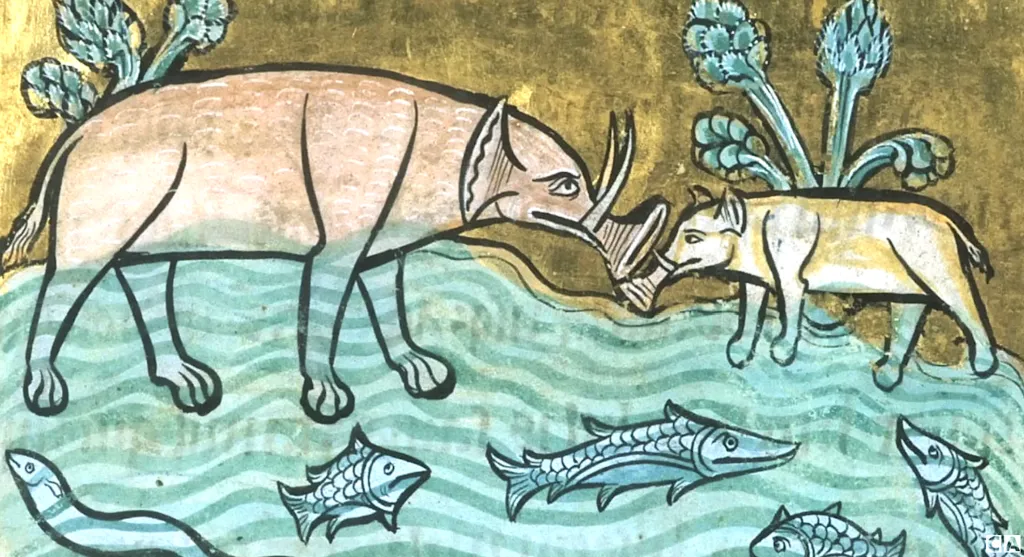
The visual representations of medieval chimeras, both intentional and unintentional, offer a fascinating glimpse into the era's understanding of the natural world. These depictions range from spiked sea turtles and tigers lacking stripes to hippopotamuses with dorsal fins, elephants bearing entire stone castles on their backs, hyenas resembling carnivorous cows, ostriches consuming iron horseshoes, and scorpions with mammalian features. Such creative interpretations were, to a degree, unavoidable given the limited access to exotic fauna in medieval Europe, even for artists attached to royal courts. Their primary sources of information were often oral accounts or texts like the Bestiary.
The Bestiary: A Medieval Compendium of Reality and Fantasy
The Bestiary served as a unique compendium during the Middle Ages, functioning simultaneously as a natural history text and a source of moral and religious instruction. As noted by the Metropolitan Museum of Art, these texts incorporated tales of bizarre and fearsome creatures, blurring the lines between the factual and the fantastical. This integration of the real and the imaginary was characteristic of many aspects of the pre-Enlightenment world, a concept that can be challenging for contemporary audiences to fully grasp. The symbolic significance often held precedence over literal accuracy for medieval artists, particularly concerning animals like the lion, which had been locally extinct since before the medieval period began.
Jane Alexander, writing for Mental Floss, highlights that the symbolic associations of animals, such as the lion with Jesus Christ, were as crucial to artists as their physical attributes. Consequently, "medieval artists typically weren’t concerned with realism," as stated by the Met's associate curator, Shirin Fozi. Fozi's observation that observers often believe they are laughing *at* the Middle Ages, when in reality they are laughing *with* it, underscores the sophisticated, and often humorous, perspective of the era. The concept of the "funny animal" has a far more ancient lineage than commonly assumed, suggesting that our ancestors possessed a sense of humor that resonates with ours today.
Artistic Interpretation and the Influence of Lore
The creation of these unique animal depictions was heavily influenced by a combination of limited direct observation, secondhand accounts, and established lore. Artists often relied on existing textual descriptions or previous artistic representations, leading to a gradual evolution and often distortion of the original animal forms. The cultural and religious significance attached to certain animals further embellished their portrayals. For instance, the lion, a potent symbol of royalty and divinity in many cultures, was frequently depicted with exaggerated features or in symbolic contexts that transcended its physical reality.
The Bestiary, in particular, played a pivotal role in disseminating information and influencing artistic conventions. These manuscripts were not merely compilations of natural phenomena but also contained allegorical interpretations and moral lessons. The descriptions of animals were often intertwined with narratives about their perceived behaviors, habitats, and symbolic meanings. This rich tapestry of information, blending empirical observation with myth and allegory, provided fertile ground for artistic creativity, resulting in the extraordinary and often whimsical bestiary we see in medieval art.
The Enduring Fascination with Medieval Bestiaries
The enduring appeal of medieval bestiaries lies in their unique blend of the familiar and the fantastic. They offer a window into a historical mindset where the boundaries between the natural world, mythology, and spiritual belief were fluid. The creatures depicted, born from a desire to understand and categorize the world, often reflect the anxieties, aspirations, and humor of medieval society. These manuscripts continue to captivate modern audiences, prompting reflection on how different cultures and historical periods have interpreted and represented the animal kingdom.
The digitization of these ancient texts has made them more accessible than ever, allowing scholars and enthusiasts alike to delve into the intricate details of medieval art and natural history. The reinterpretation of these images in contemporary digital formats, such as internet memes, highlights their timeless ability to provoke amusement and curiosity. Ultimately, the "chimeras" of medieval manuscripts are not merely errors in depiction but are testaments to a rich cultural heritage and a sophisticated, often playful, engagement with the known and unknown world.