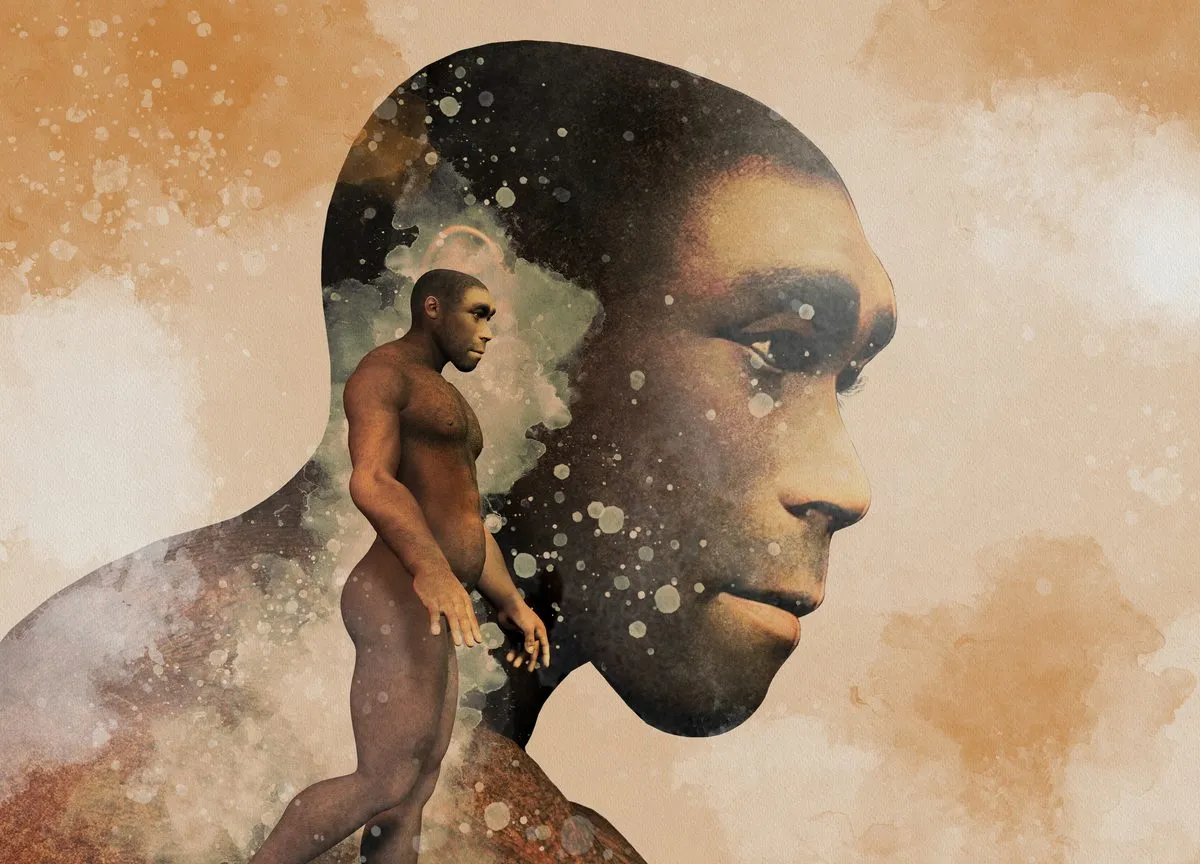
While Homo sapiens stand as the sole surviving human species today, the historical landscape of humanity was far more diverse. For hundreds of thousands of years, various human species coexisted, with Neanderthals (Homo neanderthalensis) emerging as our closest evolutionary cousins. Having diverged from a common ancestor, they represent a significant chapter in our lineage. The long-held belief that modern humans evolved directly from Neanderthals, viewing them as a transitional phase, has been largely superseded by a more nuanced understanding of our shared ancestry.
Current scientific consensus posits that modern humans and Neanderthals are sister species. They shared a common ancestor, from which they began to diverge approximately half a million years ago. Neanderthals as a distinct species emerged earlier, around 400,000 years ago, with the 'classic' Neanderthal form appearing by 130,000 years ago, preceding the emergence of Homo sapiens around 300,000 years ago. The precise identity of the common ancestor remains a subject of research, with theories pointing to species like Homo heidelbergensis or Homo antecessor, or even an as-yet-undiscovered archaic species.
Understanding the Neanderthal Connection
Genetic studies have revealed an astonishing level of relatedness between Neanderthals and modern humans, with up to 99.7% DNA overlap. This profound genetic similarity has led some researchers to propose that Neanderthals might be classified as a subspecies of Homo sapiens, specifically Homo sapiens neanderthalensis. This close genetic bond underscores their status as our nearest relatives, challenging earlier portrayals of them as primitive beings.
Evidence of Neanderthal Cognitive and Social Complexity
The debate surrounding Neanderthal linguistic capabilities has evolved significantly. Initially dismissed as incapable of complex communication, archaeological evidence now paints a different picture. The discovery of sophisticated tools, jewelry, clothing, and evidence of fire control points to a species with advanced cognitive abilities. They were capable of abstract thought, symbolic representation, and collaborative efforts, all of which are intrinsically linked to complex communication systems.
Further insights come from anatomical studies and genetic analyses. Neanderthals possessed brains that were, on average, larger than those of modern humans. While brain size does not directly equate to intelligence, it suggests a highly developed cognitive capacity. Specifically, research into 'human ancestor quickly evolving regions' (HAQERS) – sequences that influence gene expression related to language development – has shown that Neanderthals possessed these regions, and even in greater prominence than found in modern humans today. This strongly suggests the biological predisposition for language development was present.
Interbreeding and Communication Between Species
The genetic evidence unequivocally demonstrates that Homo sapiens and Neanderthals interacted and interbred. Modern humans of non-African descent carry approximately 2% Neanderthal DNA, with some East Asian populations exhibiting even higher percentages. This interbreeding implies a level of communication and social integration sufficient to form bonds and raise hybrid offspring.
Fossil evidence supports this assertion. The discovery of the Skhūl 1 child, dated to 140,000 years ago, revealed a mosaic of anatomical features: a modern human-like skull base and inner ear, coupled with a Neanderthal jaw. Similarly, a 40,000-year-old jawbone from Romania showed significant Neanderthal DNA, indicating interbreeding occurred relatively recently in their evolutionary timeline. Studies suggest that mating between female Homo sapiens and male Neanderthals may have been more common, playing a role in shaping the modern human genome.
Factors in Neanderthal Extinction
While genetic and anatomical evidence points to a capacity for communication and interbreeding, the question of mutual understanding and its role in Neanderthal extinction remains a complex area of study. Some theories suggest that differences in social connectivity might have played a critical role.
Recent research proposes that Homo sapiens may have had more robust and flexible social networks, enabling them to better adapt to climatic instability. Neanderthal social structures, while present, might have been more localized and less resilient to environmental pressures. This difference in adaptive social strategies, rather than a complete lack of communication, could have contributed to their eventual decline. Those Neanderthals who were not assimilated into Homo sapiens groups faded into history, while others contributed their genes to the modern human gene pool, a testament to the complex interactions between these two human species.
Impact Analysis
The understanding of Neanderthals has dramatically shifted from primitive brutes to complex beings closely related to us. The confirmation of interbreeding and potential for sophisticated communication challenges our perception of human evolution. It suggests that 'humanity' is not a monolithic entity but a tapestry woven from multiple ancestral threads, highlighting the importance of social adaptability and communication in species survival and propagation.