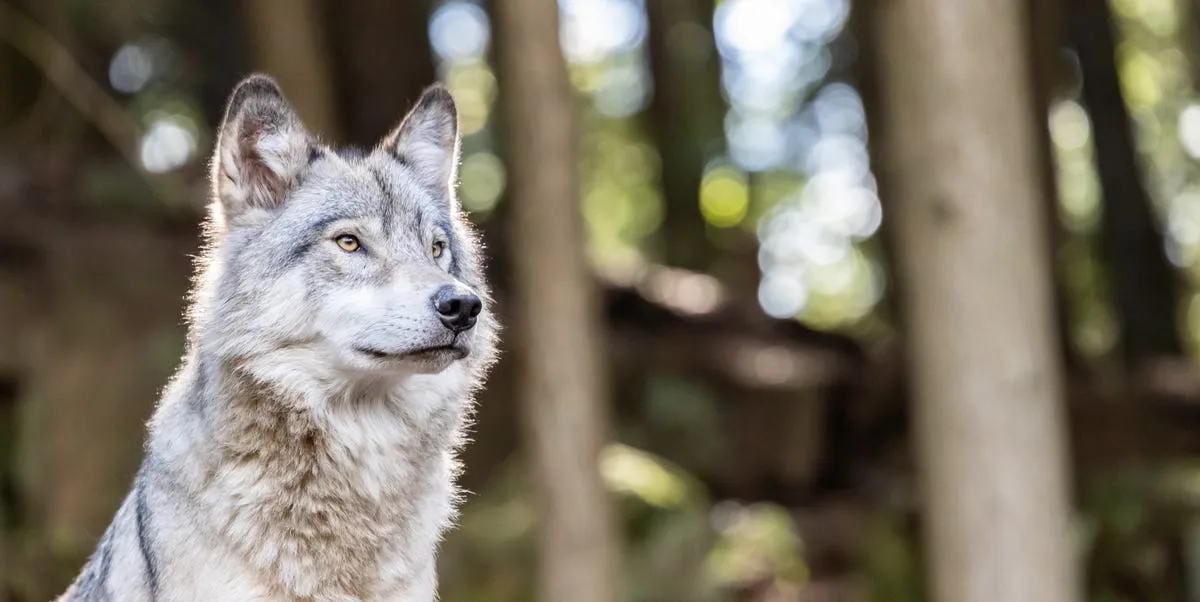
The complex genetic relationship between wolves and domestic dogs, species that diverged tens of thousands of years ago, has yielded a remarkable confirmation in Greece. While visually similar canids have often been mistaken for hybrids, recent DNA testing has definitively identified a wild animal in the Thessaloniki region as a genuine wolf-dog hybrid. This discovery is significant as it provides concrete evidence for interbreeding, which is generally considered rare in the wild due to the highly territorial nature of wolves and their distinct breeding cycles.
The scientific community has long understood that domestic dogs, Canis lupus familiaris, are descendants of wolves, Canis lupus, with their evolutionary paths splitting between 27,000 and 40,000 years ago. The genetic identity between the two species is exceptionally high, standing at 99.9%, which allows for the potential to produce fertile offspring. However, the ecological and behavioral differences, particularly a wolf's aggressive defense of its territory against perceived intruders, typically prevent widespread mating between wild wolves and domestic dogs encountered in the wild. Despite this, evidence from Eurasian wolf genomes has indicated that some interbreeding has occurred over time.
Confirmation of a Wild Wolf-Dog Hybrid
The confirmation came from the Greek wildlife organization Callisto, which was initially attempting to trap a rogue wolf near Thessaloniki. During their operations, they encountered an animal that exhibited physical characteristics suggestive of both wolf and dog ancestry. Traditional identification methods relying solely on appearance can be unreliable, as many wild wolves possess traits that can be mistaken for domestic dog breeds, and vice-versa. To ascertain the true nature of the animal, Callisto conducted comprehensive DNA analysis on multiple wolf samples from the Greek mainland.
The results of the DNA testing were conclusive: the individual animal was found to be a hybrid, composed of 55% dog and 45% wolf genetics. This represents the first scientifically verified instance of a wolf-dog hybrid in the wild in this region. Previously, sightings and anecdotal evidence from Europe, North America, and Central Asia had been common, but lacked the definitive genetic proof provided by this discovery. The finding validates suspicions and opens new avenues for understanding canid population dynamics and potential hybridization events in diverse ecosystems.
Understanding Canid Hybridization
The rarity of wolf-dog hybridization in the wild is primarily attributed to behavioral and ecological factors. Wolves typically breed only once a year, and their strong territorial instincts mean they are more likely to fight or kill an encroaching domestic dog than to engage in mating. Even if a domestic dog strays into wolf territory during the breeding season, the inherent aggression and difference in social structures often preclude successful interbreeding. This territoriality acts as a significant natural barrier to gene flow between the two closely related species.
Despite these barriers, the presence of dog ancestry fragments in a substantial percentage of Eurasian wolf genomes suggests that such interbreeding events, while infrequent, do occur. The Thessaloniki hybrid provides a critical case study, indicating that under certain circumstances, such as increased wolf populations or increased proximity between wild and domestic populations, hybridization can indeed happen. This finding also underscores the importance of genetic analysis in accurately identifying species and hybrids, moving beyond visual assessments.
Ecological Context and Population Dynamics
Callisto's ongoing work in tracking Greece's wolf population provides important context for this discovery. Following the ban on wolf hunting in Greece in 1983, implemented as part of the Bern Convention to protect large carnivores, wolf populations have seen a resurgence. The Mount Parnitha range near Athens, for instance, is home to at least three wolf packs, with an estimated total wolf population in Greece reaching over 2,000 individuals after a six-year study by the organization.
The increasing wolf population, coupled with a significant number of stray dogs in Greece—estimated to be in the millions—could create scenarios where encounters and subsequent hybridization become more plausible. It is hypothesized that a stray dog might have entered a wolf's territory, leading to the successful mating that resulted in the observed hybrid. This situation highlights the complex interplay between growing wildlife populations, urban encroachment, and the management of domestic animal populations in shared environments.
Distinction from De-Extinction Efforts
It is important to distinguish this natural hybridization event from artificial attempts at de-extinction, such as those being explored for species like the dire wolf. While both involve manipulating canid genetics, their origins and goals are fundamentally different. De-extinction projects, like the one involving the dire wolf, utilize ancient DNA fragments and advanced genetic engineering techniques to recreate extinct species by editing the genomes of living relatives, such as gray wolves, and using surrogate mothers for gestation.
In contrast, the Thessaloniki hybrid is a product of natural biological processes, representing the direct interbreeding of a modern wolf and a domestic dog. This natural occurrence offers insights into evolutionary biology and the adaptability of species, rather than demonstrating the capabilities of advanced biotechnology aimed at resurrecting extinct fauna. The distinction is crucial for understanding the scientific significance of each phenomenon.