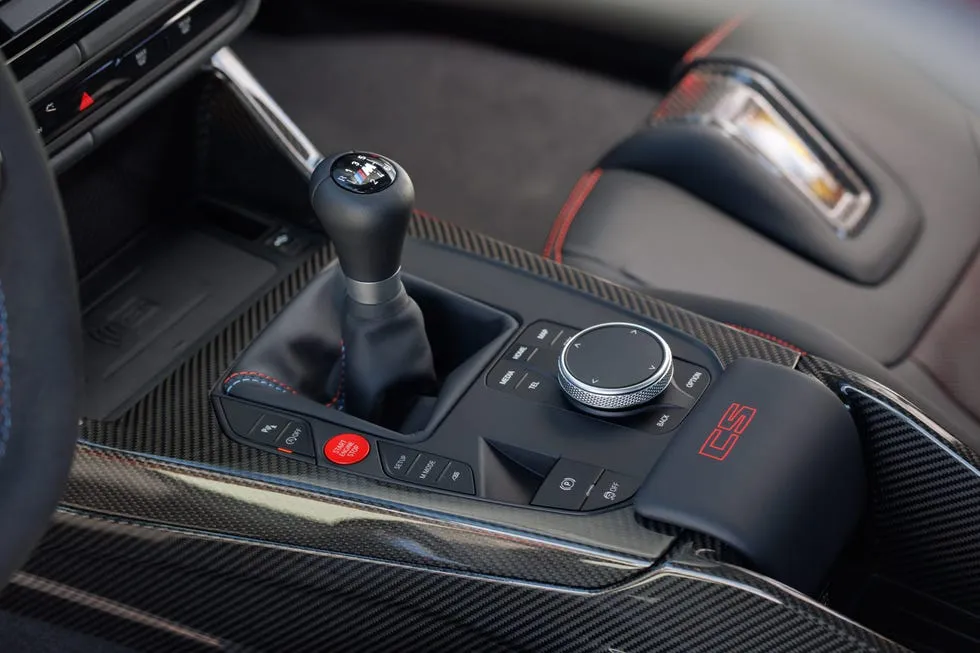
The automotive world often buzzes with the arrival of new performance models, and BMW's M division consistently delivers vehicles that capture enthusiast attention. The BMW M3 CS, a special variant of the already potent M3 sedan, represents a significant step up in performance and driver engagement. This iteration aims to bridge the gap between the standard M3 Competition and the track-focused M4 CSL, offering a compelling blend of power, agility, and track-ready dynamics in a four-door package. For the first time in the M3 CS lineage, BMW has introduced a manual gearbox option, a move that will undoubtedly resonate with purists seeking a more visceral driving connection.
This enhanced M3 CS builds upon the foundation of the all-wheel-drive Competition model, selectively incorporating performance enhancements and weight-saving measures. The result is a vehicle that not only boasts impressive straight-line acceleration but also refined handling characteristics suitable for both spirited road driving and occasional track excursions. Understanding the nuances of the M3 CS, from its powertrain and chassis tuning to its unique design elements and materials, provides insight into BMW M's commitment to delivering exceptional driving experiences.
The Evolution of the BMW M3 CS
The 'CS' designation, standing for 'Competition Sport,' has historically signified a more focused and potent version of BMW's iconic models. The M3 CS has evolved over generations, each iteration refining the formula of enhanced power and reduced weight. This latest iteration, the 2024 M3 CS, distinguishes itself by offering a six-speed manual transmission, a feature previously reserved for less powerful variants or not offered at all in some M3 CS models. This decision underscores a strategic effort by BMW to cater to a segment of the market that values driver involvement above all else.
The introduction of the manual gearbox alongside an already potent engine package signifies a deliberate strategy to appeal to a broader range of performance enthusiasts. While the automatic transmission offers lightning-fast shifts and optimal performance, the manual provides a direct mechanical link between the driver, the engine, and the road. This inclusion marks a significant departure from previous CS models that predominantly featured automatic transmissions, signaling a renewed focus on traditional driving engagement.
Powertrain and Performance Enhancements
At the heart of the BMW M3 CS lies a meticulously tuned version of the S58 twin-turbocharged inline-six engine. This powerhouse delivers a formidable 543 horsepower, an increase of 20 horsepower over the M3 Competition. The torque remains substantial at 479 lb-ft, readily available across a broad RPM range to ensure exhilarating acceleration. This power is channeled through either the standard eight-speed M Steptronic automatic transmission or, for the first time in the CS variant, a revised six-speed manual gearbox. The manual transmission has been specifically engineered to handle the increased torque output of the S58 engine, promising crisp shifts and precise engagement.
The integration of the manual transmission is a key differentiator for this model. While the automatic transmission provides rapid gear changes for maximum acceleration, the manual option allows drivers to precisely control gear selection, enhancing the connection to the vehicle's performance. This choice caters to enthusiasts who prefer the tactile feedback and control offered by a manual shifter, making the driving experience more engaging and rewarding. Performance figures indicate that the M3 CS, regardless of transmission choice, offers brisk acceleration, with 0-60 mph times competitive within its segment.
Chassis and Dynamics Refinement
BMW M's expertise in chassis tuning is evident in the M3 CS. Significant weight-saving measures have been implemented to enhance its agility and responsiveness. Extensive use of carbon fiber-reinforced plastic (CFRP) is observed throughout the vehicle, including the hood, front splitter, front air intakes, rear diffuser, and rear spoiler. These lightweight components not only reduce overall mass but also contribute to improved aerodynamics. The roof, also constructed from CFRP, lowers the center of gravity, further enhancing cornering stability.
Suspension components have been recalibrated for the CS model. Adaptive M suspension, with electronically controlled dampers, is standard and tuned to provide a balance between track performance and road comfort. The steering system has also been optimized for sharper response and better feedback, crucial for precise control at high speeds. The braking system features M Compound brakes as standard, with an option for M Carbon ceramic brakes for even greater stopping power and fade resistance under demanding conditions.
Interior and Exterior Design Elements
The exterior of the BMW M3 CS is distinguished by its aggressive yet purposeful design. The CFRP components mentioned earlier not only serve functional purposes but also lend a distinctive visual character. The model features unique wheel designs, often finished in matte black or gold, wrapped in high-performance tires. Specific CS badging further identifies this special variant. The extended use of carbon fiber accents, such as in the kidney grille surround and mirror caps, adds a touch of exclusivity and performance flair.
Inside, the M3 CS cockpit is a driver-focused environment that blends sportiness with luxury. Standard M Carbon bucket seats offer superb support and are upholstered in high-quality Merino leather, often with contrasting stitching. The center console features a carbon fiber trim, further emphasizing the lightweight construction theme. The steering wheel is typically an M Alcantara unit, providing an optimal grip for spirited driving. Despite the focus on performance, essential comfort and convenience features are retained, ensuring the M3 CS remains a practical as well as potent sedan.
Impact Analysis
The introduction of the BMW M3 CS with a manual transmission option represents more than just a new model variant; it signifies a thoughtful response to enthusiast demand and a commitment to preserving traditional driving engagement in an increasingly automated automotive landscape. This move could potentially influence other manufacturers to reconsider the inclusion of manual gearboxes in their performance offerings, especially in niche segments where driver involvement is a key selling proposition. Furthermore, the emphasis on lightweight materials and chassis refinement in the M3 CS sets a benchmark for performance sedans, pushing the boundaries of what is achievable in terms of handling and dynamic capability. The strategic positioning of the M3 CS, bridging the gap between standard and ultra-track-focused models, also offers a valuable benchmark for evaluating the cost-benefit of performance enhancements for discerning buyers.