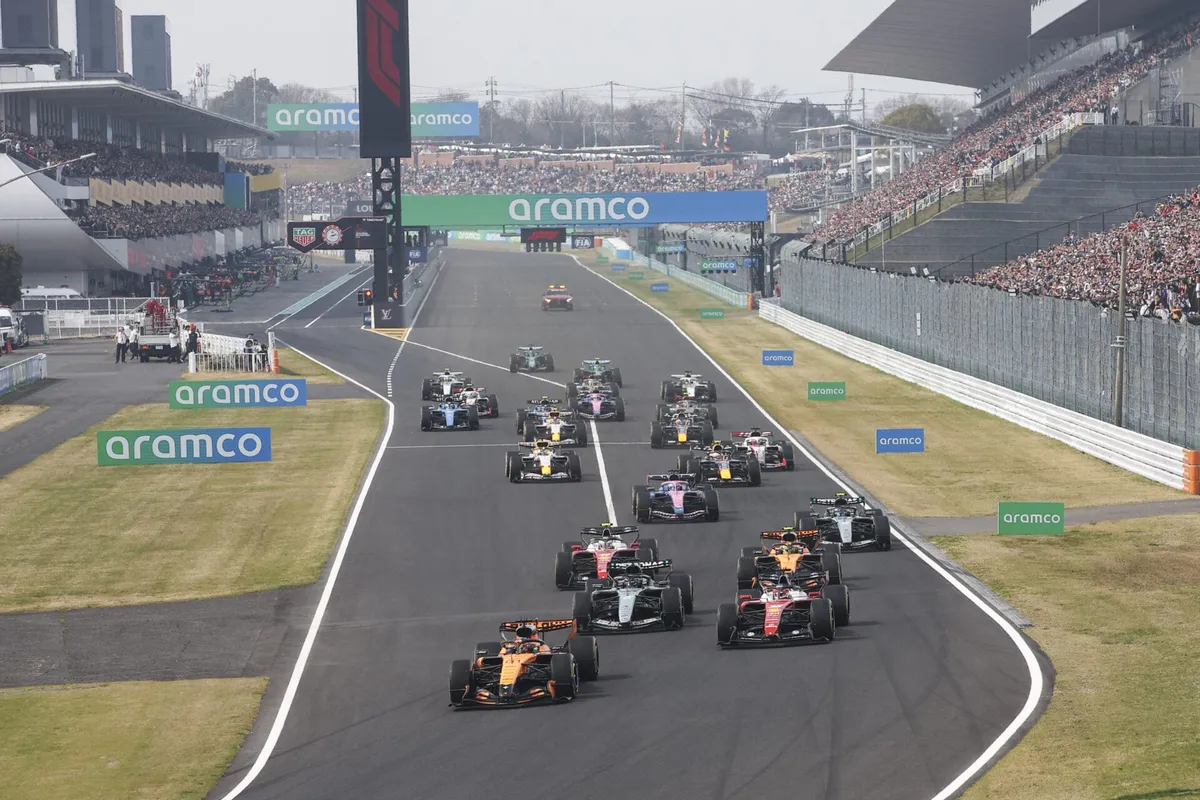
Formula 1 is set to implement a new 'low power start detection' system for the upcoming Miami Grand Prix. This regulatory tweak, unanimously agreed upon by teams, aims to address instances where cars experience abnormally low acceleration off the starting grid. The system is designed to detect such occurrences and automatically engage the MGU-K (Motor Generator Unit – Kinetic) to boost the car's minimum speed. The FIA has stated that this measure is purely a safety enhancement and will not provide any sporting advantage, emphasizing its role in preventing potential collisions resulting from significant speed disparities during the crucial initial phase of the race.
The decision comes in response to several high-profile incidents and concerns raised by drivers and teams alike. Recent races have seen drivers such as Liam Lawson, Max Verstappen, and Gabriel Bortoleto encounter issues with their car's acceleration from a standstill. These instances have created hazardous situations, forcing drivers behind to take evasive action to avoid slower-moving cars. The FIA's intervention seeks to preemptively mitigate these risks, particularly on circuits where track limits are narrow and overtaking opportunities can be scarce, thereby enhancing overall race safety.
Fan Reaction to New Race Start Technology
The introduction of the 'low power start detection' system has been met with considerable disapproval from a segment of the Formula 1 fanbase. Online forums and social media platforms have become a focal point for fan commentary, with many expressing frustration over what they perceive as further automation and a reduction in the demand for driver skill. A prevalent sentiment on platforms like Reddit suggests that drivers struggling with starts should utilize the pit lane option instead of relying on electronic assistance. Critics argue that managing the car's launch is an inherent part of a driver's challenge and that artificial intervention dilutes this aspect of motorsport.
This concern about 'skill dilution' is not new within the F1 community. Drivers, including Aston Martin's Fernando Alonso, have previously voiced opinions that modern Formula 1 prioritizes technical management and energy recovery strategies over raw driving prowess. Alonso's comments, suggesting that the sport is evolving into a 'battery world championship,' resonate with fans who feel that automated systems further remove the driver from critical decision-making processes. The new system, by intervening to correct acceleration issues, is seen by some as another step away from the pure, unadulterated driving challenge that many fans cherish.
The FIA's Safety Rationale
The FIA maintains that the primary objective of the 'low power start detection' system is to ensure driver safety. The governing body points to the unpredictable nature of a start-line incident, where a car suffering from a significant power deficit can become a stationary or slow-moving hazard for faster-accelerating competitors. By ensuring a minimum level of acceleration, the system aims to keep all cars moving at a pace that allows surrounding drivers to react appropriately, thus preventing potential pile-ups. The FIA has stressed that the system is calibrated to address only extreme cases of low power output, avoiding interference in standard or near-standard starts.
This nuanced approach suggests that the system will not actively interfere with competitive starts but will serve as a safety net for genuine technical anomalies. The FIA's technical department will be closely monitoring the performance of the system during practice sessions in Miami to ensure it functions as intended without unintended consequences. The ultimate goal is to enhance the safety margin at the start of races without compromising the competitive integrity or the skill required from the drivers.
Ferrari's Advantage and Future Implications
Ferrari has demonstrated exceptional performance in race starts throughout the 2026 season, with drivers Charles Leclerc and Lewis Hamilton frequently gaining positions on the opening lap. This strong performance is attributed, in part, to the team's strategic approach to engine development, including the deliberate construction of a smaller turbocharger that requires less preparation time for optimal launch. Ferrari has, by and large, advocated against overly complex start procedures, focusing instead on efficient car design and driver execution.
The new 'low power start detection' system is unlikely to significantly impact Ferrari's race start capabilities. Given that the system is designed for extreme low-power situations, teams that consistently achieve competitive starts, like Ferrari, are not expected to be unduly affected. Mercedes, for instance, has experienced slower starts but not typically to the dangerous extent that would trigger the MGU-K assistance. Therefore, while the rule change addresses a specific safety concern, it is anticipated that the competitive landscape regarding race starts will remain largely unchanged for the leading teams.
Impact Analysis
The introduction of the 'low power start detection' system represents a minor but potentially significant shift in Formula 1's regulatory approach. While framed as a safety measure, its implementation highlights the ongoing tension between technological intervention and the preservation of traditional driving skills. The fan reaction underscores a broader concern within motorsport circles about the increasing reliance on electronics and automated systems, potentially diminishing the spectacle and the perceived agency of the drivers. The FIA's challenge will be to balance these safety imperatives with the expectations of a fanbase that values raw driver talent and traditional racing challenges. The effectiveness and reception of this system in Miami will likely inform future decisions regarding technological interventions in the sport.