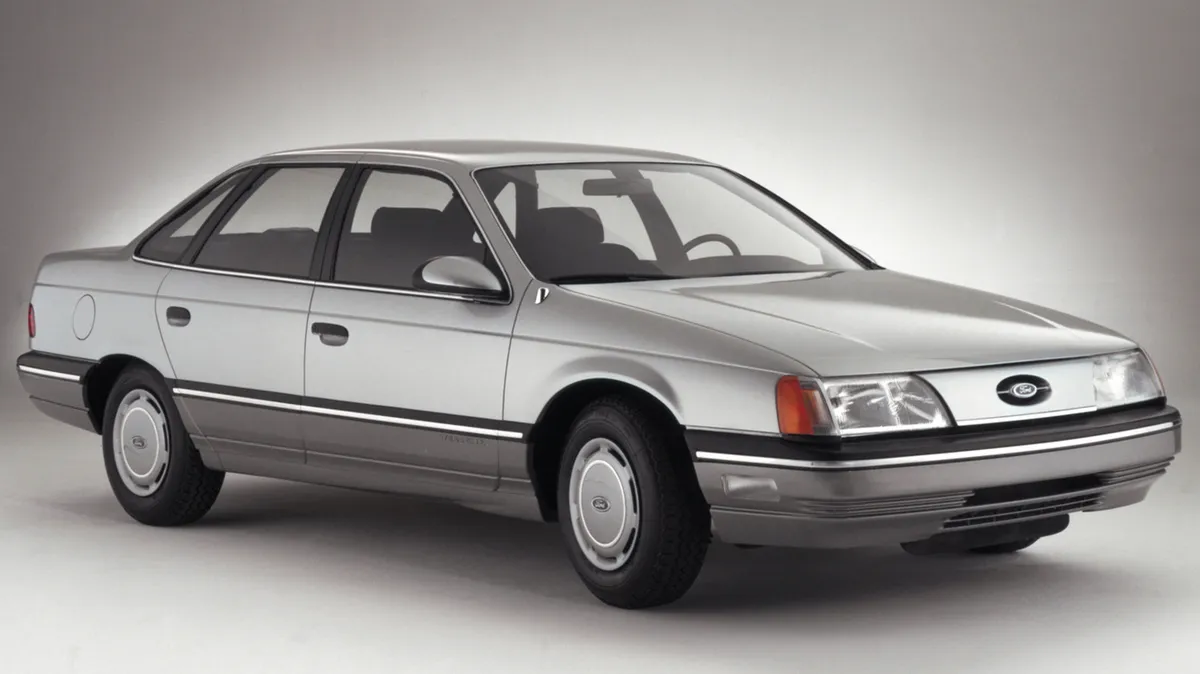
The automotive landscape of the mid-1980s saw a dramatic shift with the introduction of the 1986 Ford Taurus. Its radically aerodynamic design, shared with its Mercury Sable counterpart, shattered conventional styling norms and was instrumental in revitalizing the then-struggling Ford Motor Company. However, this groundbreaking vehicle wasn't without its early challenges, as a peculiar and unpleasant odor began to trouble some owners.
This wasn't just a minor inconvenience; the sulfurous smell, often likened to rotten eggs, emanated from the exhaust. The issue gained significant public attention when Consumer Reports' chief auto tester, Robert Knoll, described some models to The New York Times as "literally stunk." While the precise cause and Ford's initial response details remain somewhat obscure in historical accounts, the problem persisted for several months before a fix was developed. For context, such an odor can often indicate a clogged catalytic converter, a critical component in a vehicle's exhaust system designed to reduce harmful emissions.
Revolutionary Design and Development
The development of the Ford Taurus commenced in the early 1980s, a period of significant transition for the automotive industry grappling with the aftermath of the Oil Crisis. Ford recognized the need for a modernized lineup to meet evolving market demands and efficiency expectations. This led to a complete overhaul of the company's car development processes, fostering greater teamwork internally and incorporating extensive external research. This included rigorous consumer focus groups and benchmarking against the best competitor vehicles available to create a truly differentiated product.
Ford invested approximately $3.5 billion in the Taurus project, a substantial sum equivalent to roughly $10.5 billion in today's economic terms. This level of investment underscores the project's critical importance to the company's future. For perspective, even a $1 billion net loss in a single quarter, as experienced by Lucid in early 2026, could cause significant financial concern among experts, highlighting the scale of Ford's commitment to the Taurus.
Market Impact and Sales Success
Despite facing considerable developmental hurdles and experiencing 18 recalls within its first two years of production—even after a delayed launch intended to address quality concerns—the Ford Taurus proved to be a remarkable success. In its inaugural year, 1986, Ford sold over 236,000 units of the Taurus, encompassing both sedan and station wagon variants. By 1987, deliveries for these body styles collectively neared 375,000 vehicles.
The Taurus, alongside the Mercury Sable, had a profound positive impact on Ford's financial performance. In 1986, Ford surpassed General Motors in pre-tax earnings, a feat not achieved by Ford in nearly six decades. This financial resurgence was further reflected in the stock market, with Ford's share price experiencing a remarkable 76% increase in 1987, much to the delight of its shareholders.
Dominance in the U.S. Market
The success of the first-generation Taurus extended beyond its initial sales figures and financial impact. It set the stage for an unprecedented period of domestic automotive leadership in the United States. In 1992, the Taurus began an impressive five-year consecutive streak as the best-selling car in the country.
This sustained period of market dominance by the Taurus marked a significant moment, as no other domestically branded car has managed to achieve the top sales spot in the U.S. market since its reign concluded. The Taurus' legacy is one of bold design, crucial corporate recovery, and undeniable market leadership, even with the notable, albeit temporary, olfactory challenges faced by early models.