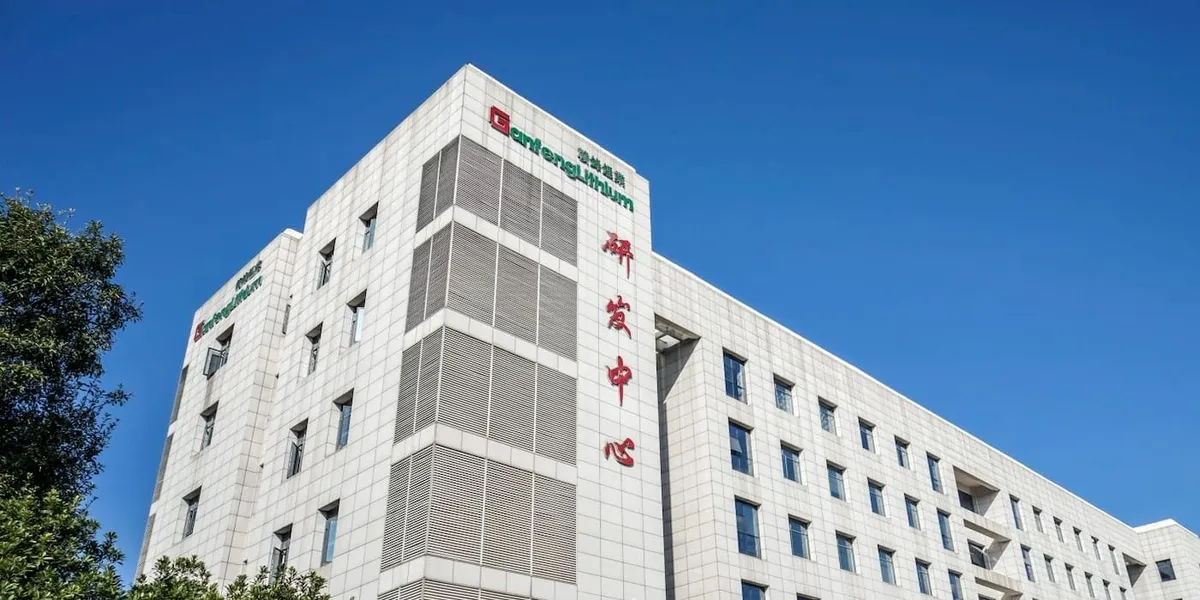
Ganfeng Lithium, a prominent global player in lithium metal production and compounds, has announced a significant advancement in battery technology: the commencement of small-scale production for what it claims are the world's first 10 Ah solid-state batteries. These batteries boast an impressive energy density of 500 Wh/kg, a figure that could substantially redefine the capabilities of electric vehicles (EVs) and energy storage systems. With established supply agreements with major automotive manufacturers including Tesla, Volkswagen, and Hyundai, Ganfeng's development signals a potential leap forward in the quest for higher-performing and safer energy storage solutions.
As China's largest lithium compounds producer and the leading lithium metals manufacturer globally, Ganfeng Lithium commands a significant portion of the market. Its strategic supply deals with leading automakers underscore its integral role in the EV supply chain. The company's commitment to innovation is further demonstrated by its exploration of multiple battery chemistries, including solid-state and lithium iron phosphate technologies, catering to a wide array of applications from EVs to large-scale energy storage.
Ganfeng Lithium's Breakthrough in Solid-State Battery Technology
The recent investor update from Ganfeng highlights its dual-pronged approach to solid-state battery development, focusing on both silicon-based and lithium metal anode technologies. The newly produced 10 Ah solid-state batteries utilizing lithium metal anodes have achieved the remarkable 500 Wh/kg energy density. Concurrently, their silicon-based solid-state battery variant has reached an energy density of 400 Wh/kg, with a demonstrated cycle life exceeding 1,100 cycles, indicating readiness for scaled production.
 These advancements are built upon innovations such as a proprietary “zero-strain” lithium alloy anode and a sulfur cathode. This combination is designed to enhance both electrochemical and thermal stability while effectively mitigating unwanted lithium dendrite formation and migration, a common challenge in lithium-metal battery development. The lithium alloy anode has shown minimal expansion (3%-5%) during charge-discharge cycles and has successfully passed rigorous safety tests, including nail penetration and high-temperature exposure up to 250°C (482°F).
The Significance of High Energy Density Batteries
The pursuit of batteries with higher energy density, measured in Wh/kg (watt-hours per kilogram), is a central theme in the evolution of electric vehicles. Higher energy density directly translates to the potential for increased range on a single charge without a proportionate increase in battery weight or size. For consumers, this means EVs that can travel farther, alleviating range anxiety, a significant barrier to widespread EV adoption.
Ganfeng's achievement of 500 Wh/kg in a solid-state format is particularly noteworthy. Current high-end lithium-ion batteries typically range from 250-300 Wh/kg. Doubling this density, even in a prototype or small-scale production, suggests a future where EVs could offer ranges significantly exceeding 1,000 kilometers (over 620 miles) on a single charge, rivaling or surpassing the capabilities of internal combustion engine vehicles.
Solid-State Battery Technology: Advantages and Challenges
Solid-state batteries represent a paradigm shift from conventional lithium-ion batteries, which use liquid electrolytes. Solid-state batteries replace this liquid electrolyte with a solid material, such as ceramics or polymers. This fundamental difference offers several key advantages:
- Enhanced Safety: The elimination of flammable liquid electrolytes significantly reduces the risk of thermal runaway and fires.
- Higher Energy Density: Solid electrolytes can enable the use of lithium metal anodes, which have a much higher theoretical capacity than the graphite anodes used in current lithium-ion batteries.
- Longer Lifespan: Solid electrolytes are often more stable and less prone to degradation, potentially leading to batteries that can withstand more charge-discharge cycles.
- Faster Charging: Some solid-state designs show potential for faster ion transport, enabling quicker charging times.
However, the path to mass production for solid-state batteries has been complex. Challenges include achieving high ionic conductivity in solid electrolytes at room temperature, managing volume changes of the electrodes during cycling, ensuring good interfacial contact between the electrolyte and electrodes, and scaling up manufacturing processes to be cost-effective and efficient.
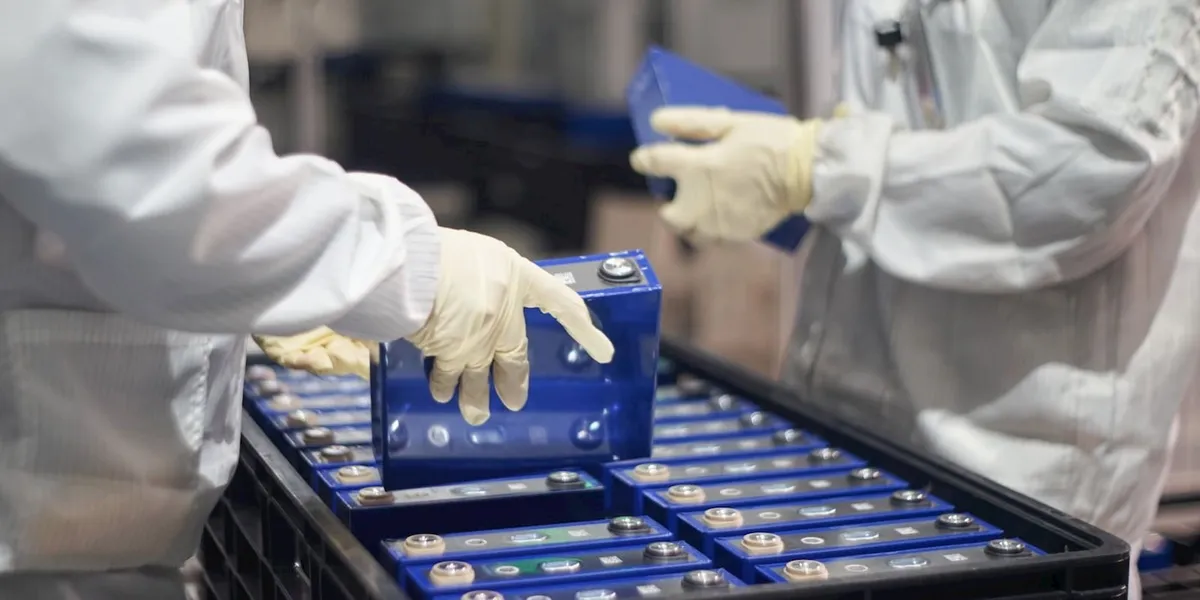 Ganfeng’s reported progress, particularly the stability of their lithium alloy anode and passing stringent safety tests, suggests they are making substantial headway in overcoming these hurdles.
Industry Landscape and Future Outlook
Ganfeng Lithium is not alone in its pursuit of solid-state battery technology. Numerous automakers and battery manufacturers worldwide are investing heavily in this field. Companies like FAW Group have announced installations of semi-solid-state batteries with impressive range capabilities. Industry giants such as BYD, CATL, Volkswagen, Toyota, and Mercedes-Benz are all targeting small-scale production around 2027-2028, with mass market deployment anticipated later in the decade.
While solid-state batteries are often hailed as the ultimate solution for EV energy storage, it's crucial to note that they are part of a broader innovation landscape. Alternative chemistries like lithium iron phosphate (LFP) and sodium-ion batteries are also evolving, offering benefits such as lower cost, enhanced safety, and longer lifespans, albeit typically with lower energy density compared to advanced solid-state designs.
The continuous development across various battery technologies underscores a clear trend: electric vehicles are steadily becoming more efficient, safer, affordable, and capable. Innovations such as BYD's Blade Battery 2.0 and its rapid Flash Charging technology, capable of delivering over 1,000 km range and 5-minute charging, exemplify the rapid pace of progress in the EV sector.
Impact Analysis
Ganfeng Lithium's announcement of producing 10 Ah solid-state batteries with 500 Wh/kg energy density represents a pivotal moment in battery technology. If this technology can be scaled efficiently and economically, it has the potential to fundamentally alter the EV market. Increased range and potentially faster charging could accelerate consumer adoption of electric vehicles globally, reducing reliance on fossil fuels and contributing significantly to decarbonization efforts. Furthermore, the enhanced safety profile of solid-state batteries could address lingering consumer concerns about EV battery safety. Ganfeng’s strong relationships with major automakers position them to be a key supplier of this next-generation technology, potentially reshaping supply chains and competitive dynamics within the automotive and energy storage industries.