Ganfeng Lithium, a dominant force in the global lithium market and a key supplier to major automotive manufacturers, has announced a significant advancement in battery technology. The company has commenced small-scale production of what it claims are the world's first 10 Ampere-hour (Ah) solid-state batteries boasting an impressive energy density of 500 Watt-hours per kilogram (Wh/kg). This breakthrough positions Ganfeng at the forefront of next-generation battery development, potentially accelerating the transition towards electric vehicles with longer ranges and faster charging capabilities.
As China's largest lithium compounds producer and the world's leading manufacturer of lithium metal, Ganfeng holds a substantial share of the global market, estimated at 45% for lithium metal and 70% within China. Its established supply chain includes major electric vehicle (EV) and automotive giants such as Tesla, Volkswagen, Hyundai, and BMW, underscoring the company's critical role in the EV ecosystem. Ganfeng's comprehensive product portfolio already encompasses a wide array of lithium battery solutions, including those designed for EVs, energy storage systems, and industrial applications, now notably featuring advanced solid-state battery technologies.
Ganfeng Lithium's Solid-State Battery Advancements
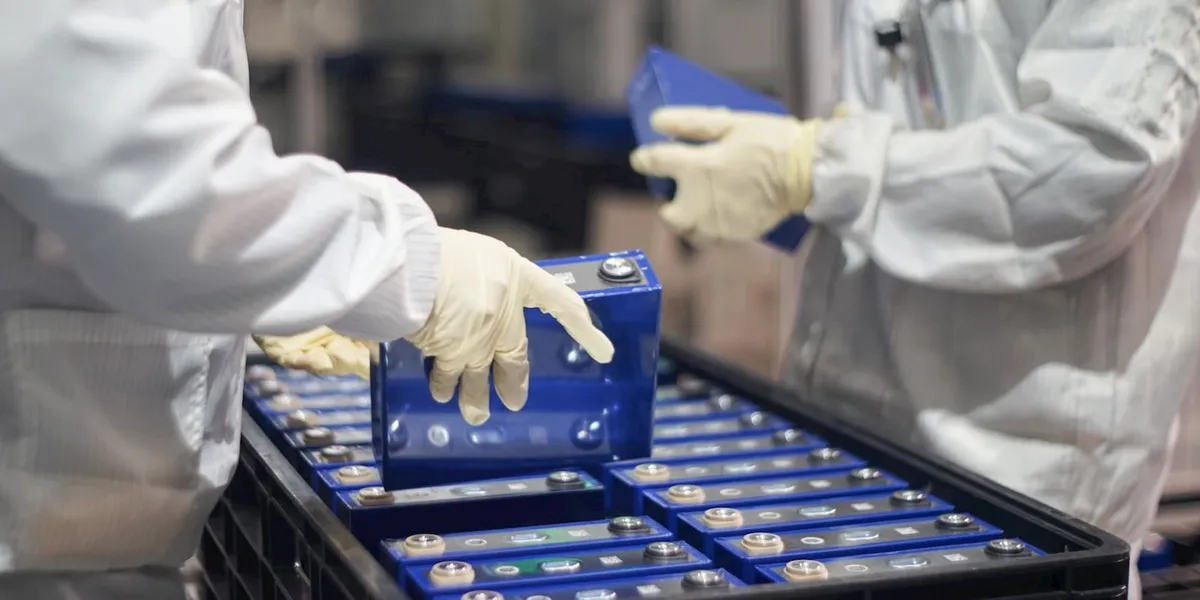
The company's recent investor update detailed the commencement of pilot production for its cutting-edge 10Ah solid-state batteries. These batteries utilize a lithium metal anode and achieve an energy density of 500 Wh/kg. Ganfeng is simultaneously pursuing a silicon-based solid-state battery approach, which has demonstrated an energy density of 400 Wh/kg. This latter technology has reportedly surpassed 1,100 charge-discharge cycles, indicating robust longevity and readiness for scaled manufacturing.
Lithium Metal Anode Technology
Ganfeng's 500 Wh/kg solid-state battery innovation is centered on its advanced lithium metal anode. This approach leverages unique material science to overcome some of the inherent challenges associated with lithium metal, such as dendrite formation and volume expansion during cycling. By enabling a more stable and efficient lithium metal anode, Ganfeng is pushing the boundaries of energy density achievable in solid-state formats.
The company's efforts were further elaborated during China's All-Solid-State Battery Innovation and Development Summit Forum. Officials highlighted the development of a “zero-strain” lithium alloy anode and a sulfur cathode. This combination is designed to significantly enhance electrochemical and thermal stability while mitigating problematic lithium migration within the battery cell. Such advancements are crucial for ensuring the safety and performance required for widespread adoption in electric vehicles.
Reports indicate that the lithium alloy anode exhibits minimal expansion, approximately 3% to 5%, over a full charge and discharge cycle. Crucially, this technology has successfully passed rigorous safety tests, including nail penetration and high-temperature exposure tests, remaining operational at temperatures as high as 250°C (482°F). This demonstrates a substantial improvement in safety and durability compared to traditional lithium-ion battery chemistries.
Silicon-Based Solid-State Batteries
Alongside the lithium metal anode technology, Ganfeng is also making strides with silicon-based solid-state batteries. These batteries offer a competitive energy density of 400 Wh/kg, with the company reporting cycle life exceeding 1,100 cycles. While slightly lower in peak energy density than the lithium metal variant, the silicon-based approach often presents a more straightforward path to mass production and may offer advantages in terms of cost and material sourcing.
The development of these silicon-based cells is a testament to Ganfeng's diversified strategy in solid-state battery research and development. By exploring multiple anode chemistries, the company is hedging its bets and positioning itself to capitalize on the most viable technologies as the market matures. The readiness for large-scale production indicated for the 400 Wh/kg cells suggests a near-term commercialization potential.
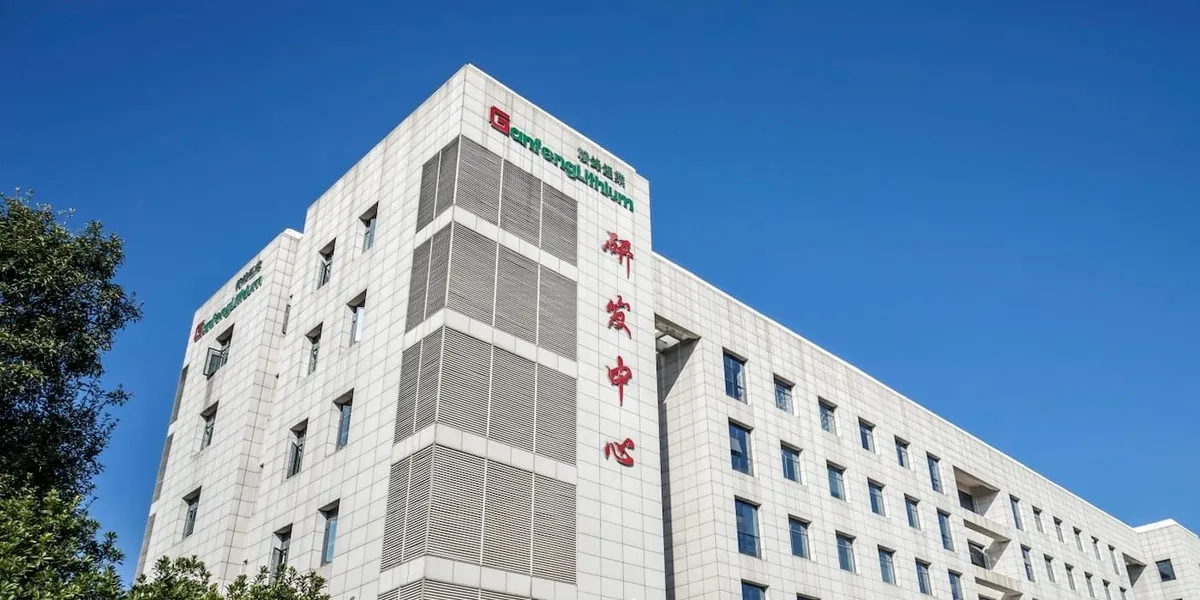
Ganfeng's stated goal with its lithium alloy anode research is to actively contribute to the industrialization of high-energy-density all-solid-state batteries. The company's existing relationships with automakers like Dongfeng and Changan, both of which are exploring solid-state battery applications, provide immediate avenues for testing and potential integration of these new technologies.
The Broader Landscape of Solid-State Batteries
Ganfeng's announcement arrives amidst a flurry of activity and significant progress in the solid-state battery sector. Other players are also reporting breakthroughs, suggesting a rapid acceleration in the field. For instance, FAW Group recently announced the integration of the first semi-solid-state EV battery in a vehicle, boasting a cell energy density exceeding 500 Wh/kg and enabling a range of over 1,000 kilometers (CLTC rating). This demonstrates that advanced battery chemistries are not confined to laboratory settings but are actively entering vehicle platforms.
The timeline for broader adoption of solid-state batteries is becoming clearer, with many major automakers and battery manufacturers, including BYD, CATL, Volkswagen, Toyota, and Mercedes-Benz, targeting small-scale production around 2027-2028, and mass production anticipated towards the end of the decade. While often hailed as the 'holy grail' for EVs due to promises of superior energy density, enhanced safety, and faster charging, solid-state technology is just one component of overall EV improvement.
Complementary advancements in other battery types, such as lithium iron phosphate (LFP) and sodium-ion batteries, are also contributing to the evolution of electric vehicles. These technologies are increasingly offering compelling alternatives characterized by lower costs, improved safety profiles, and extended lifespans. Innovations like BYD's Blade Battery 2.0, coupled with its Flash Charging technology, showcase the rapid pace at which EV efficiency, range, and charging speed are improving, offering over 1,000 km of range and the ability to charge in as little as five minutes.
Impact Analysis
Ganfeng Lithium's achievement of producing 10Ah solid-state batteries with 500 Wh/kg energy density represents a critical milestone in the quest for next-generation energy storage. This breakthrough has profound implications for the automotive industry and the broader energy landscape. Firstly, it directly addresses the core limitations of current lithium-ion technology, namely energy density and charging speed, by offering a pathway to significantly extend EV driving ranges and reduce charging times. This could fundamentally alter consumer perceptions of EVs, alleviating range anxiety and making them a more practical alternative for a wider audience.
Secondly, the successful development and pilot production of these advanced solid-state batteries signal a potential shift in the global battery supply chain hierarchy. Ganfeng's established position as a key supplier to major OEMs suggests that its technology could be rapidly integrated into production vehicles, giving it a first-mover advantage. This advancement also intensifies the competitive landscape, pushing other battery manufacturers and automotive companies to accelerate their own solid-state research and development efforts or risk falling behind. The emphasis on safety and longevity, demonstrated through rigorous testing, further enhances the appeal of solid-state technology, paving the way for safer and more reliable electric vehicles in the future.