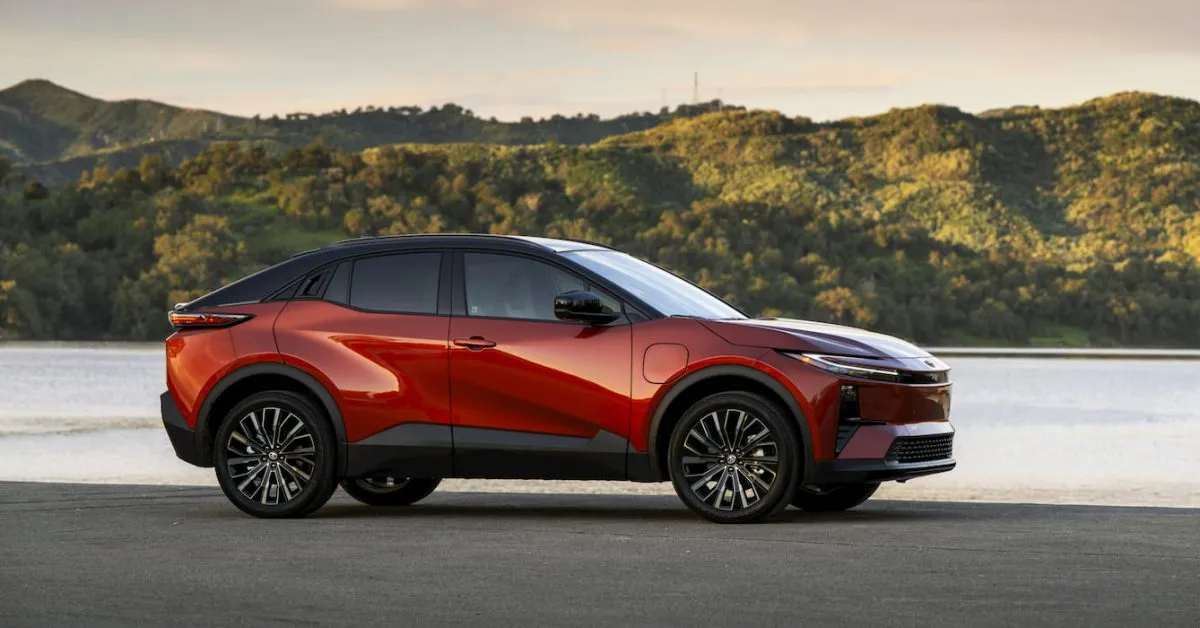
Toyota is making a significant push into the electric vehicle market with substantial incentives on its newly arrived 2026 bZ, C-HR, and bZ Woodland electric SUVs. As these models hit dealership lots, the Japanese automaker is offering attractive discounts and financing options, aiming to capture consumer interest in an increasingly competitive EV landscape. This strategic move comes shortly after the unveiling of the 2027 Highlander EV, Toyota's first three-row electric SUV, indicating a broad commitment to electrifying its SUV portfolio.
The 2026 bZ and C-HR electric SUVs, positioned as more accessible entries into Toyota's EV offerings, are designed to compete in the compact and subcompact crossover segments. While the C-HR was anticipated to be Toyota's most budget-friendly electric SUV, its starting price of $37,000 is slightly above the bZ's $34,900 base price. However, the newly announced incentives are poised to significantly reduce the effective cost for consumers, making these vehicles more financially appealing.
Aggressive Incentives Drive EV Affordability
Purchase and Financing Deals
For consumers looking to purchase one of Toyota's 2026 electric SUVs outright, the company is providing a customer cash discount of $5,000 across the bZ, C-HR, and bZ Woodland models. This discount effectively lowers the bZ's entry price to under $30,000, the C-HR to approximately $32,000, and the bZ Woodland to around $40,000. This immediate price reduction is a key strategy to stimulate sales and overcome potential price barriers for potential EV buyers.
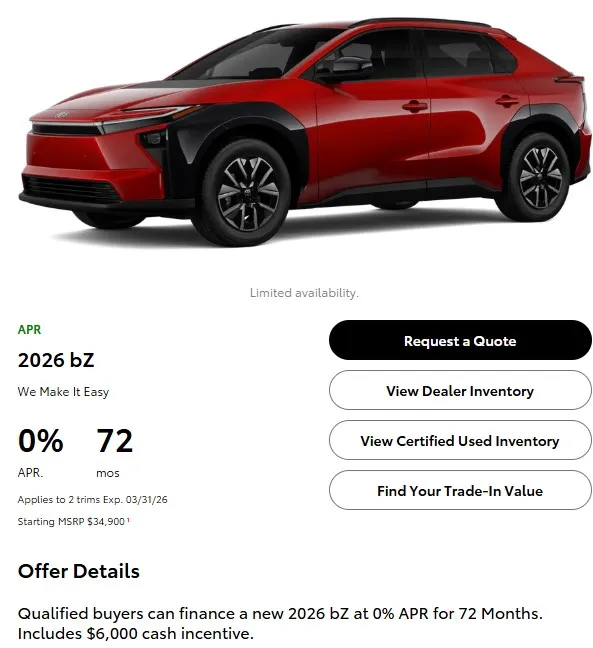
Beyond the outright cash discount, Toyota is also offering a compelling 0% Annual Percentage Rate (APR) financing option for up to 72 months. This is coupled with an additional cash incentive of up to $6,000, further sweetening the deal for buyers. Such low-interest financing significantly reduces the overall cost of ownership over the loan term, making the monthly payments more manageable and the purchase more attractive compared to higher-interest financing options.
Leasing Advantages
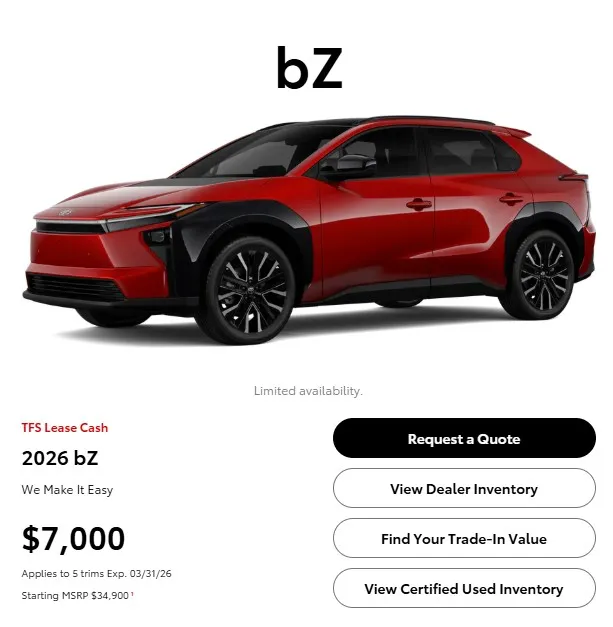
Leasing customers are not left out, with Toyota offering a $7,000 lease cash bonus when leasing any of the 2026 bZ, C-HR, or bZ Woodland models through Toyota Financial Services (TFS). This substantial bonus directly reduces the amount financed, leading to lower monthly lease payments. 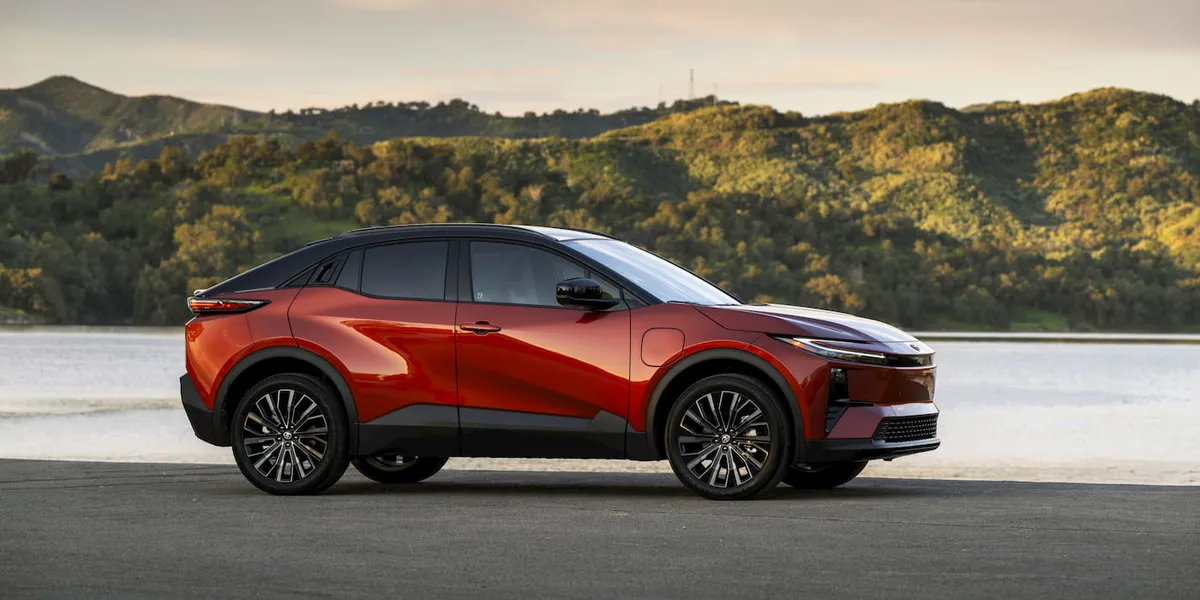
Specific lease offers highlight the value proposition. The 2026 bZ XLE is advertised at $289 per month for a 36-month lease with $3,999 due at signing. Similarly, the 2026 C-HR SE can be leased for approximately $327 per month over 36 months with the same down payment. The bZ Woodland, while positioned as a more premium offering, is available for around $559 per month under similar lease terms. These figures represent competitive lease rates within the current EV market.
Model Comparison: bZ, C-HR, and bZ Woodland
Powertrain and Performance
The 2026 Toyota C-HR is equipped with a 74.7 kWh battery, delivering an estimated driving range of up to 290 miles. Its dual-motor setup provides up to 338 horsepower, enabling a brisk 0-60 mph acceleration in approximately 5 seconds. Standard all-wheel drive (AWD) enhances its driving dynamics and all-weather capability.
The 2026 bZ offers flexibility with two battery options: a 57.7 kWh unit yielding up to 236 miles of range and a larger 74.7 kWh battery that extends the range to 314 miles. The AWD variant of the bZ boasts a slightly quicker 0-60 mph time of 4.9 seconds. 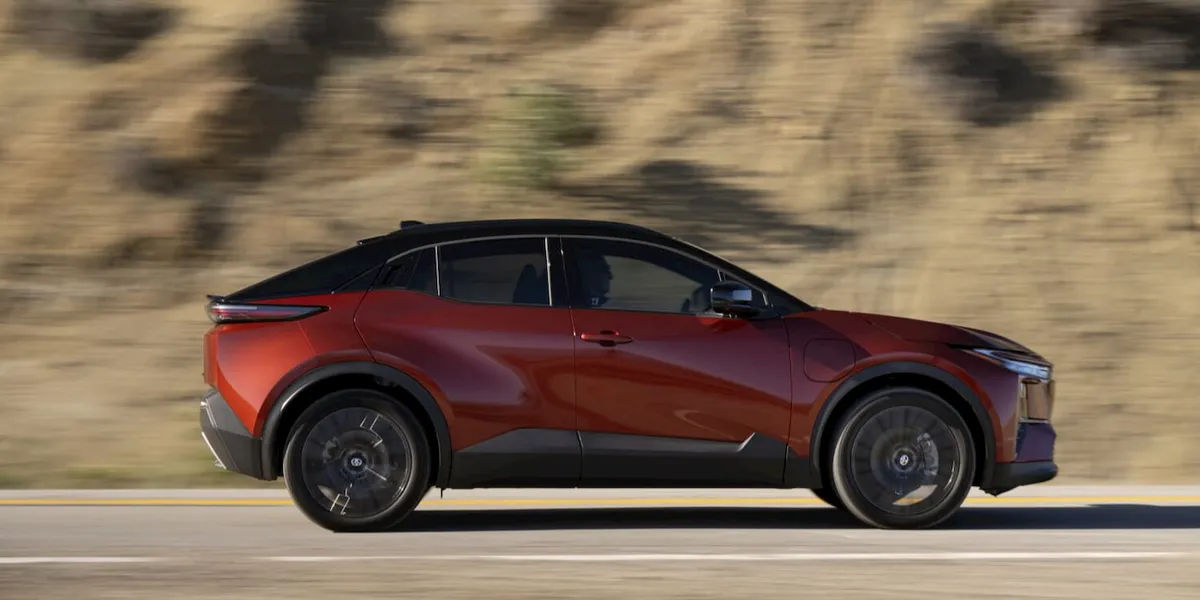
Dimensions and Practicality
In terms of size, the C-HR measures 177.9 inches in length, 72.6 inches in width, and 63.8 inches in height, making it a compact crossover comparable to vehicles like the Kia Niro or Volvo EX30. It is approximately 6.7 inches shorter than the bZ.
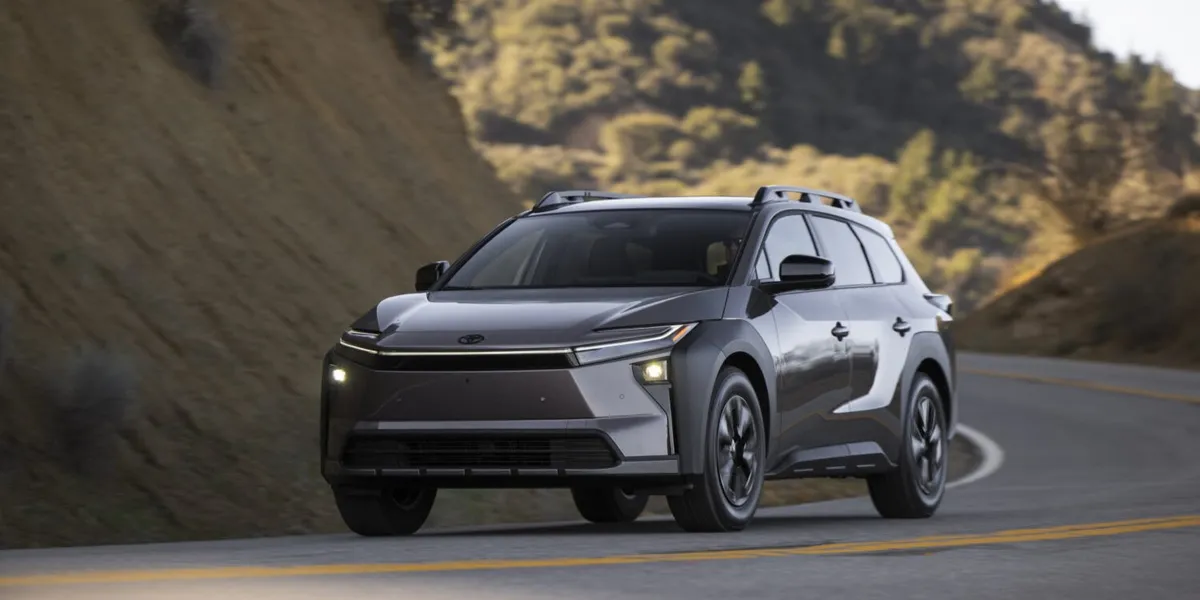
The 2026 bZ Woodland represents a more rugged and spacious variant. It is nearly 6 inches longer than the standard bZ, offering an additional 30 cubic feet of cargo space. This enhanced practicality, combined with its standard AWD powertrain producing 375 horsepower (37 hp more than the standard bZ), positions it as a capable all-terrain electric SUV. 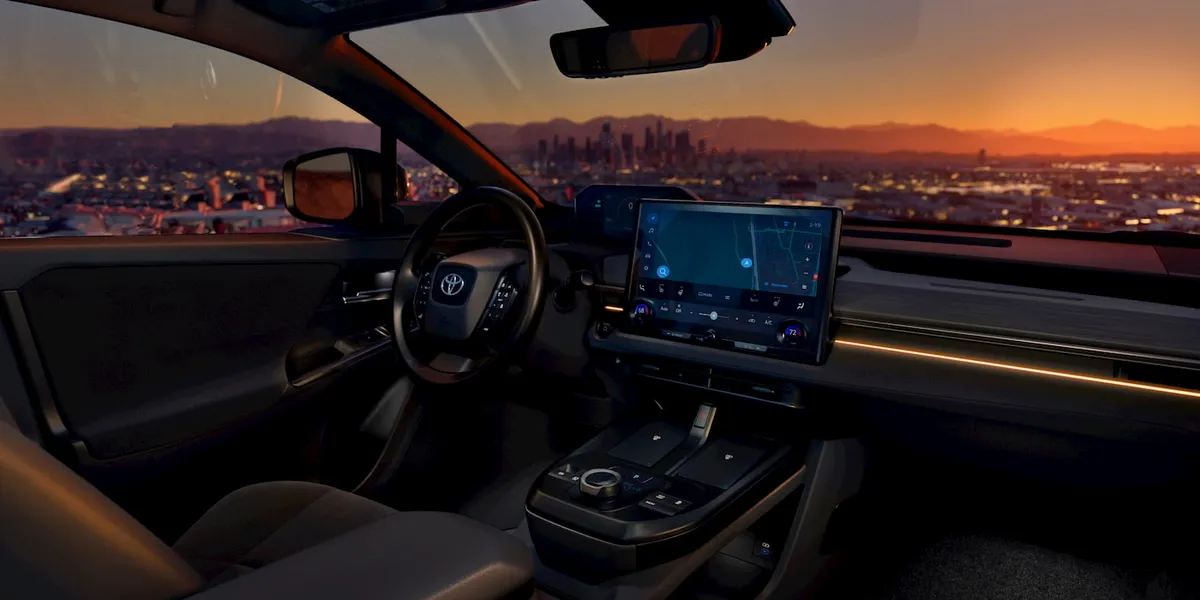
Range and Charging Capabilities
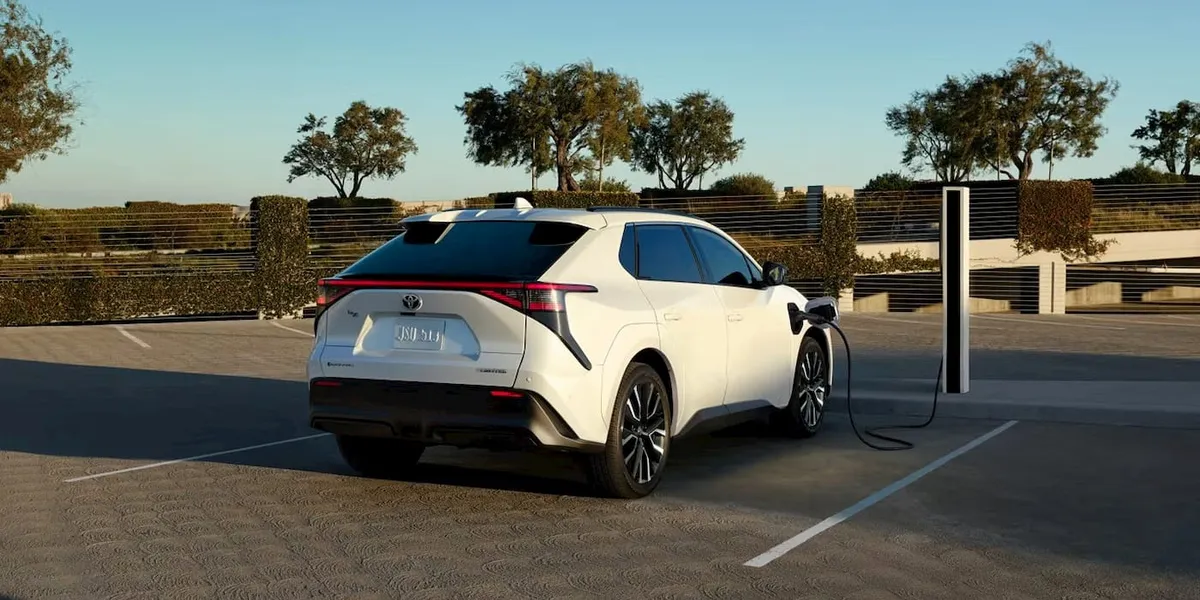
Despite its increased power and utility, the bZ Woodland's range is rated at 260 miles on its standard 74.7 kWh battery, a reduction compared to the longer-range bZ variant, attributed to its higher performance output. All three models feature an integrated NACS charge port, allowing access to Tesla Supercharger stations.
Utilizing DC fast charging, these Toyota electric SUVs can replenish their batteries from 10% to 80% capacity in roughly 30 minutes, a crucial feature for long-distance travel and convenience. 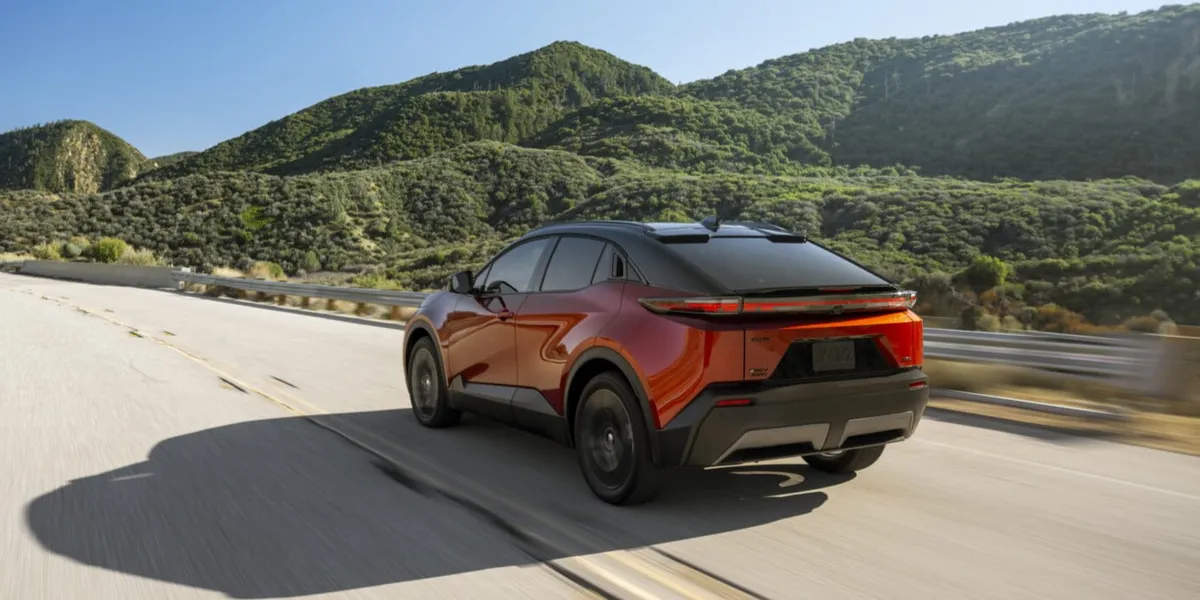
Market Positioning and Competitive Landscape
Interior Technology and Features
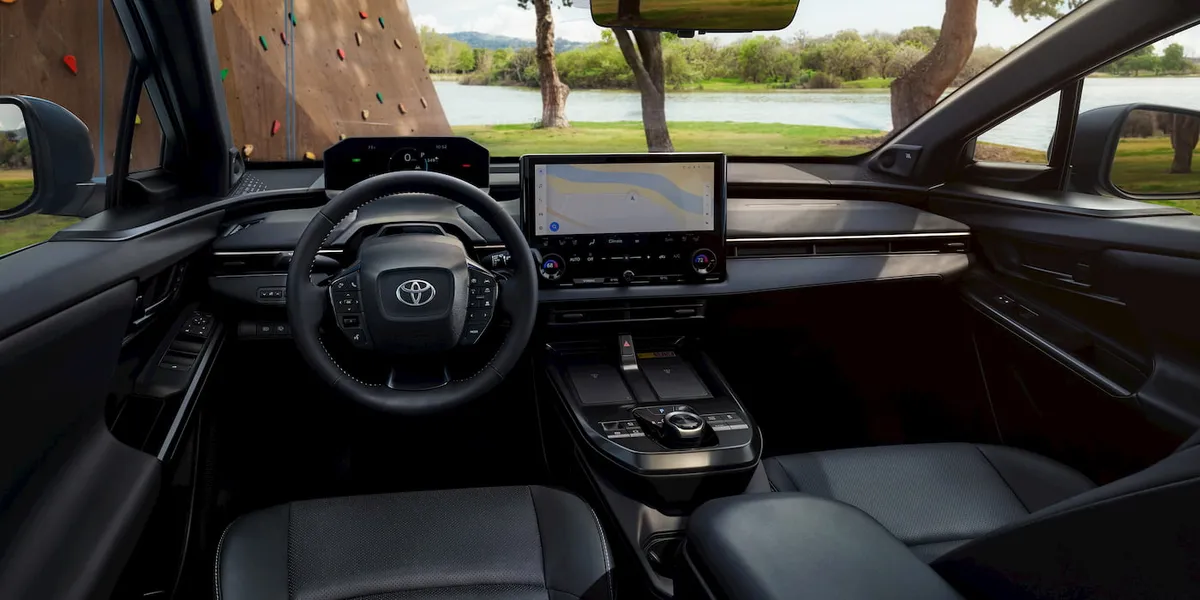
Inside, all 2026 Toyota EVs feature an updated interior design language and Toyota's latest Multimedia infotainment system. This system includes a 7-inch driver display and a prominent 14-inch central touchscreen, both supporting wireless Apple CarPlay and Android Auto connectivity. 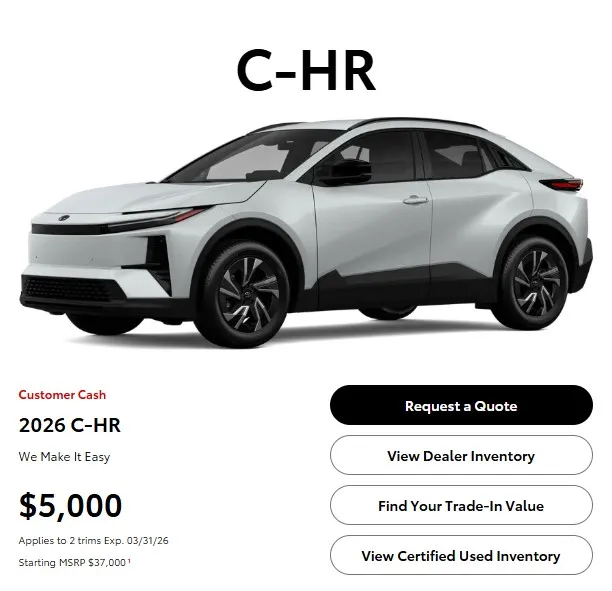
The bZ Woodland enhances its off-road credentials with 8.3 inches of ground clearance and a towing capacity of 3,500 lbs, further distinguishing it as a more adventurous option within the lineup. Toyota's comprehensive incentive program, including cash discounts, low APR financing, and attractive lease deals, aims to make its new EV offerings highly competitive.
Impact Analysis
Toyota's aggressive incentive strategy for its 2026 EV lineup signals a determined effort to gain market share in the rapidly expanding electric vehicle sector. By offering substantial discounts and 0% financing, Toyota is directly addressing consumer price sensitivity, a significant factor in EV adoption. This move intensifies competition, particularly against rivals like Hyundai and Chevrolet, who are also offering significant incentives on popular models such as the IONIQ 5 and Equinox EV. The success of these promotions could redefine pricing expectations in the compact and mid-size EV SUV segments, potentially accelerating the transition to electric mobility for a broader range of consumers. The inclusion of NACS ports also integrates Toyota's EVs more seamlessly into the growing charging infrastructure, further reducing adoption barriers.